There are nights when the sky feels still, almost untouched—an endless stretch of quiet darkness dotted with distant light. And then, without warning, something moves. A brief streak, a sudden flare, a moment that vanishes as quickly as it appears. For centuries, such sights have inspired wonder. But lately, they seem to be happening more often, as if the sky itself has grown restless.
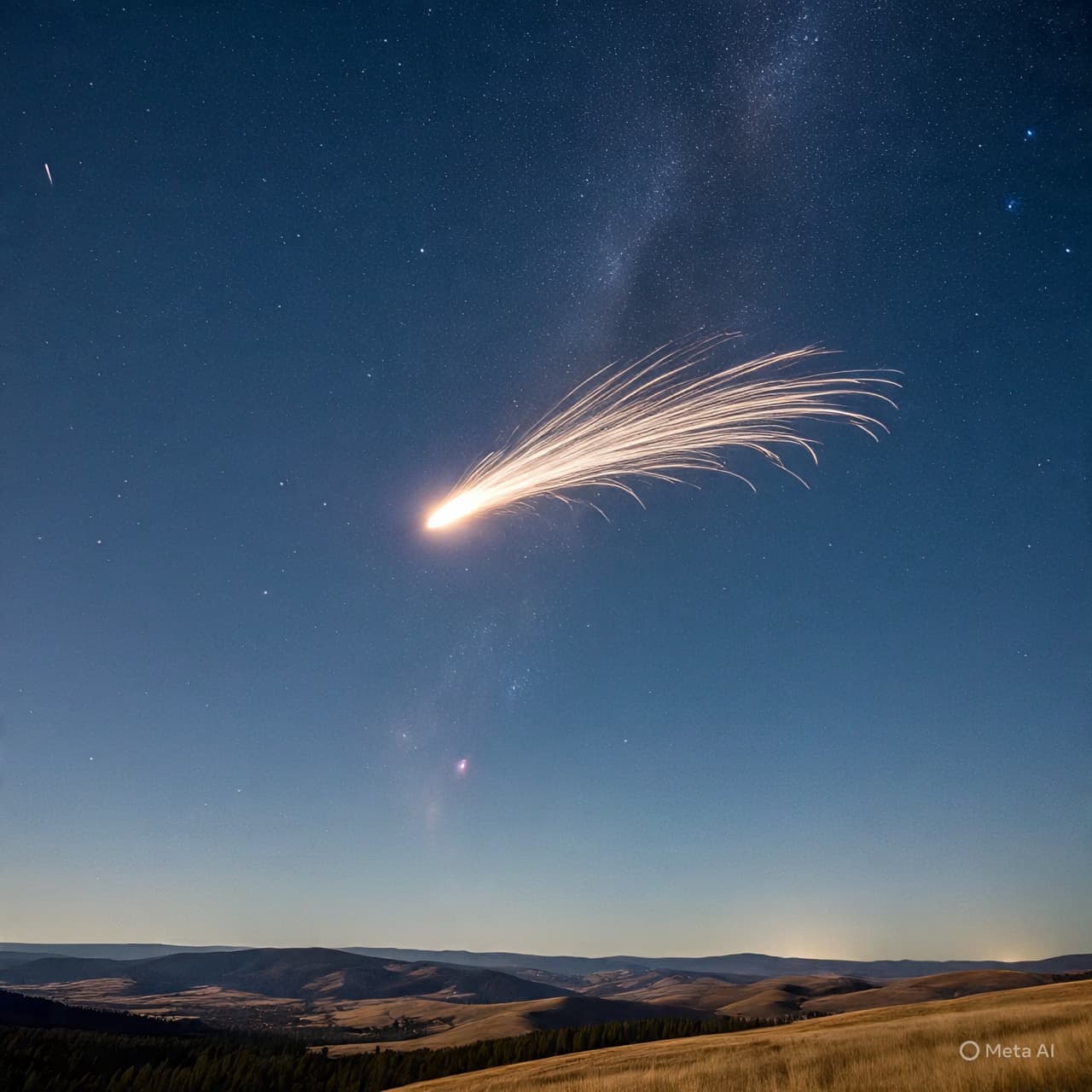
In 2026, observers across different parts of the world have reported an unusual rise in fireball sightings—those bright, dramatic meteors that burn vividly as they enter Earth’s atmosphere. According to organizations like NASA and the American Meteor Society, the number of reported fireballs has noticeably increased, drawing attention not only from scientists, but from everyday skywatchers who find themselves unexpectedly witnessing these fleeting events.
At first glance, the idea of a “surge” can feel unsettling. It invites questions about what might be changing above us, and whether such changes carry deeper implications. Yet, as researchers gently point out, the explanation may lie not in something entirely new, but in how we are observing the familiar.
One contributing factor is visibility itself. With more people carrying smartphones and having access to real-time reporting platforms, fireballs that might once have gone unnoticed are now documented, shared, and recorded almost instantly. The American Meteor Society has noted that its database has grown not only because of increased activity, but because of increased awareness. The sky has not necessarily become more active—it has become more observed.
Still, that is not the entire story. Scientists also suggest that Earth periodically passes through denser streams of cosmic debris—remnants left behind by comets or collisions within the asteroid belt. During these periods, the likelihood of meteors entering the atmosphere increases. Some of the fireballs reported in 2026 may be linked to such natural cycles, where clusters of debris intersect with Earth’s orbit.
The European Space Agency and NASA both emphasize that most of these objects are small, often no larger than a pebble or a rock. As they encounter the atmosphere, friction causes them to heat up and disintegrate, producing the bright flashes seen from the ground. Only rarely do larger fragments survive the journey to reach Earth’s surface, and when they do, they are typically found as meteorites, scattered and inert.
There is also a quieter layer to this phenomenon, one that speaks to how human perception shapes experience. In an age of constant connectivity, a single fireball can appear global within moments, shared across platforms and time zones. What might once have been an isolated observation now feels collective, amplifying the sense that something widespread is unfolding.
Yet, in the measured language of science, there is little indication of unusual danger. Agencies like NASA and ESA continue to monitor near-Earth objects, maintaining systems designed to track and assess potential risks. The current increase in fireball reports, while notable, does not signal a heightened threat to everyday life.
Instead, it offers something else—a reminder of Earth’s place within a larger, dynamic environment. The planet moves not through emptiness, but through a field of particles, fragments, and ancient remnants of cosmic history. Occasionally, these fragments meet our atmosphere, leaving behind brief signatures of light.
For now, researchers continue to study the data, refining their understanding of patterns and cycles. The surge in sightings remains a topic of interest rather than alarm, a phenomenon that invites observation rather than fear.
And so, the night sky remains what it has always been: a space of quiet continuity, occasionally interrupted by moments of brilliance. Whether those moments are increasing in number or simply in notice, they continue to draw the same response they always have—a pause, a glance upward, and a fleeting sense of connection to something far beyond.
AI Image Disclaimer Visuals are created with AI tools and are not real photographs.
Source Check Credible sources identified:
NASA American Meteor Society European Space Agency (ESA) Space.com BBC Science
Published by Banx Network. This article is part of the Banx decentralized media programme, powered by the BXE token on the XRP Ledger.