There is a particular kind of homecoming that involves no landing, no embrace, no pause. A spacecraft named Juice returned to Earth on Monday, not to stay but to borrow a little of its gravitational generosity before continuing a journey that will not end anywhere near here. The flyby was brief—a matter of minutes—but it left behind a handful of images that remind us how small and luminous our planet appears when viewed from a distance.
The European Space Agency's Jupiter Icy Moons Explorer passed just 8,640 kilometers above the Indian Ocean at 13:45 CEST on September 28, using Earth's gravity to bend its trajectory and accelerate toward the outer solar system . The maneuver deflected the spacecraft by 20 degrees and added 3.5 kilometers per second to its speed—a slingshot effect that saves fuel for the complex maneuvers that await at Jupiter .
Along the way, Juice's monitoring cameras and navigation camera captured images of Earth and the Moon. One image shows much of the African continent, with Madagascar visible as a small shape off the eastern coast and the faint outlines of Yemen and Oman near the top of the frame . Another, taken by the NavCam just two minutes after closest approach, shows a portion of Madagascar in black and white—a test of the optical navigation technique that will eventually help the spacecraft steer around Jupiter's icy moons .
These images were not the primary purpose of the flyby. The monitoring cameras were designed to keep watch on the spacecraft's booms and antennas, not to produce scientific portraits of Earth . The NavCam, meanwhile, was being tested for a technique called optical navigation, which will allow Juice to determine its position relative to Ganymede, Europa, and Callisto without relying solely on ground commands . The flyby offered a convenient opportunity to practice on a target whose appearance is well known.
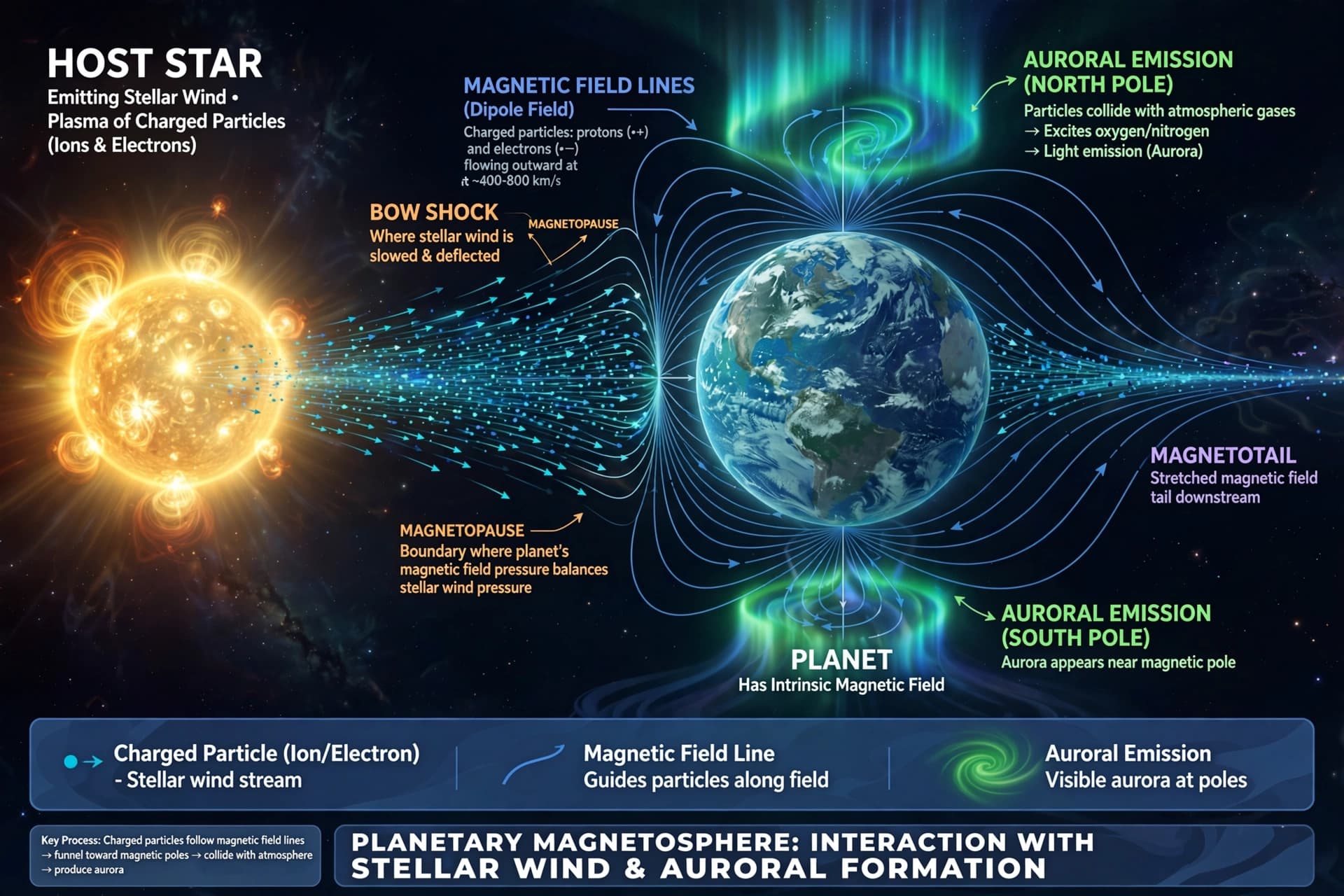
Juice's scientific instruments were also active during the encounter. The spacecraft passed through Earth's magnetotail—the elongated region of the magnetosphere trailing away from the Sun—allowing researchers to calibrate instruments that will later study Jupiter's magnetic environment . High-resolution images from the JANUS scientific camera are expected in the coming weeks, offering a sharper view of the Earth-Moon system than the monitoring cameras could provide .
The flyby was the first of three Earth gravity assists planned for Juice's long journey. The spacecraft will return to Earth in 2029 for another boost, then fly by Venus in 2031 before finally arriving at Jupiter in 2031 . The precision of this first encounter was such that only one small engine burn was needed out of six planned, preserving fuel for the science phase that lies ahead .
For now, Juice is moving away from Earth, carrying with it images of a blue planet and a gray moon, two worlds that will grow smaller and fainter in its cameras over the coming years. The spacecraft's destination is a gas giant and its icy moons, a realm where liquid water may lie beneath frozen surfaces and where the question of life's possibility remains open. But on Monday, for just a few minutes, it looked back at home.
AI Image Disclaimer: The illustrations accompanying this article were generated by artificial intelligence and are for illustrative purposes only.
Sources: European Space Agency, Scientific American, Universe Space Tech, Starlust.org
Published by Banx Network. This article is part of the Banx decentralized media programme, powered by the BXE token on the XRP Ledger.