The earth does not often speak in the Barossa Valley, but when it does, it speaks in a low, brief murmur rather than a shout. In the quiet hours before dawn on Monday, that murmur arrived beneath the vines and rooftops near Tanunda—a magnitude-2.8 tremor that lasted only seconds but carried enough voice to wake sleeping residents and send cats scrambling from the ends of beds. It was not a catastrophe, nor even a warning, but a gentle reminder that the ground beneath even the most pastoral landscapes is not entirely still.
The earthquake was recorded at 2:26 a.m. by Geoscience Australia, with its epicenter near Stone Well on the outskirts of Tanunda, roughly 55 kilometers northeast of Adelaide. Nearly 250 reports flowed in from residents, most from Tanunda and nearby Nuriootpa, describing rattling shelves, windows shaking, and a deep, bass-like rumble that some initially mistook for thunder or a passing truck. One resident told the ABC that the tremor lasted perhaps three seconds, though his cat remained unsettled for considerably longer.
Seismologist Tania Page noted that quakes of this size typically produce only a few seconds of shaking and are more often heard than felt—a noise that resembles thunder, a heavy vehicle, or a distant explosion. Geoscience Australia classifies earthquakes below magnitude 3.5 as seldom causing damage, and no injuries or structural harm were reported in the Barossa on Monday. The depth was estimated at roughly 10 kilometers, shallow enough to be noticed but not deep enough to carry destructive force.
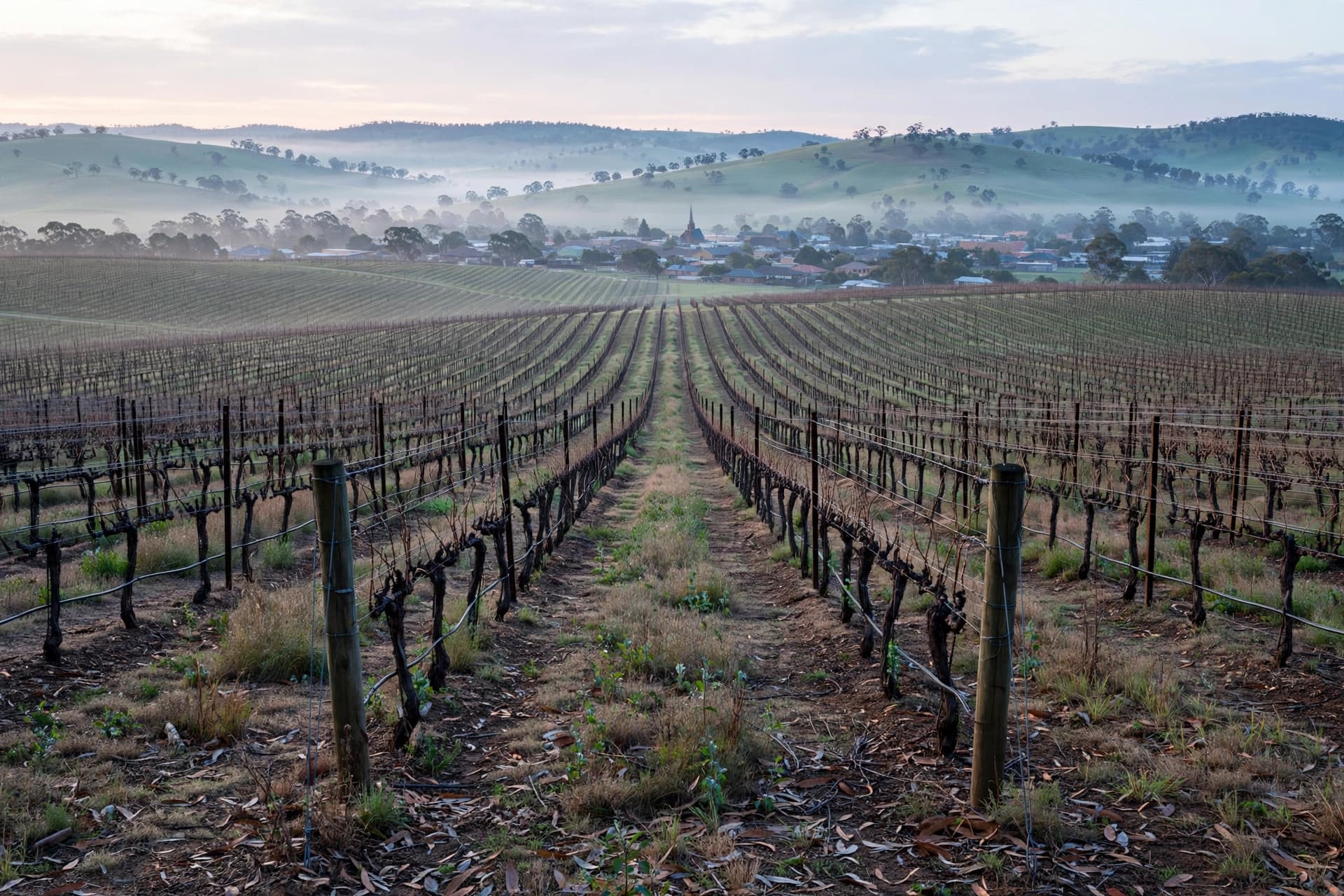
What makes such an event notable is not its power but its placement. The Barossa Valley is known worldwide for shiraz and riesling, for stone churches and long lunches, not for seismic restlessness. Yet South Australia has a quiet history of minor tremors, and Monday's event joins a long catalogue of small shifts that rarely make headlines beyond the local morning news. The community's response—curiosity, a few startled pets, a flurry of social media posts—reflected the mildness of the event itself.
By daylight, the vineyards were undisturbed, the cellars intact, and the morning routines resumed. The tremor had come and gone without leaving a mark beyond the stories residents would tell over coffee. It was, in the end, a small geological footnote—a brief conversation between the earth and a town that listens more often to the rhythms of seasons than to the movements of tectonic plates.
For those who felt it, the memory will linger not as a moment of fear but as a curious interruption, a reminder that even the most settled landscapes hold a quiet, patient energy beneath their surface. The Barossa returned to its usual stillness, but perhaps with a slightly sharper awareness that stillness is never absolute.
AI Image Disclaimer: The images accompanying this article were generated by artificial intelligence and are illustrative in nature.
Sources: Australian Broadcasting Corporation, Geoscience Australia, Glam Adelaide, Townsville Bulletin, PerthNow
Published by Banx Network. This article is part of the Banx decentralized media programme, powered by the BXE token on the XRP Ledger.