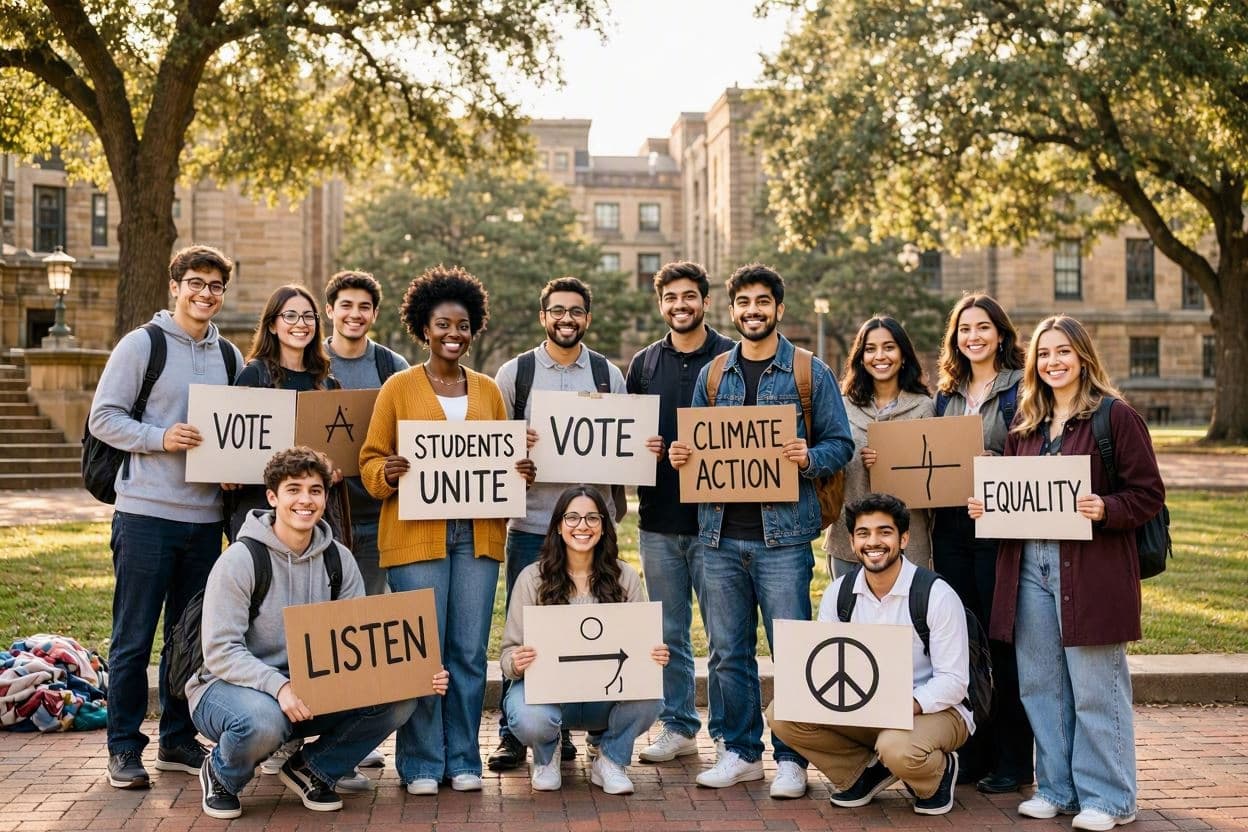
In the hallowed halls of academia, where ideas are meant to clash and converge, a new tension has emerged between civic expression and immigration status. A coalition of advocacy groups has recently addressed a formal appeal to political leaders Mark Carney and Danielle Smith, urging them to intervene in the potential deportation of student protesters. This plea highlights the delicate intersection of free speech, educational sanctuary, and the rigid frameworks of international law.
The students involved have been vocal in their demonstrations, raising concerns that mirror broader global debates on justice and policy. However, for international students, the stakes are uniquely high. Their right to remain in the country is contingent upon their visa status, which can be jeopardized by legal infractions or perceived violations of public order. The letter argues that deportation is a disproportionate response to peaceful protest, suggesting it could chill legitimate academic and civic discourse.
Mark Carney, known for his economic expertise, and Danielle Smith, a prominent provincial leader, represent different spheres of influence. By addressing both, the groups seek a unified front that balances federal immigration authority with provincial educational mandates. The request is not merely for leniency but for a recognition of the role universities play as spaces for critical engagement, even when that engagement is uncomfortable or controversial.
Advocates emphasize that many of these students are contributing members of their academic communities, bringing diverse perspectives that enrich the learning environment. To remove them for exercising their right to assemble would send a troubling message about the limits of tolerance in a democratic society. The letter posits that protection should extend to those who challenge the status quo, provided their actions remain within the bounds of non-violent expression.
The legal complexities surrounding this issue are significant. Immigration laws are designed to maintain national security and order, yet they must also align with constitutional protections for freedom of expression. Finding a path that respects both imperatives requires nuanced policymaking. The groups behind the letter hope to spark a dialogue that prioritizes human rights and educational integrity over punitive measures.
Public reaction has been mixed, reflecting the polarized nature of contemporary political discourse. Some view the protests as disruptive, while others see them as essential acts of conscience. Amidst this divide, the fate of the students hangs in the balance, serving as a test case for how Canada navigates the rights of its temporary residents during times of social unrest.
As the situation unfolds, the eyes of the academic and legal communities remain fixed on the response from leadership. Will there be a reconsideration of the enforcement approach? Or will the strict application of immigration rules prevail? The outcome will likely set a precedent for future interactions between student activism and state authority.
The letter to Carney and Smith underscores a critical moment for student rights and immigration policy. It invites leaders to consider the broader implications of deportation for peaceful protesters, urging a solution that upholds both the rule of law and the values of open dialogue.
AI Image Disclaimer: The accompanying visuals are AI-generated to illustrate the themes of advocacy and academic discourse.
Sources: CBC News The Globe and Mail National Post
Published by Banx Network. This article is part of the Banx decentralized media programme, powered by the BXE token on the XRP Ledger.


.jpg&w=3840&q=75 "Chinese Shipper COSCO Collected Intelligence for Beijing Using Concealed Equipment, US Officials Say")