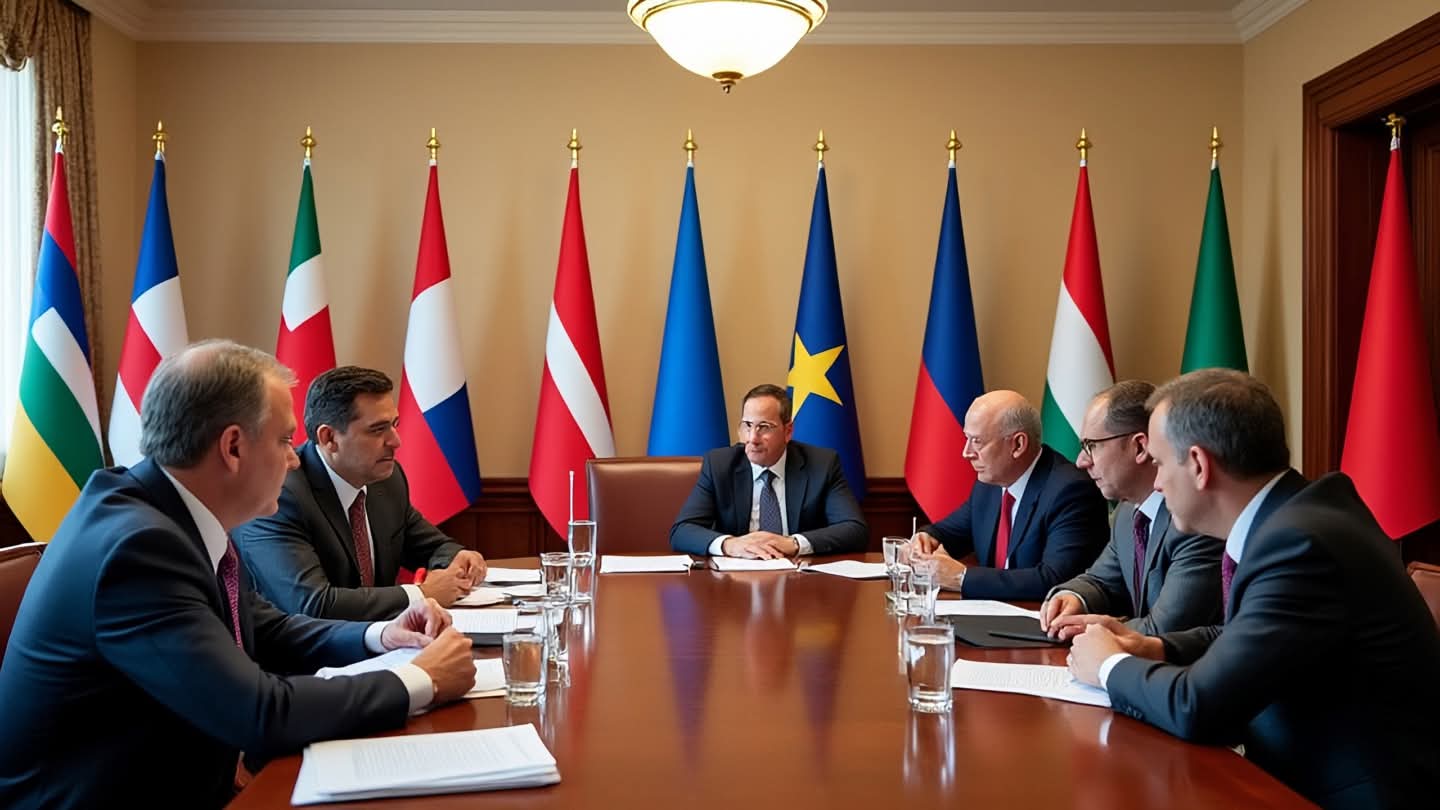
Alliances are often described as ironclad, yet they are forged in the fires of changing political winds and shifting strategic priorities. As the United States undertakes a comprehensive review of its military posture in Europe, the message to its NATO partners is clear: the era of unilateral American guardianship is evolving into a demand for shared leadership and greater self-reliance across the Atlantic.
The Pentagon’s recent initiative, often referred to in strategic circles as part of a broader "NATO 3.0" vision, seeks to recalibrate the burden of defense on the continent. This review comes amid heightened geopolitical tensions and a domestic political climate in Washington that increasingly questions the extent of American commitment to foreign theaters. The underlying premise is not abandonment, but rather a restructuring that expects European allies to assume primary responsibility for their conventional defense capabilities.
For decades, the U.S. has provided the backbone of NATO’s deterrence strategy, maintaining significant troop levels and advanced military assets in Europe. However, recent directives from the White House and the Department of Defense suggest a pivot towards a model where European nations lead regional security efforts. This shift is accompanied by calls for increased defense spending, with new benchmarks urging allies to allocate a higher percentage of their GDP to military readiness and modernization.
The reaction among European capitals has been a mix of urgency and strategic reassessment. Nations are accelerating procurement plans, enhancing cross-border military cooperation, and investing in indigenous defense industries. The goal is to build a credible deterrent that can operate effectively even if American support becomes more conditional or distant. This transition is not without its challenges, as it requires harmonizing diverse military doctrines and overcoming historical hesitations regarding rearmament.
Critics argue that such a rapid shift could create vulnerabilities during a period of global instability. They caution that while European capacity is growing, it has not yet reached a level where it can fully replace the strategic depth provided by the United States. Proponents, however, view this as a necessary maturation of the alliance, one that strengthens collective security by ensuring that no single nation bears a disproportionate share of the risk and cost.
The review also touches on the logistical footprint of U.S. forces, with potential adjustments to base operations and troop deployments. These changes are being evaluated carefully to ensure they do not undermine existing commitments while signaling a new expectation of partnership. The dialogue between Washington and Brussels has intensified, focusing on how to integrate European-led initiatives with remaining American assets for maximum effectiveness.
Ultimately, this period of reflection serves as a test of the alliance’s adaptability. It challenges member states to move beyond rhetorical support and demonstrate tangible investments in their own security architectures. The outcome will likely define the character of transatlantic relations for the coming decades, shaping a balance of power that is more distributed and potentially more resilient in the face of emerging threats.
As the review progresses, NATO allies are expected to present concrete plans for increasing their defense contributions. The United States maintains that a stronger, more capable Europe is essential for the stability of the alliance, urging partners to take the lead in securing their own continent.
AI Image Disclaimer: The images associated with this article are AI-generated visualizations created to reflect the thematic elements of international defense diplomacy.
Sources: Reuters Associated Press War.gov (U.S. Department of Defense) Financial Times Politico
Published by Banx Network. This article is part of the Banx decentralized media programme, powered by the BXE token on the XRP Ledger.