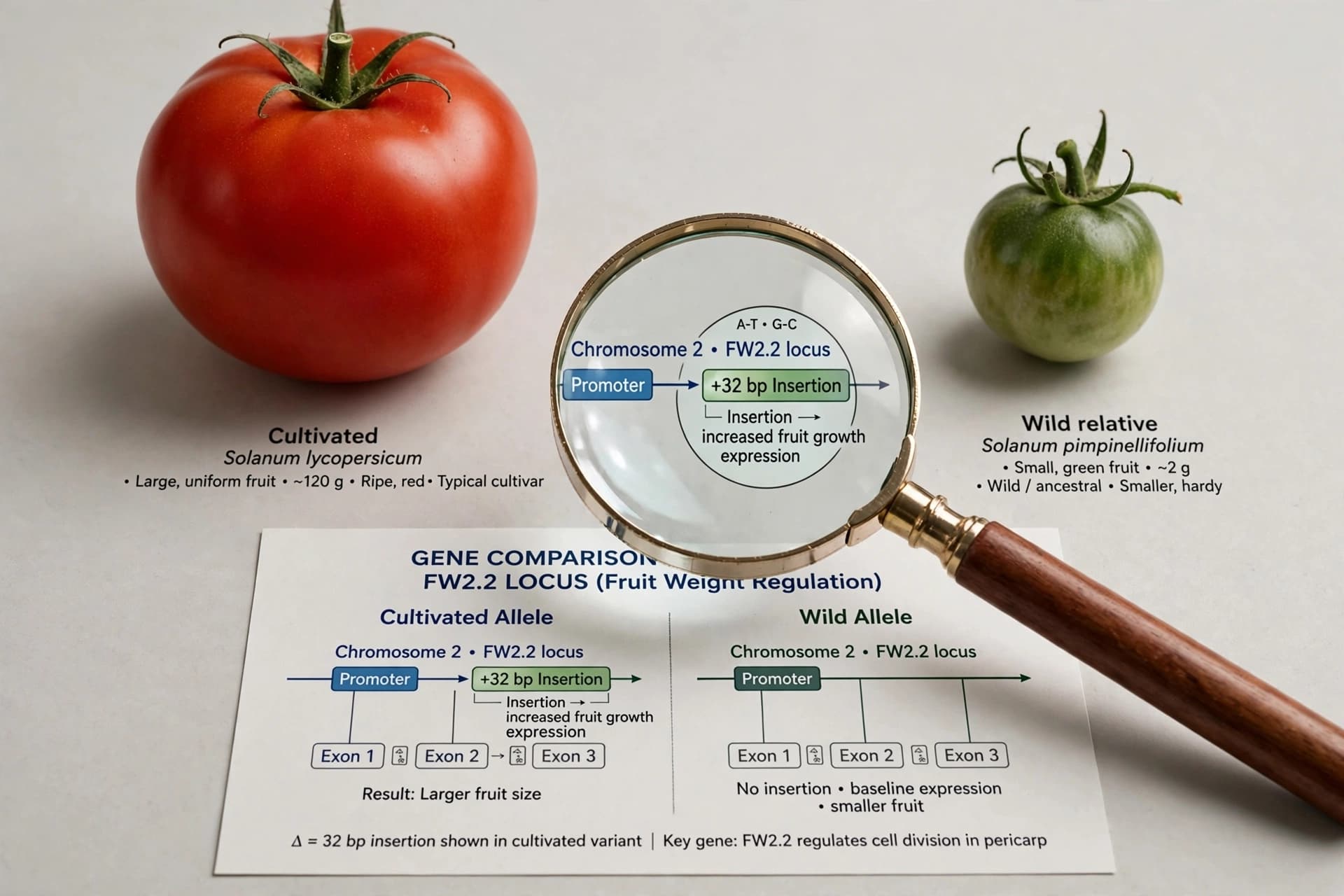
There is a particular nostalgia attached to the taste of a tomato—not the firm, uniform slices that arrive on winter sandwiches, but the sun-warmed fruit picked from a garden vine, its sweetness balanced by acidity, its aroma carrying notes of grass and fruit. That tomato, the one memory insists upon, has largely disappeared from supermarket shelves. Generations of breeding for size, firmness, and shelf life have produced a crop that ships well and yields abundantly but tastes, to many palates, like little at all. Now, scientists believe they have found a map that could guide breeders back toward flavor—and the traits they need may still be hiding in the wild relatives of the modern tomato.
A study led by researchers at the Boyce Thompson Institute, published in the journal Nature, offers the most detailed picture yet of how gene regulation differs between cultivated tomatoes and their wild cousins. The team, led by Senior Research Associate Carmen Catala, Professor Zhangjun Fei, and USDA scientist James Giovannoni, compared gene activity in cultivated tomato and three wild relatives across different fruit tissues and stages of development and ripening.
The work distinguishes between two types of genetic control. Cis effects are changes in the DNA sequence immediately adjacent to a gene, acting like a dimmer switch built into the lamp itself—they affect only that one gene. Trans effects are changes elsewhere in the genome that alter the regulatory environment, like building-wide wiring that affects many genes at once. From the outside, both produce the same result: a gene that shines more brightly or dimly. But knowing which is at work matters for breeders, because cis changes can be selected for more precisely without disrupting other traits.
The researchers found that cis changes were the dominant driver of differences in gene activity, affecting up to 23.5 percent of active genes, compared with no more than 4.6 percent for trans changes. Many of these regulatory switches were highly specific, operating in only one tissue at one moment of fruit development.
The map helps explain several familiar traits. In green-fruited wild species, cis changes boost genes that steer the pigment pathway away from lycopene, the red pigment that gives tomatoes their color and much of their nutritional value—which is why those fruits stay green. A matched pair of sugar-related genes explains differences in sweetness: one gene breaks down sucrose, while another blocks this process, and in green-fruited species they are regulated in a coordinated way that allows the fruit to retain more sucrose. The data also reveal a developmental switch for bitterness, with young fruit maintaining high levels of defensive compounds that are later converted into non-bitter forms as cultivated tomatoes ripen.
For breeders, the value of this work lies in its precision. "Wild tomatoes are an enormous reservoir of diversity for flavor, nutrition, and resilience," Catala said, "but bringing those traits into modern varieties can come at the expense of other traits that breeders have spent decades improving, like yield, fruit size, or shelf life. This can be countered with precise information on how the genes responsible for such traits are controlled".
The flavor that was lost, it seems, is not gone forever. It is waiting in the wild, encoded in the genes of plants that never made it to the supermarket—a reminder that what we breed away can sometimes be bred back, if we know where to look.
AI Image Disclaimer: The imagery in this article was created using artificial intelligence for illustrative purposes only and does not depict the actual tomatoes or research described.
Sources: EurekAlert, Boyce Thompson Institute, Nature, Morning Ag Clips, PNAS
Published by Banx Network. This article is part of the Banx decentralized media programme, powered by the BXE token on the XRP Ledger.