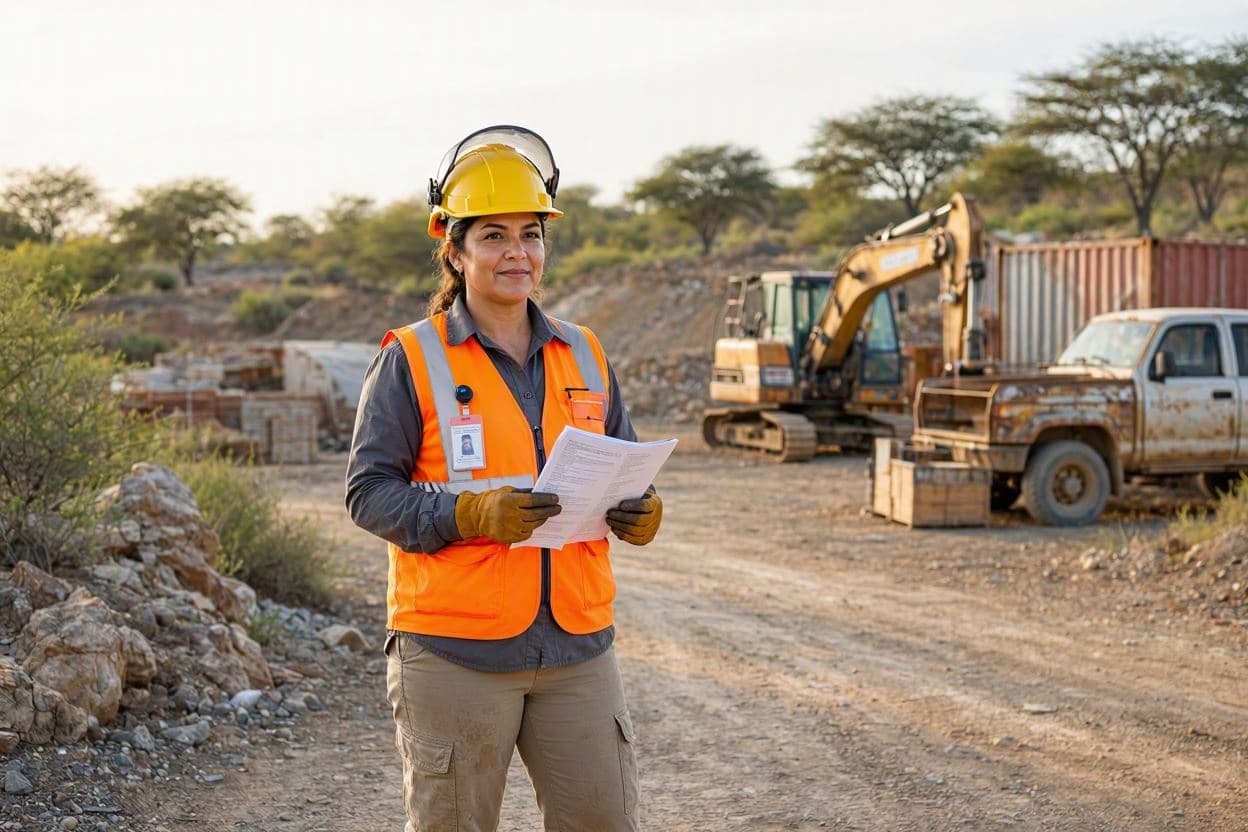
For generations, the story of mining in Tanzania was written in a single voice—male, often foreign, rarely local. Women stood at the edges of the pits, washing gravel, carrying loads, their labor essential but their names absent from the licenses that determined who owned what. A mining license is a quiet document, unremarkable to look at, but it carries within it the power to transform a life from participant to proprietor. Tanzania is now handing that document to women.
The government’s message, delivered by Deputy Minister for Minerals Dr. Steven Kiruswa at the 2026 Mining Queens Awards in Geita, was direct: the goal is not simply more licenses but a shift in position . Women should move from being ordinary participants to becoming mine owners, producers, traders, investors, and competitive service providers . The distinction matters because holding a license does not guarantee success. It requires technology, business knowledge, access to markets, capital, and the ability to operate safely and sustainably .
The progress is already visible. In Geita Region, 714 women have joined different groups and received small-scale mining licenses . These licenses give women legal recognition and the confidence to invest, according to Hellen Paulin, chairperson of the Mwanza Regional Women Small-Scale Miners Association. “Mining has helped us to run our lives and support our families,” she said. “A mining licence gives women legal recognition and confidence to invest in their businesses” .
Access to finance follows formalization. Banks and lending institutions are more willing to support businesses that operate legally, and many women have used loans to purchase improved mining equipment, increase production, and expand their operations . The income that follows is reinvested in families—school fees, healthcare, and small businesses that provide additional income streams . Asha Jama, co-owner of a construction aggregate mine in Dodoma, described it as more than equality. “Women’s empowerment in the mining sector is not just about equality; it is a strategic pathway to building inclusive economic growth,” she said .
The government is also addressing the technical gaps that can undermine new operators. Through the State Mining Corporation, or STAMICO, it has established demonstration centers and excellence centers to train small-scale miners in efficient, environmentally sustainable, and mechanized techniques . Precious stone centers allow women to create lapidary and jewelry businesses after receiving training, and scholarships and equipment are provided to encourage gender inclusion . The Mining for a Brighter Tomorrow program, running from 2025 to 2030, aims to increase participation of women, youth, and people with special needs across the mineral value chain .
Minerals Minister Anthony Mavunde has gone further, instructing Regional Mines Officers to reserve mining blocks specifically for youth, women, and persons with disabilities, with officers evaluated on their allocation of licenses to these groups . The government has also allocated 10 percent of mining sector revenues to exploration, a move intended to reduce the speculative guesswork that has ruined many small-scale miners .
Tanzania is advancing women’s participation in mining through licensing, training, and access to finance, with 714 women in Geita Region alone receiving small-scale mining licenses. The government aims to move women from marginal roles to ownership and investment across the mineral value chain.
AI Image Disclaimer: All visual content associated with this article is produced by artificial intelligence for representational purposes only.
Sources: Daily News Tanzania, The Citizen Tanzania, Ministry of Minerals Tanzania, ICGLR, Parliament of Tanzania
Published by Banx Network. This article is part of the Banx decentralized media programme, powered by the BXE token on the XRP Ledger.