There is an irony in the story of Canadian cannabis that few anticipated when the country chose legalization in 2018. The intent was to bring a substance out of the shadows, to regulate it, to take profit away from criminals. Instead, nearly a decade later, Canadian-grown marijuana has become one of the most seized illicit exports at Europe's largest ports, a product whose legal origins have somehow fed an illegal trade across an ocean. The law changed at home, but the market did not stay at home.
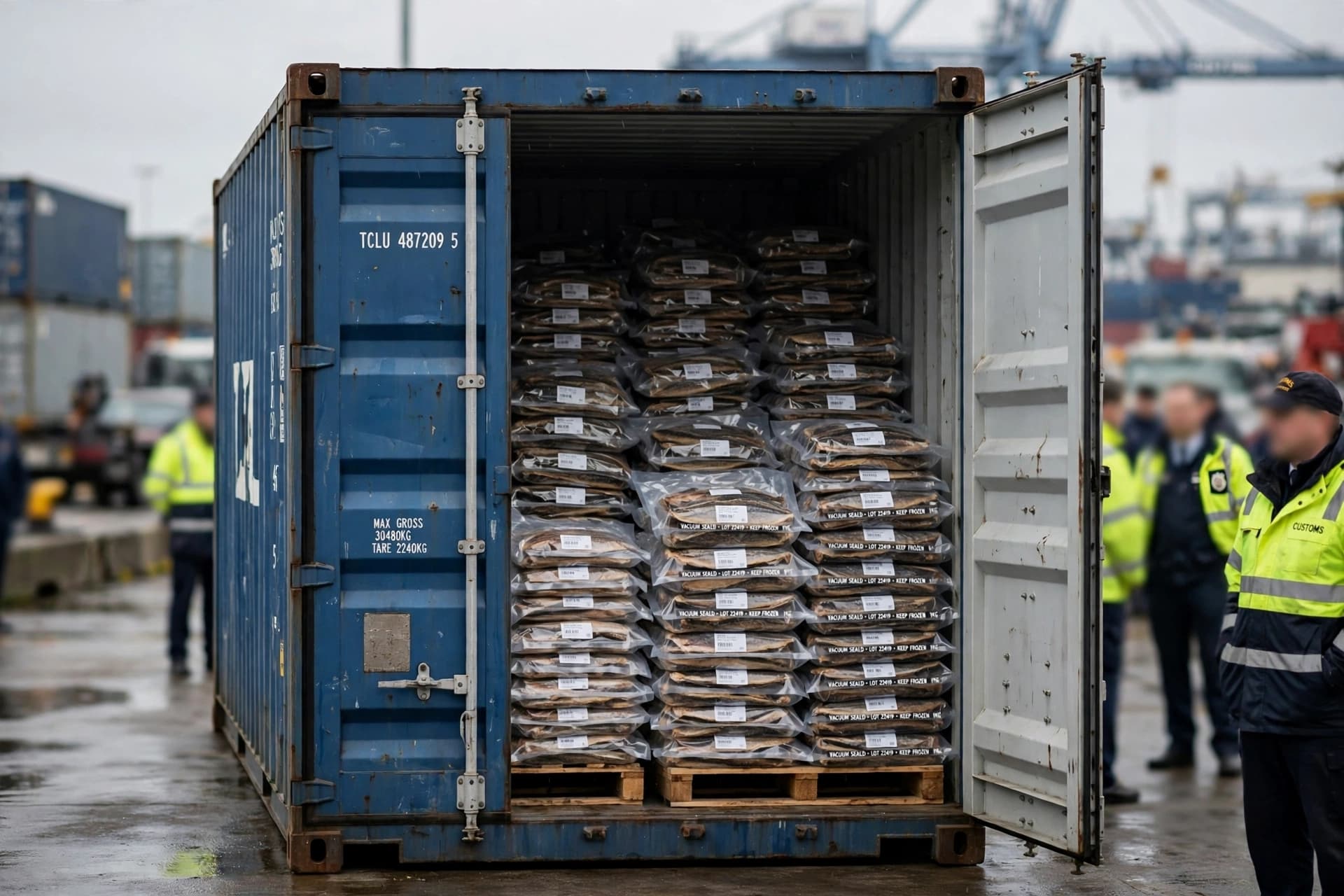
The numbers are extraordinary. Belgian customs seized 21 tonnes of Canadian cannabis in the port of Antwerp in 2025 alone, exceeding illegal exports from every other country in the world—including Morocco, until recently Europe's biggest supplier . The Canada Border Services Agency reported seizing about 34 tonnes of cannabis products intended for export at maritime border points in the same year . Rotterdam, Europe's largest port, has seen a similar surge. The smuggling is not subtle: cannabis hidden in shipping containers of household belongings, stashed inside crates built to look like wooden fire briquettes, vacuum-packed and labeled for a market that pays many times what the drug fetches in Canada.
The economics explain the motivation. According to Europol, a kilogram of Canadian marijuana wholesales for about 4,100 Euros in the Netherlands—roughly 6,400 Canadian dollars—and as much as 6,000 Euros in the United Kingdom. Street prices are higher still . In Canada, the wholesale price for a kilogram of dried cannabis averages between one thousand and fifteen hundred dollars, according to the RCMP . The gap is not a margin; it is an invitation.
Belgian officials have been blunt about the cause. Kristian Vanderwaeren, director general of Belgian Customs and Excise, told CBC News that the surge is tied to Canada's policy. "According to my information, it has to do with the policy of the Canadian government," he said. "And 320 million Europeans who have money to buy this … it's an immense market" . Ine Van Wymersch, Belgium's first drug commissioner, described it as a supply-driven market, one in which criminal groups are exploiting a gray zone that the Canadian government finds difficult to regulate .
The consequences extend beyond seized shipments. Brussels has recorded 74 shootings this year, according to the region's minister-president, and Van Wymersch noted that while cocaine is the primary driver of violence, cannabis plays a role as well . She travels with a security team, a measure she described as necessary given the nature of the networks involved. "These criminal gangs, they don't have any values," she said . The debate over whether Belgium is becoming a "narco state" is one she rejects, but the question itself reflects the pressure the country is under.
For Canada, the story is one of unintended consequences. Legalization created a legal industry, but it also created a surplus, and surplus seeks outlets. The CBSA has acknowledged a sustained increase in illegal export attempts since 2022, particularly to Europe, carried out through cargo shipments, postal shipments, and air passengers . The agency is cooperating with Belgian authorities, but the flow continues. A product that was meant to be controlled has found a way to travel.
There is no simple remedy here, and it would be unkind to pretend otherwise. The Canadian government did not intend to become a source for Europe's illicit cannabis market, and Belgian officials do not blame Canada alone for their own challenges. But the record seizures tell a story that legalization's architects may not have fully anticipated: that when a legal market and an illegal one share a border, the price difference between them becomes a force of its own.
Image note: The images in this article were created with artificial intelligence and are not photographs of actual seizures or the individuals involved.
Sources: CBC News, Radio-Canada, The Brussels Times
Published by Banx Network. This article is part of the Banx decentralized media programme, powered by the BXE token on the XRP Ledger.