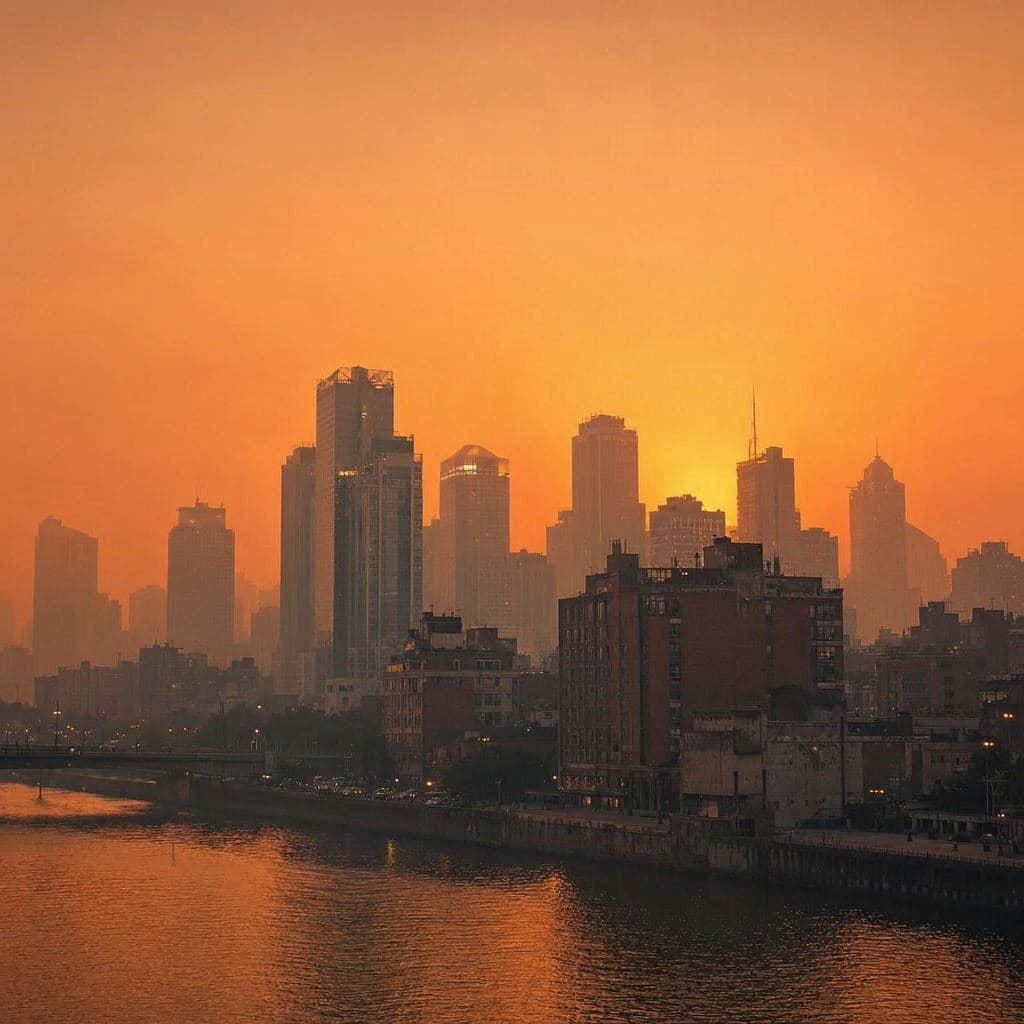
Across the vast expanse of North America, a hazy veil has once again descended, obscuring the sun and tinting the sky in shades of orange and grey. Wildfire smoke, originating from burns in Canada and the Pacific Northwest, has traveled thousands of miles, affecting air quality as far south as Florida. This recurring phenomenon serves as a poignant reminder of the interconnectedness of our environment and the far-reaching impacts of climate change.
For millions of people, the return of the smoke is not just an inconvenience but a health hazard. It disrupts daily life, limits outdoor activities, and raises concerns about long-term respiratory effects. The visibility of this pollution, even in regions far from the flames, underscores the scale of the challenge we face.
Body: The smoke plumes, carried by high-altitude winds, have blanketed major cities across the Midwest, Northeast, and Southeast. Air quality indexes in many areas have reached unhealthy levels, prompting advisories for vulnerable populations, including children, the elderly, and those with pre-existing conditions. Health officials urge residents to stay indoors and use air purifiers when possible.
In Florida, a state typically associated with clear blue skies and tropical breezes, the arrival of Canadian wildfire smoke is a striking anomaly. Residents have reported a distinct smell of burning and a reduction in visibility, particularly during sunrise and sunset. This unusual event highlights how atmospheric patterns can transport pollutants across continental boundaries.
The source of the smoke is primarily the ongoing wildfires in Canada, which have burned millions of acres this season. Drier conditions and higher temperatures, linked to global warming, have created ideal conditions for these fires to spread and persist. Efforts to contain them are hampered by the sheer scale of the affected areas and the remote locations of many burns.
Environmental scientists emphasize that this is not an isolated incident but part of a growing trend. As climate change intensifies, the frequency and severity of wildfires are expected to increase, leading to more frequent episodes of poor air quality across the continent. This reality requires adaptive strategies and international cooperation.
For local communities, the impact is both economic and social. Tourism, a vital industry for many regions, suffers when visitors are deterred by poor air quality. Outdoor events are canceled, and businesses face reduced foot traffic. The psychological effect of living under a smoky sky can also contribute to anxiety and stress.
Public health systems are bracing for an increase in respiratory issues. Hospitals and clinics report higher numbers of patients seeking treatment for asthma, bronchitis, and other conditions exacerbated by smoke inhalation. This strain on healthcare resources adds another layer of complexity to the crisis.
Efforts to mitigate the impact include public awareness campaigns and the distribution of masks and air filters. Governments are also investing in better forecasting tools to provide early warnings and help people prepare. These measures, while helpful, are reactive rather than preventive.
As the smoke eventually clears, the underlying issues remain. The need for sustainable forest management, carbon reduction, and climate resilience is more urgent than ever. The haze over Florida is a visible symbol of a problem that requires global attention and action.
Closing: The return of wildfire smoke to regions as distant as Florida is a clear signal of environmental change. It invites us to look beyond our immediate surroundings and consider the broader implications of our actions on the planet’s health.
AI Image Disclaimer: Visuals in this article are AI-generated representations intended to illustrate the widespread nature of the smoke.
Sources: CNN Weather NASA SVS The Weather Channel Newsweek
Published by Banx Network. This article is part of the Banx decentralized media programme, powered by the BXE token on the XRP Ledger.