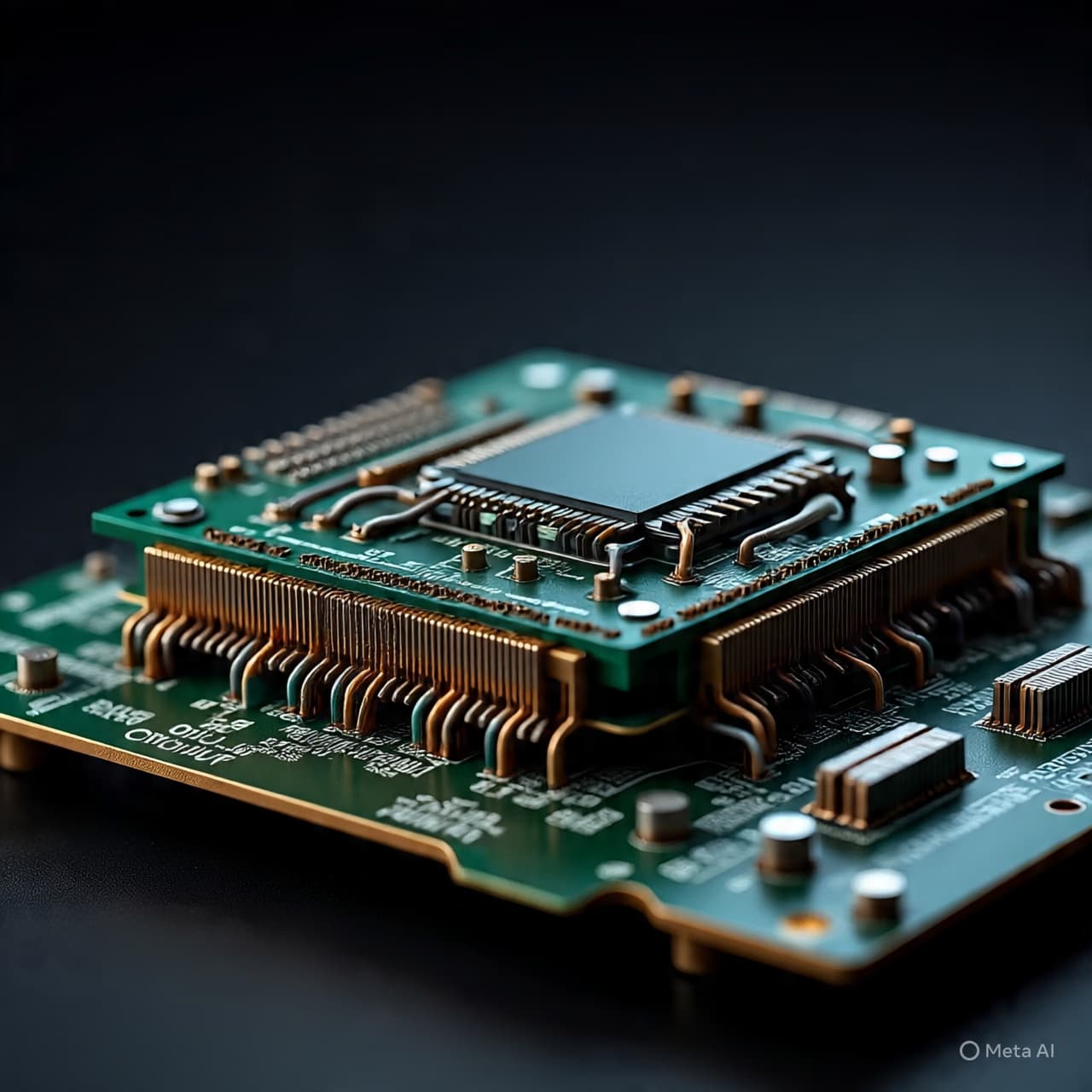
In the world of silicon and circuitry, time moves in measured cycles. Roadmaps stretch years into the future, whispered first in analyst briefings and industry forums before surfacing as clearer outlines. Long before a processor ever rests inside a motherboard, it lives as a codename—an idea waiting patiently in development labs.
That patience is now turning toward 2027, where reports suggest that is preparing a next-generation desktop architecture known internally as “Nova Lake-S.” While official confirmation remains measured, industry chatter indicates the chip could debut at the 2027 edition of , potentially sharing the spotlight with a rival platform from , reportedly codenamed “Olympic Ridge.”
In the semiconductor landscape, such parallel timelines are not unusual. Intel and AMD have long moved in strategic cadence—each iteration shaping the other’s ambition. From clock speeds to core counts, from efficiency metrics to integrated graphics, competition has fueled steady evolution across the desktop market.
“Nova Lake-S” is expected to succeed Intel’s earlier architectural generations, continuing the company’s push toward refined hybrid core designs and improved manufacturing nodes. Though concrete specifications remain speculative, observers anticipate a focus on performance-per-watt gains, expanded AI acceleration, and stronger multi-threaded capabilities. By 2027, desktop computing will likely demand even greater synergy between raw power and intelligent workload management.
Meanwhile, AMD’s rumored “Olympic Ridge” appears positioned as a competitive counterweight. AMD has steadily built momentum through successive Ryzen generations, emphasizing efficiency and high core density. A CES launch window for both platforms would underscore how major technology showcases often become stages for architectural transitions.
CES, traditionally associated with consumer electronics from televisions to electric vehicles, has increasingly become a venue for foundational computing announcements. A synchronized debut—should it materialize—would signal the next chapter in the desktop CPU narrative, where innovation is less about isolated leaps and more about layered refinement.
Industry analysts note that by 2027, artificial intelligence workloads may be deeply embedded in everyday desktop usage. AI-assisted content creation, advanced gaming engines, and productivity tools will likely require CPUs capable of seamlessly managing heterogeneous cores and integrated accelerators. Nova Lake-S may be designed with that horizon in mind.
Yet timelines in semiconductor development are rarely absolute. Manufacturing constraints, market conditions, and technological pivots can influence launch windows. Intel has spent recent years recalibrating its roadmap and fabrication strategy, working to regain predictable cadence and restore manufacturing leadership. A 2027 target suggests a longer-term, structured approach.
For consumers, the announcement—if confirmed—would not signal immediate change, but rather a glimpse of the computing landscape to come. Enthusiasts and system builders often track such roadmaps years in advance, aligning upgrade cycles with architectural shifts.
What remains certain is the enduring rhythm of rivalry. Intel and AMD continue shaping each other’s strategies, each new codename a placeholder for performance ambitions not yet realized. By the time CES 2027 arrives, today’s speculation will have transformed into silicon reality—or evolved again under new designations.
For now, Intel’s Nova Lake-S and AMD’s Olympic Ridge exist primarily in roadmap discussions and industry reporting. Neither company has finalized public specifications or pricing. Still, the alignment of projected timelines hints at another coordinated moment in the long-running dialogue between two semiconductor giants.
In that dialogue, progress unfolds not in headlines alone, but in nanometers, architectures, and carefully timed reveals. And as 2027 approaches, the next exchange may already be taking shape behind laboratory doors.
AI Image Disclaimer: Graphics are AI-generated and intended for representation, not reality.
Sources (Media Names Only): Tom’s Hardware AnandTech VideoCardz TechPowerUp Wccftech
Published by Banx Network. This article is part of the Banx decentralized media programme, powered by the BXE token on the XRP Ledger.