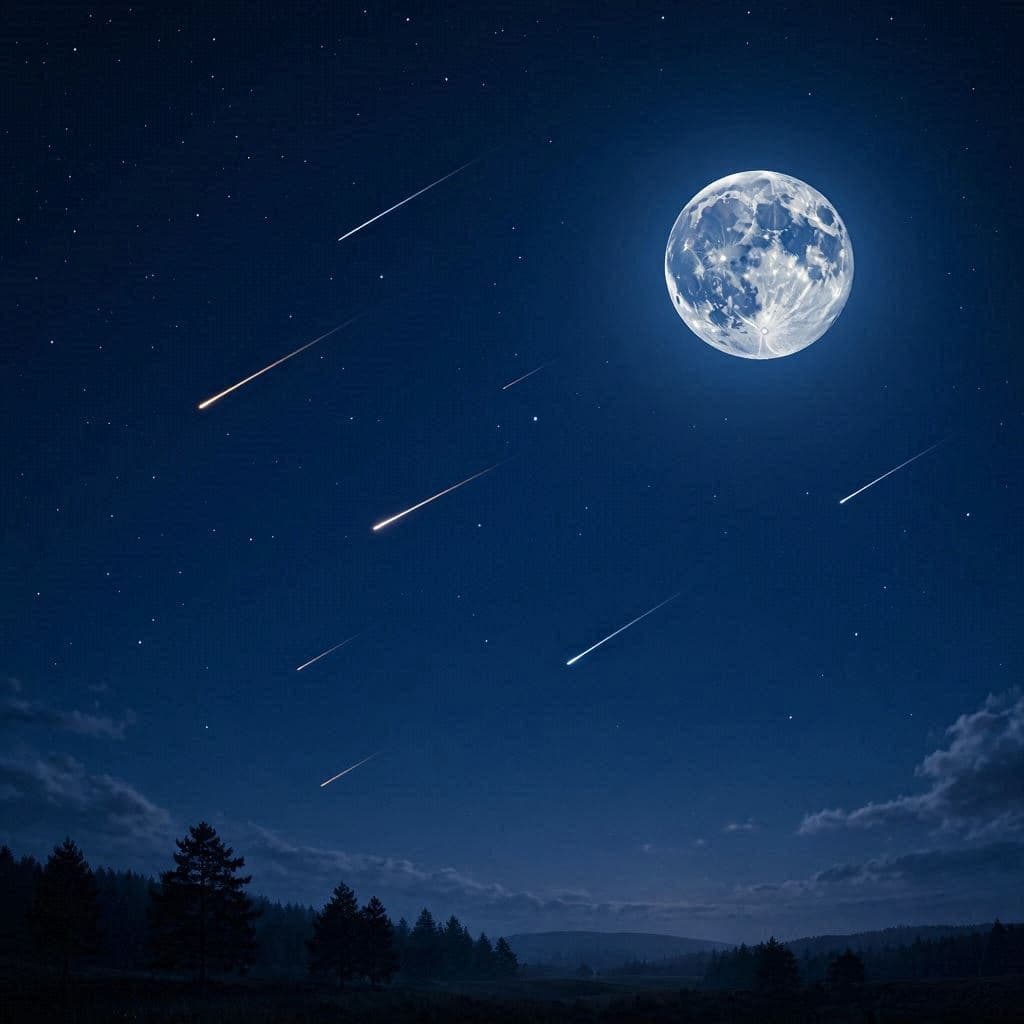
As the summer nights grow longer and warmer, the sky above offers a celestial display that has fascinated humanity for centuries. This week, two meteor showers—the Southern Delta Aquariids and the Alpha Capricornids—are set to peak, creating a potential spectacle for stargazers. Although the bright Full Buck Moon may compete for attention, the promise of shooting stars remains a compelling reason to look up.
These annual events are caused by Earth passing through streams of debris left behind by comets. Each streak of light is a tiny particle burning up in the atmosphere, a fleeting moment of beauty in the vastness of space. For those willing to venture away from city lights, the night sky promises a show of cosmic proportions.
Body: The Southern Delta Aquariids, known for their steady and moderate activity, are expected to produce up to 25 meteors per hour at their peak. They are best viewed from the Southern Hemisphere but are still visible from northern latitudes. The shower is associated with Comet 96P/Machholz, and its meteors are often characterized by their slow speed and persistent trails.
Simultaneously, the Alpha Capricornids, though less prolific, are famous for their bright fireballs. These slower-moving meteors can be particularly striking, often leaving glowing trains that linger in the sky. The combination of these two showers creates a unique opportunity for observers to see a variety of meteor types.
The peak activity is predicted for the nights of July 30 and 31, 2026. However, the presence of the Full Buck Moon will significantly impact visibility. Moonlight can wash out fainter meteors, so viewers are advised to look for the brighter fireballs or wait until the moon has set in the early morning hours for the best experience.
Viewing tips include finding a dark location with a clear view of the southern sky. Lying down on a blanket and allowing eyes to adjust to the darkness for at least 20 minutes can enhance the chances of spotting meteors. Patience is key, as meteor showers are unpredictable and often require time to reveal their beauty.
For photographers, capturing meteors during a full moon is challenging but not impossible. Using wide-angle lenses and long exposures can help capture the brighter trails. The contrast between the moonlit landscape and the sudden streak of a meteor can create stunning images.
Community groups and astronomy clubs often organize viewing parties, providing equipment and expertise to help newcomers enjoy the event. These gatherings foster a sense of community and shared wonder, making the experience more enjoyable and educational.
The scientific value of observing meteor showers extends beyond aesthetics. Data collected by amateur and professional astronomers helps researchers understand the composition of comets and the dynamics of our solar system. Each observation contributes to a broader understanding of our cosmic neighborhood.
As the week progresses, the intensity of the showers will gradually decrease, but the memory of the display will linger. It serves as a gentle reminder of the dynamic and ever-changing nature of the universe we inhabit.
Closing: The peak of the Southern Delta Aquariids and Alpha Capricornids is a gift of the summer sky. Despite the moon’s glare, it invites us to pause, look up, and appreciate the timeless beauty of the cosmos.
AI Image Disclaimer: The visuals in this article are AI-generated illustrations designed to reflect the beauty of meteor showers and the night sky.
Sources: National Geographic New York Post EarthSky Farmers' Almanac
Published by Banx Network. This article is part of the Banx decentralized media programme, powered by the BXE token on the XRP Ledger.