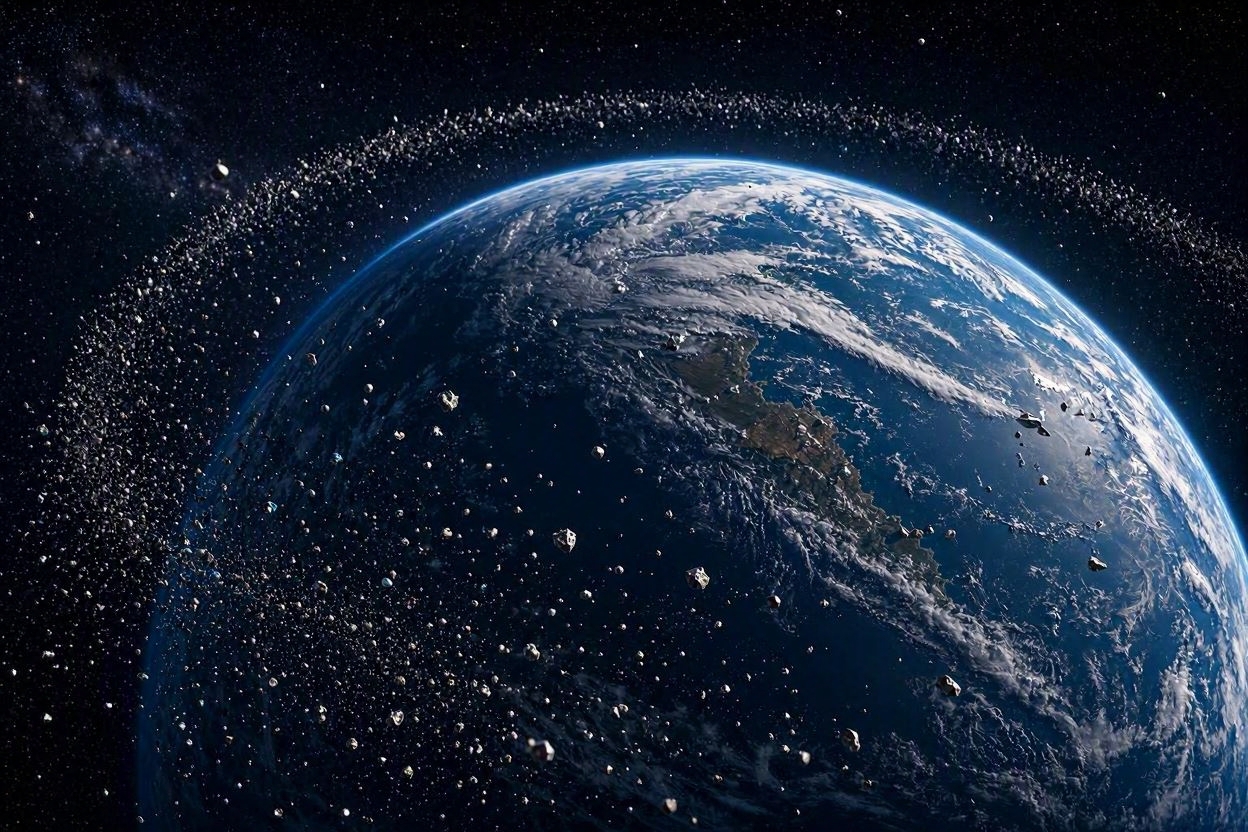
Above our heads, a silent crisis is unfolding in the vacuum of space. As humanity launches thousands of satellites into orbit, the region surrounding Earth is becoming increasingly crowded with debris, creating a hazardous environment for future exploration. The concept of "closing the space gap" refers to the urgent need to address this growing problem of orbital congestion, ensuring that the skies remain safe for communication, navigation, and scientific discovery. It is a challenge that requires global cooperation and innovative technology.
Recent reports indicate that the number of tracked objects in orbit has surged, with defunct satellites and rocket fragments posing significant collision risks. Even tiny pieces of debris, traveling at high speeds, can cause catastrophic damage to operational spacecraft. The risk is not limited to space; as more objects re-enter the atmosphere, there is a growing concern about debris falling through airspace, potentially endangering people and property on the ground. This dual threat highlights the interconnectedness of our activities in space and their impact on Earth.
Efforts to mitigate this issue are gaining momentum. Agencies like the European Space Agency (ESA) are releasing detailed environment reports that highlight the rising casualty risk from uncontrolled reentries. These documents serve as a call to action, urging governments and private companies to adopt stricter guidelines for satellite disposal and debris management. The goal is to create a sustainable space economy where the benefits of orbital infrastructure do not come at the cost of long-term safety.
Technological solutions are also emerging. Startups and established aerospace firms are developing methods to track smaller debris, design satellites that de-orbit safely, and even actively remove junk from orbit. These initiatives represent a shift from passive observation to active stewardship. By treating space as a shared resource that requires maintenance, we can prevent the Kessler syndrome, a scenario where collisions create a cascade of debris that renders orbit unusable.
The economic implications are significant. As space becomes more accessible, the cost of insurance and risk management for satellite operators is rising. Cleaning up space junk is no longer just an environmental concern but a business opportunity. Companies are betting that debris removal and sustainable design will become lucrative sectors, driving innovation in materials science and robotics. This market-driven approach may accelerate the adoption of best practices.
For the public, the issue of space debris may seem distant, but its effects are tangible. Disruptions to GPS, weather forecasting, and internet services can result from collisions or interference. Protecting the orbital environment is essential for maintaining the modern conveniences we rely on daily. It is a reminder that our technological progress depends on the health of the systems that support it.
International collaboration is key to closing the space gap. No single nation can solve this problem alone, as debris knows no borders. Treaties and agreements are being discussed to establish common standards for launch and disposal. By working together, the global community can ensure that space remains a frontier for exploration rather than a graveyard of forgotten technology.
In the end, closing the space gap is about responsibility. It is a recognition that our reach into the cosmos must be matched by our care for the environment we create there. By acting now, we can preserve the stars for future generations, ensuring that the sky remains a place of wonder and possibility.
AI Image Disclaimer: The images accompanying this article are AI-generated artistic interpretations of space debris and orbital mechanics, not actual photographs of specific satellites or debris fields.
Published by Banx Network. This article is part of the Banx decentralized media programme, powered by the BXE token on the XRP Ledger.