In the quiet prelude to the trading week, markets often move with the ease of a slow current — but recent geopolitical waves have stirred that stillness into disruption. Across global financial centres, stock markets slipped as investors grappled with renewed tensions between the United States and Europe linked to tariff threats and a high‑stakes dispute over Greenland. This clash — part diplomatic, part economic — has rippled through equities and safe‑haven assets alike, reminding markets how swiftly policy feuds can translate into financial volatility.
The spark for market jitters has been U.S. President Donald Trump’s renewed tariff threats against several European NATO allies unless they acquiesce to U.S. pressure over Greenland — a vast Arctic territory of strategic and resource interest. Trump floated the possibility of imposing tariffs starting at 10% in February and rising to 25% by June on goods from Denmark, Norway, Sweden, France, Germany, the Netherlands, Finland and the UK if an agreement tied to Greenland isn’t reached.
With this backdrop, European stock markets declined sharply. The pan‑European STOXX 600 index, along with key national benchmarks such as France’s CAC 40, Germany’s DAX and the UK’s FTSE 100, all registered falls as investors reassessed risk amid worsening policy rhetoric. Major exporters — including luxury brands and automakers — took some of the deepest hits, reflecting their exposure to transatlantic trade flows.
Globally the mood turned cautious even as U.S. markets were closed for the Martin Luther King Jr. Day holiday, with stock futures in the U.S. sliding in reaction to the tariff news. Asian markets were also pressured, and safe‑haven assets like gold and silver surged to record levels as some investors sought refuge from equity risk.
This risk‑off tilt underscores how quickly trade policy rhetoric can alter investor psychology. Tariffs — traditionally an economic tool — carry geopolitical overtones in this case, complicating Europe‑U.S. relations that have, until now, been anchored in allied cooperation. European leaders have openly criticised the tariff stance, calling it coercive, which further feeds uncertainty.
In financial markets, uncertainty often becomes its own force. When the prospect of higher barriers to trade rises, corporate earnings expectations can be trimmed, cross‑border supply chains recalibrated, and capital flows reallocated toward assets perceived as safer. The result, as seen this week, is equity weakness, heightened demand for precious metals, and tempered risk appetite.
For now, analysts emphasise that these moves reflect sentiment amidst political posturing rather than confirmed policy implementation. Still, the ripple effects are real: investors are recalibrating portfolios, traders are hedging against potential tariff escalations, and markets are bracing for weeks of geopolitical and economic news that could amplify volatility.
AI Image Disclaimer
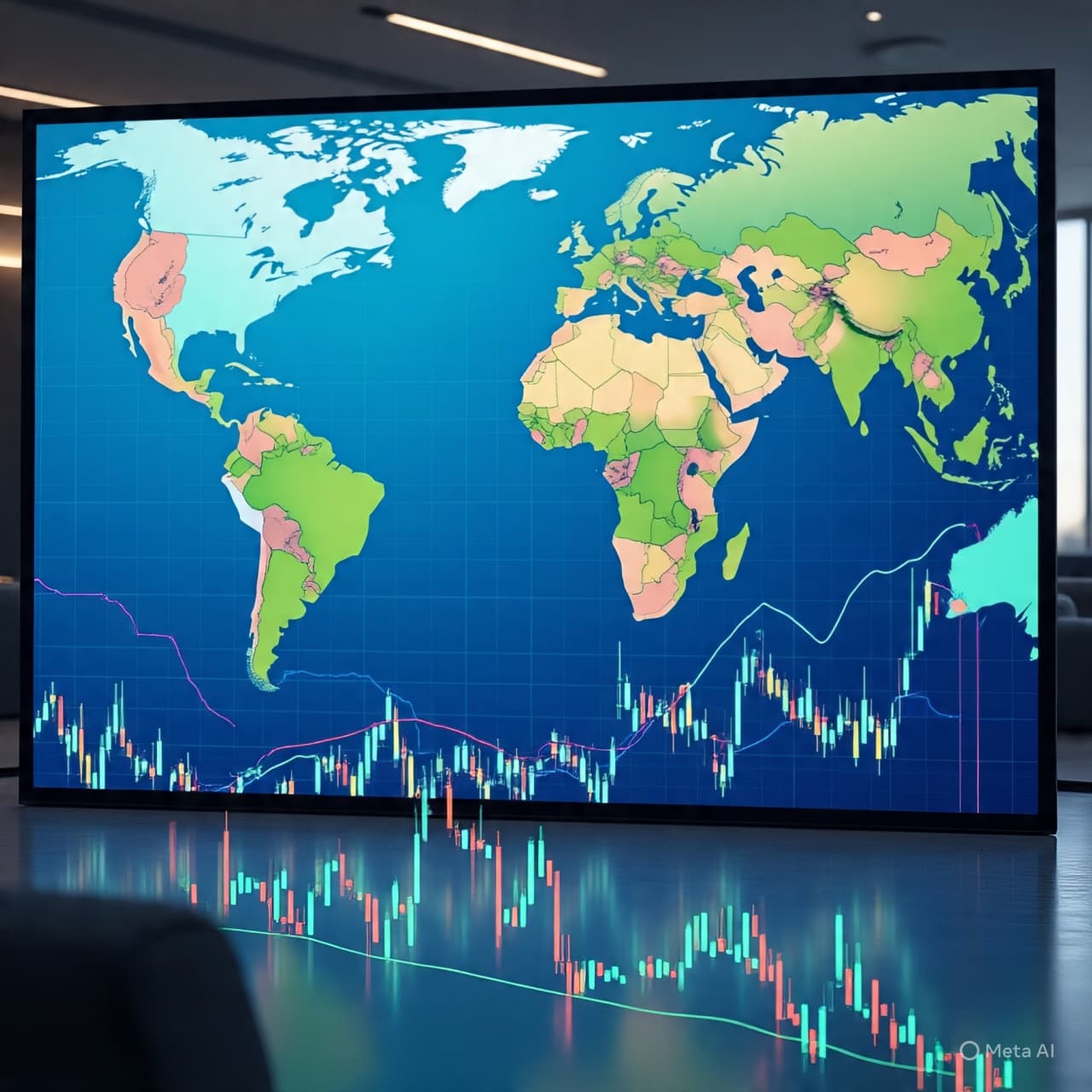
Visuals are created with AI tools and are not real photographs, meant for conceptual illustration only.
Published by Banx Network. This article is part of the Banx decentralized media programme, powered by the BXE token on the XRP Ledger.