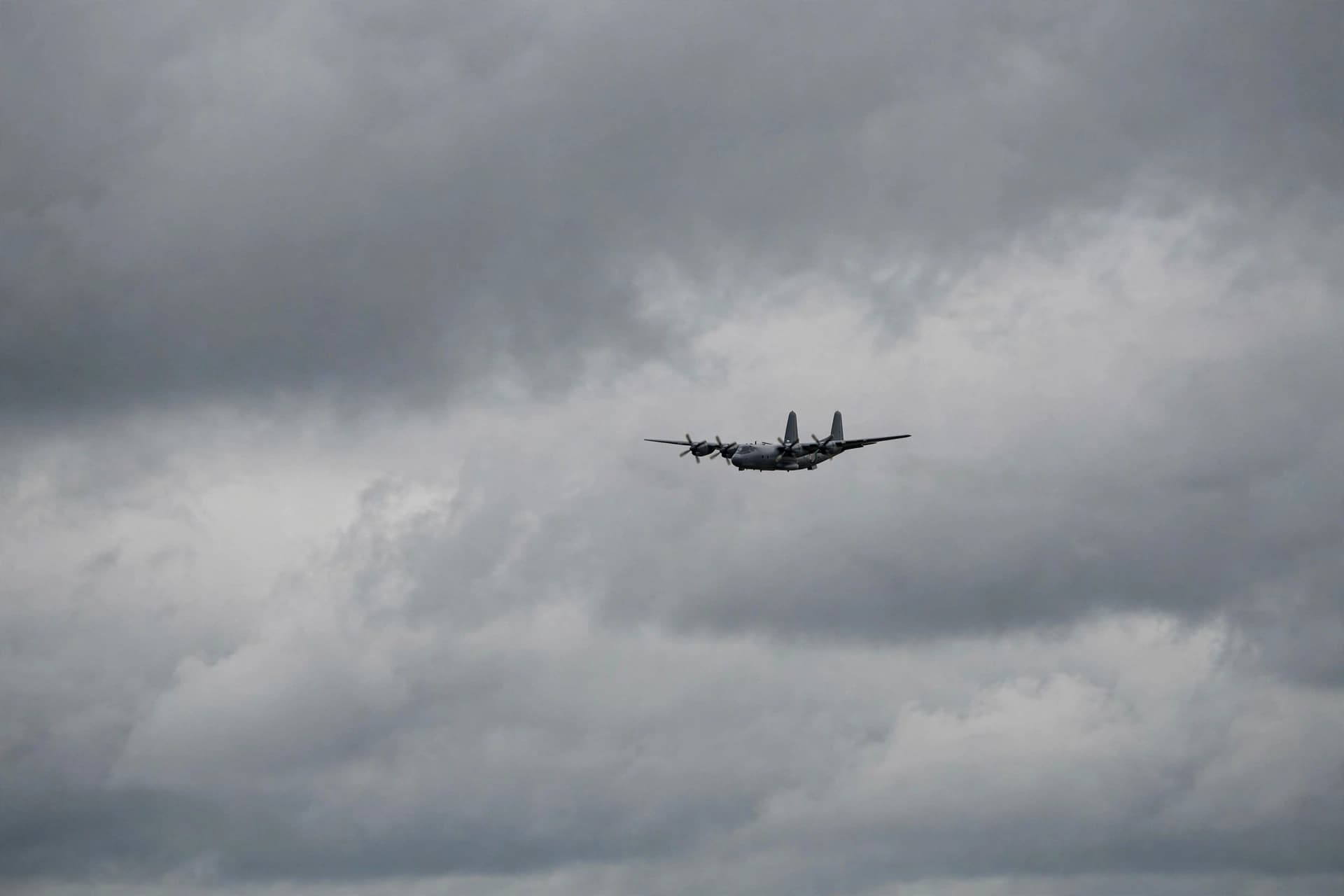
There is a particular stillness that follows the fall of something built to fly far and carry much. The Tu-95, with its distinctive swept wings and four turboprop engines, has been a fixture of Russian military aviation since the Cold War, a machine designed for endurance and reach. On Tuesday, one such aircraft went down during a routine training mission in Russia’s far east, killing six crew members and leaving a seventh hospitalized. The bomber carried no weapons, the Defense Ministry said, a detail that does nothing to soften the fact of six lives ended in an unpopulated stretch of the Amur region .
The crash occurred near the village of Krasnoyarovo, close to the Zeya River and not far from the Chinese border. Regional authorities stated that the pilots “did all they could to steer the plane away from residential buildings,” a final act of professional attention in circumstances that left no room for survival . Video footage circulating on Russian media appeared to show the bomber flying at extremely low altitude with a visible bank before a flash of explosion behind the treeline. The aircraft was not carrying ammunition, and the fire that followed the impact likely consumed fuel tanks rather than ordnance .
A team of investigators has been dispatched to the crash site, and the Aerospace Forces have opened an inquiry into the cause. The Russian Defense Ministry has not offered preliminary theories, and in the absence of a flight data recorder analysis or survivor testimony beyond the single injured crew member, the circumstances remain opaque . What is known is that the aircraft was on a training flight, not a combat sortie, and that mechanical failure, human error, or some combination of the two now becomes the subject of formal scrutiny.
The Tu-95 occupies a peculiar place in military aviation: it is simultaneously an artifact of mid-twentieth-century design and an active component of Russia’s current strategic posture. During the ongoing war in Ukraine, these bombers have been used regularly to launch conventionally armed cruise missiles, their long range allowing strikes from positions far from Ukrainian air defenses . In June 2025, Ukraine’s “Spiderweb” operation used drones launched covertly from trucks to damage or destroy several Tu-95s at air bases across Russia, an attack that highlighted the vulnerability of even strategic assets when parked in the open .
The loss of a single Tu-95 in a training accident is not militarily significant in isolation. Russia possesses a limited but not negligible fleet of these aircraft, and their operational tempo has already been affected by combat losses and the Spiderweb attack. Yet each crash of a strategic platform carries implications beyond the immediate toll: it raises questions about maintenance, crew training, and the wear that accumulated missions impose on aging airframes. The Tu-95 has served for decades because it works, but longevity has its costs.
For the families of the six crew members, the geopolitical dimension of the aircraft is irrelevant. What matters is the ordinary grief of lives ended abruptly in a remote landscape. The lone survivor was evacuated to a hospital, and the investigation will proceed at the pace that such inquiries always do: methodically, quietly, with findings that may or may not be made public. In the meantime, the Tu-95 fleet continues its missions, and the Amur region returns to its usual silence.
---
AI Image Disclaimer: All visuals included with this article were created by AI and are not photographs of the actual event.
Sources: The Associated Press, Petra News Agency, Yonhap News Agency, Rossiyskaya Gazeta
Published by Banx Network. This article is part of the Banx decentralized media programme, powered by the BXE token on the XRP Ledger.