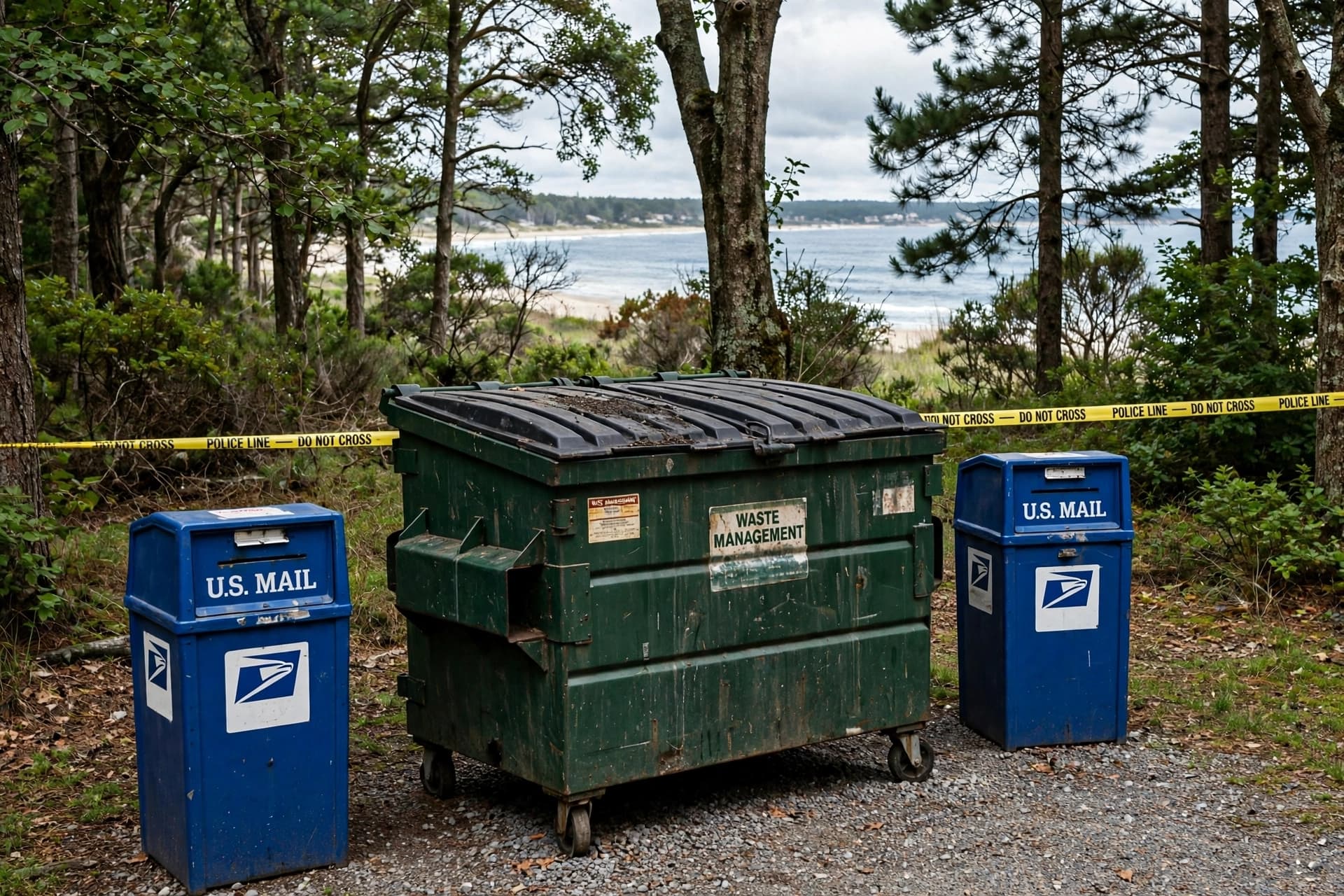
Golden Gardens Park sits at the northwestern edge of Seattle, where the land meets Puget Sound and the wind carries salt and the smell of low tide. It is a place for picnics and sunsets, for dogs running on the beach and families watching the water. This week, it was also a place where someone discarded two bins of stolen mail, and inside those bins were 92 ballots that had been sent to voters and never reached them. King County Elections confirmed the discovery after a voter called to report it. The ballots were undelivered, unvoted, and already reissued to the people whose names appeared on the envelopes .
The incident is being investigated by the U.S. Postal Inspection Service, which handles mail theft. King County Elections chief of staff Kendall Hodson said the office hears about a handful of similar incidents each election cycle—stolen mail, ballots tossed aside, the paper trail of a crime that was not aimed at democracy but at whatever else the thief thought the envelopes might contain. "What we consistently hear from our partners in law enforcement, and is evidenced by the fact they were left behind, is that ballots are typically not the target in mail theft," Hodson said .
There is a particular unease that settles over a story like this, even when the facts are reassuring. The ballots were not used. They were not counted. They were found and reported, and the voters who never received them have already been sent replacements. The signature verification system that King County uses means that even if someone had tried to fill out and return one of those ballots, it would have been rejected at the processing stage . The machinery of election security, in this case, did what it was designed to do.
But the image lingers: a dumpster at a park, bins of mail, the intimate contents of people's lives mixed with discarded paper. Mail theft is not typically an act of political sabotage. It is an act of opportunism, a crime of quick hands and quick exits, and the ballots are collateral damage. The fact that they were left behind, rather than used or sold, supports the conclusion that whoever took the mail was not looking for votes .
Seattle Police checked 26 trash bins in two parking lots after the discovery and found no additional ballots. The investigation continues, but the immediate crisis has passed. Voters who have not received their ballots are being asked to call King County Elections or request replacements online. Those who find discarded ballots are asked to photograph the envelopes and send the images to the elections office, a small act of civic diligence that helps investigators understand the scope of the theft .
Elections are an act of faith as much as a system of rules. The faith is that the ballot you cast will be counted, that the envelope you seal will reach its destination, that the machinery will hold. When that faith is interrupted—even by something as mundane as mail theft—it is worth acknowledging. The system worked. The ballots were replaced. But the dumpster at Golden Gardens is a reminder that the chain of custody for a democracy runs through places no one thinks to guard.
The investigation is ongoing. The voters have their replacements. The park, by the water, continues to be what it was before the bins were found there.
---
AI Image Disclaimer: Visuals in this article were generated by artificial intelligence and are not photographs of the actual incident.
Sources: The Seattle Times, King County Elections, FOX 13 Seattle, MyNorthwest.com
Published by Banx Network. This article is part of the Banx decentralized media programme, powered by the BXE token on the XRP Ledger.