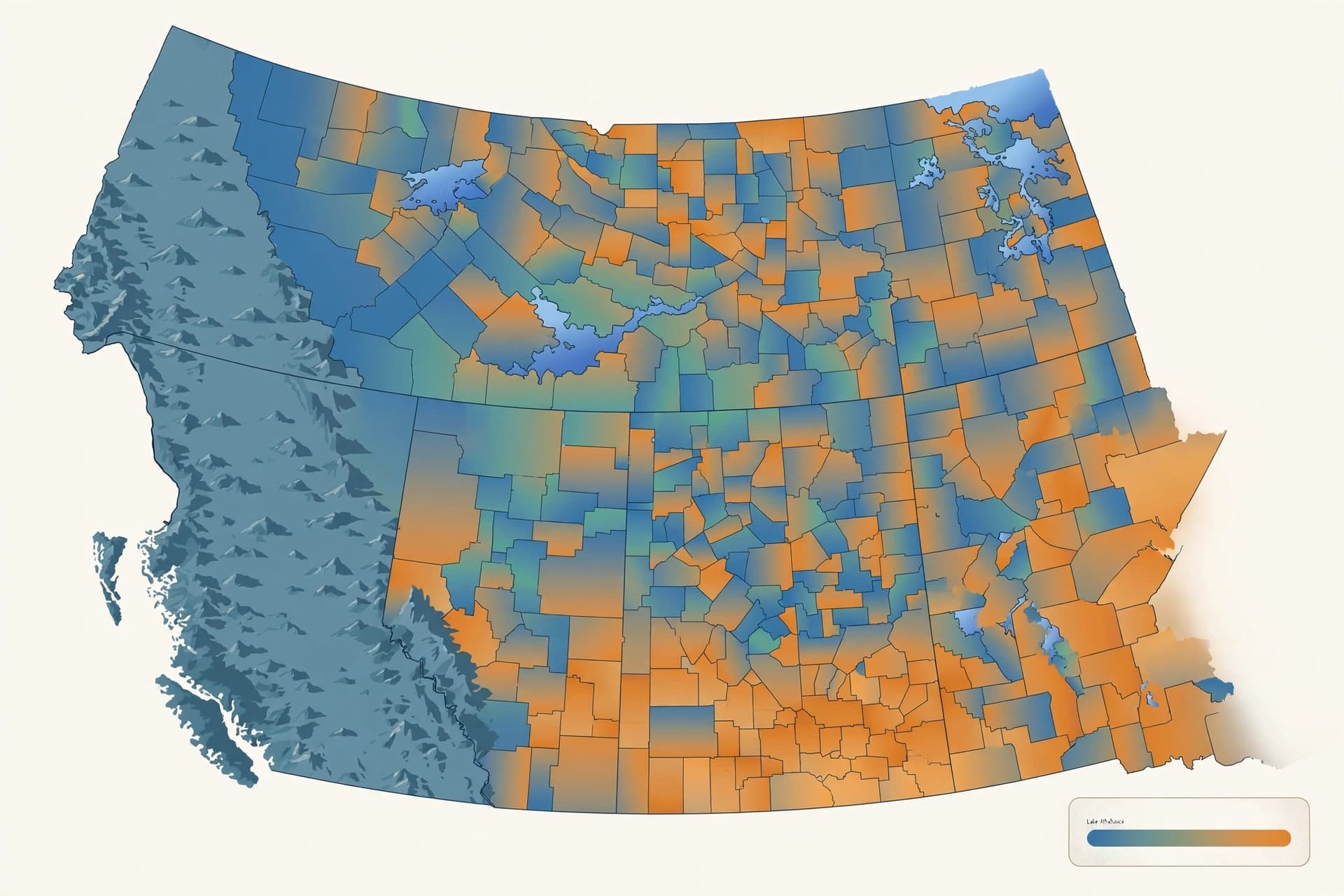
A map is a peculiar thing. It can show the shape of a province, the lines of its roads, the sprawl of its cities. But when the map is colored by votes, it becomes something else entirely—a portrait of a place's divisions and its common ground, its urgencies and its hesitations. In the aftermath of Alberta's referendum, the maps tell a story that is both familiar and newly sharpened: the cities and the countryside did not see the same question in the same way.
On the tenth question—whether Alberta should remain a province of Canada or pursue a binding referendum on separation—the divide was stark. Edmonton showed the strongest preference for remaining, with more than 85 percent of votes cast for Option 1 and just under 15 percent for Option 2. Calgary was less lopsided but still clear, with 82 percent choosing to remain . Across the province, more than 1.4 million Albertans voted to stay in Canada, while more than 480,000 supported a referendum on separation .
The rural map tells a different story, though not a uniform one. Option 2 was most popular in rural ridings—generally in the northwestern, central, and southern parts of the province—but only two ridings produced a majority for separation. Rimbey-Rocky Mountain House-Sundre voted 51.1 percent for Option 2, and Central Peace-Notley voted 50.4 percent . Even in Premier Danielle Smith's riding of Brooks-Medicine Hat, Option 1 prevailed, 13,934 to 8,126 .
Lori Williams, a political science professor at Mount Royal University, cautioned against reading the rural vote as an endorsement of separation. According to polling, she said, those who voted for or planned to vote for Option 2 were mostly wanting to send Ottawa a message, not necessarily wanting to leave. "Because of the ambivalence involved in it, it wasn't necessarily a separation endorsement, but rather an improvement in the relationship," she said . The closer results in a handful of rural ridings reflect a desire to be heard, not a mandate to depart.
The other nine questions on the ballot revealed a similar geographic pattern. In Edmonton, a majority of voters rejected all nine proposals. In Calgary, a majority voted against them all except for the citizenship proposal, which would make proof of citizenship mandatory at provincial election polls. In midsize cities like Red Deer, Lethbridge, and Medicine Hat, majorities endorsed seven of the nine. In rural Alberta, support for all nine questions surpassed 60 percent . The questions ranged from immigration control to constitutional amendments, and their mixed reception suggests that even where the province agrees on the need for change, it does not agree on what that change should look like.
The separation question itself—Question 10—was structured not as a vote on leaving but as a vote on whether to hold a future binding referendum. This distinction matters. A vote for Option 2 was not a vote to separate; it was a vote to create the mechanism by which separation could later be decided. The nuance was lost in some of the rhetoric surrounding the campaign, but the maps make it visible: a province that is talking to itself about its future, not yet ready to make a final decision.
The referendum results are unofficial until certified, but the shape they describe is unlikely to change. Alberta remains a province of Canada, and the conversation about its place within the federation continues—carried now in the language of maps and margins, urban and rural, close votes and clear ones.
AI Image Disclaimer: Visuals in this article were created by artificial intelligence and are not actual photographs of the referendum or its participants.
Sources: Edmonton Sun, Edmonton Journal, The Globe and Mail, CTV News
Published by Banx Network. This article is part of the Banx decentralized media programme, powered by the BXE token on the XRP Ledger.