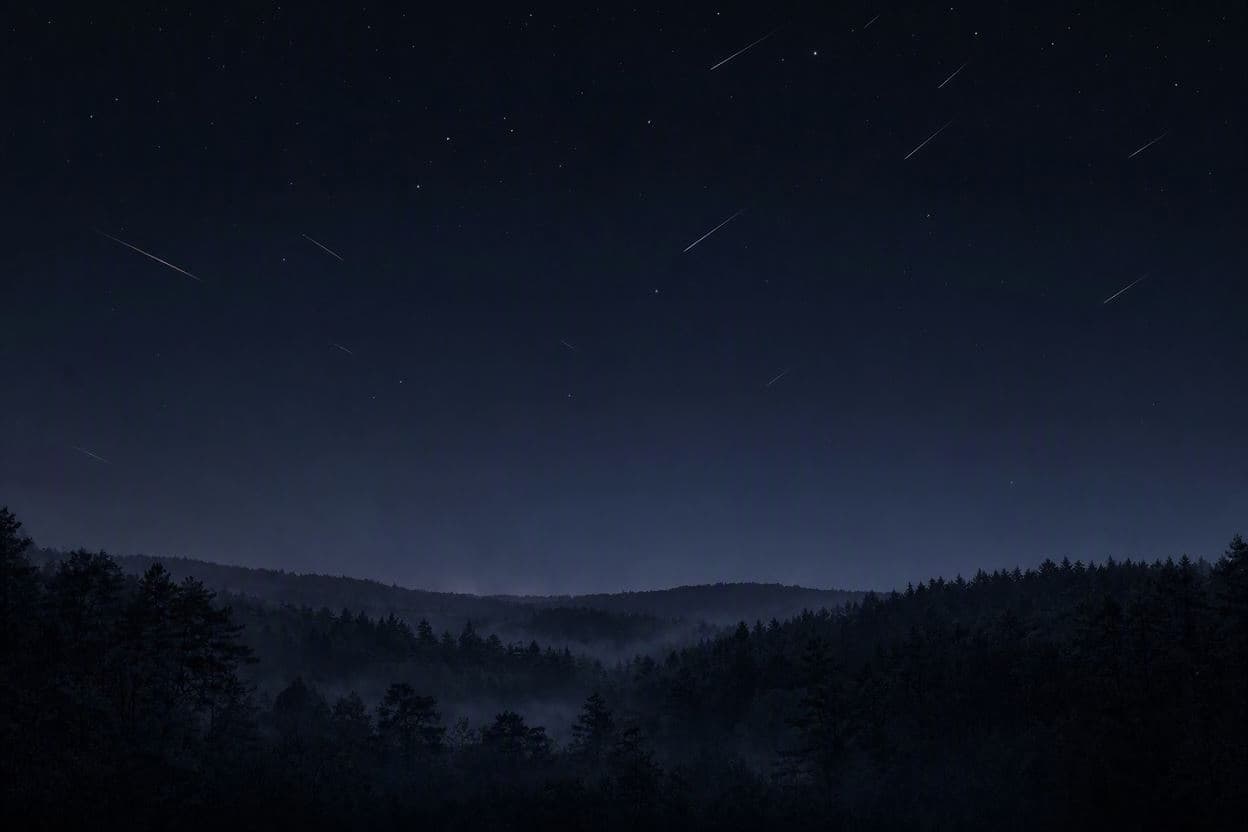
As the summer warmth begins to yield to the crisp anticipation of autumn, the night sky offers a fleeting yet profound spectacle. The Aurigids meteor shower, a celestial event that arrives with the turning of the calendar to September, invites observers to look upward and reflect on the vast, rhythmic dance of our solar system. It is a gentle reminder that even in our busy lives, there are moments of quiet wonder waiting just above the horizon, visible to those who take the time to pause and watch.
This annual phenomenon is not merely a display of light but a connection to the cosmic debris left behind by comets long past. As Earth passes through these trails of dust and ice, tiny particles burn up in our atmosphere, creating streaks of light that vanish as quickly as they appear. In their brevity, they offer a metaphor for the transient beauty of nature, urging us to appreciate the present moment before it slips away into memory.
The Aurigids are known for their unpredictability, often varying in intensity from year to year. Unlike some of the more reliable showers, such as the Perseids in August, the Aurigids can surprise observers with sudden bursts of activity or remain subtly shy. This element of uncertainty adds to their charm, encouraging stargazers to be patient and persistent. The peak activity typically occurs in the early hours of September 1st, offering a serene backdrop to the transition between months.
Originating from the comet Kiess, which has an orbital period of thousands of years, the meteors enter the atmosphere at high speeds. When they collide with air molecules, they ionize the gas around them, creating the glowing trails we see. While most particles are no larger than a grain of sand, their kinetic energy is sufficient to produce bright flashes against the dark canvas of the night. This process, though violent on a microscopic scale, appears graceful and silent from our vantage point on the ground.
Observing the Aurigids requires minimal equipment, making it an accessible experience for people of all ages. A clear view of the sky, away from the glare of city lights, is the primary requirement. Lie back, let your eyes adjust to the darkness, and scan the constellation of Auriga, the Charioteer, from which the meteors appear to radiate. The simplicity of the act connects us to generations of ancestors who also looked up in awe, seeking meaning in the stars.
For astronomers, the shower provides valuable data about the composition of cometary material and the dynamics of interplanetary dust. Each meteor observed contributes to a broader understanding of our solar system’s history. Yet, for the casual observer, the scientific details are secondary to the emotional experience. The sight of a shooting star often evokes a sense of hope or a wish, a cultural tradition that persists despite our growing knowledge of the physics involved.
In a world increasingly dominated by digital screens and artificial light, the meteor shower serves as a natural counterpoint. It reminds us of the enduring presence of the cosmos, unaffected by human affairs. Taking time to witness this event can be a form of mindfulness, grounding us in the larger reality of the universe. It is a shared human experience that transcends borders and languages, uniting viewers under the same sky.
As the shower peaks, it marks the beginning of a new season, both astronomically and culturally. September is often associated with renewal and preparation, and the Aurigids set a contemplative tone for the weeks ahead. They invite us to slow down, breathe deeply, and find joy in the simple act of watching the heavens.
The Aurigids meteor shower is a gentle invitation to reconnect with the natural world. As September begins, take a moment to step outside and look up. Whether you see one meteor or a dozen, the experience offers a quiet perspective on our place in the universe, reminding us that beauty often arrives unexpectedly and leaves just as quickly.
AI Image Disclaimer: Please note that any accompanying visuals for this piece are AI-generated artistic interpretations designed to capture the ethereal quality of the meteor shower, not actual photographic recordings of the event.
Sources:
• NASA Science
• American Meteor Society
• Space.com
• EarthSky
Published by Banx Network. This article is part of the Banx decentralized media programme, powered by the BXE token on the XRP Ledger.