In the quiet, wooded creeks of San Mateo County, where the rhythm of daily life often drowns out the whispers of the past, a single discovery has bridged the gap between the present and the Ice Age. A researcher, engaged in a routine geomorphological survey for the Midpeninsula Regional Open Space District, stumbled upon an object that was not merely a stone, but a relic of a lost world. The find, an intact molar from a Pacific mastodon, serves as a poignant reminder that history is not always buried deep; sometimes, it lies just beneath the surface, waiting for a keen eye to notice its significance.
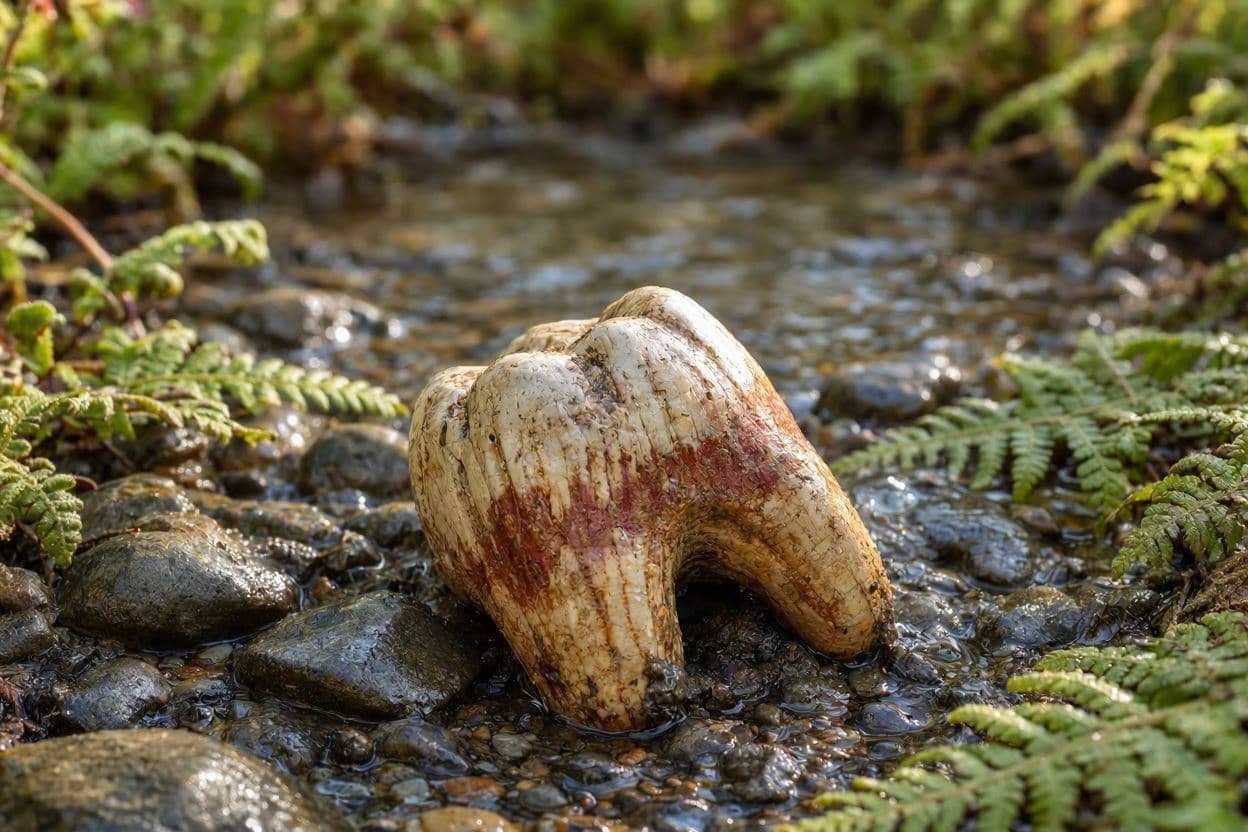
The tooth, roughly nine inches in length and in immaculate condition, was discovered in a creek bed, likely exposed by recent erosion or seasonal water flow. For the researcher, Brigid Lynch, the moment was one of sudden realization amidst the mundane tasks of fieldwork. What began as a standard assessment of landscape features transformed into a paleontological event, highlighting the serendipitous nature of scientific discovery. It is a testament to the fact that even in well-studied regions like the Bay Area, the earth still holds secrets from millennia ago.
Pacific mastodons, massive herbivores that roamed North America until their extinction around 12,000 years ago, were once common in this region. Their fossils have been found before, but each new discovery adds valuable data to our understanding of their distribution, diet, and the environmental conditions of the Late Pleistocene. This particular specimen, with its well-preserved ridges and structure, offers a tangible connection to a time when the landscape was vastly different, populated by giants that shaped the ecosystem through their grazing and movement.
The identification of the fossil was confirmed by experts, including paleontologist Wayne Thompson, who noted the rarity of finding such a complete specimen in situ. The tooth’s preservation suggests it was buried quickly after the animal’s death, protecting it from the scavengers and weathering that typically destroy bone over thousands of years. This rapid burial, perhaps due to a flood or landslide, created a time capsule that has now been reopened, offering scientists a fresh opportunity to study the biology of these extinct creatures.
For the local community and the open space district, the find underscores the importance of preserving natural habitats not just for their ecological value, but for their historical significance. These protected lands serve as archives of the past, where geological and biological histories are intertwined. The discovery encourages a deeper appreciation for the land, reminding visitors that they are walking through a landscape that has supported diverse life forms for millions of years.
The process of recovering and studying the fossil involves careful collaboration between geologists, paleontologists, and museum curators. The tooth has been donated to a local institution for further analysis, where it will be cleaned, cataloged, and potentially displayed. This transition from a muddy creek bed to a scientific collection ensures that the knowledge gained from the find is shared with the public, fostering education and wonder about the natural world.
Such accidental discoveries also highlight the role of citizen science and professional vigilance. While specialized equipment and extensive digs are common in paleontology, many significant finds occur by chance during other types of fieldwork. This intersection of disciplines enriches both fields, providing context for geological studies and new specimens for biological research. It is a reminder that science is often a collaborative and unexpected journey.
As the mastodon tooth takes its place in the scientific record, it carries with it the story of its discovery—a moment of surprise and delight in a California creek. It invites us to look closer at the world around us, to respect the depth of time embedded in the landscape, and to remain open to the surprises that the past may still offer.
AI Image Disclaimer: The visual representations accompanying this article are AI-generated illustrations designed to evoke the atmosphere of the discovery and are not actual photographs of the fossil site.
Sources: ABC7 News The Guardian Fox Weather
Published by Banx Network. This article is part of the Banx decentralized media programme, powered by the BXE token on the XRP Ledger.