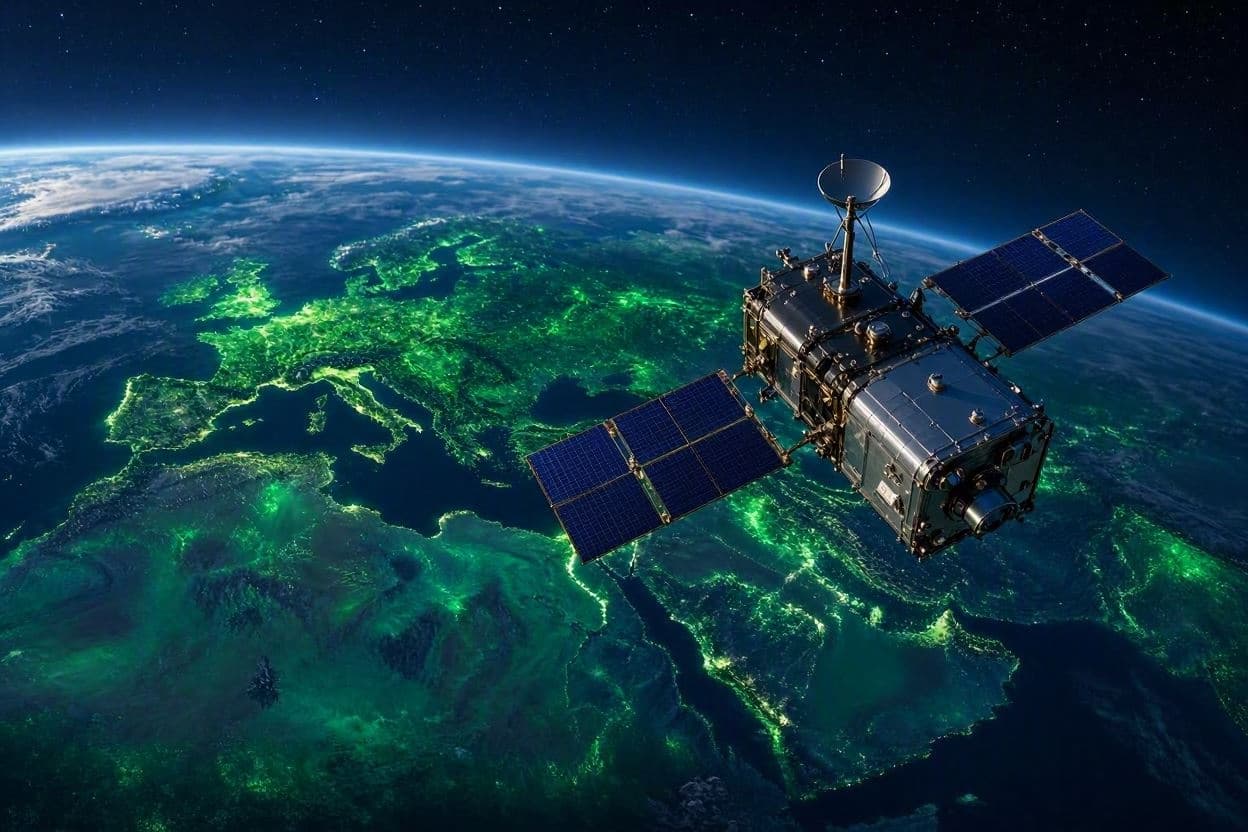
High above the Earth, a new eye has opened to watch the quiet, vital work of photosynthesis. The European Space Agency’s FLuorescence EXplorer (FLEX) satellite, launched in September 2026, now orbits our planet, tasked with measuring the faint glow emitted by plants as they convert sunlight into energy. This mission marks a significant leap in our ability to monitor global vegetation health, offering unprecedented insights into how ecosystems are responding to the pressures of a changing climate.
Plants emit a tiny amount of light, known as solar-induced chlorophyll fluorescence, during the process of photosynthesis. While invisible to the human eye, this signal is a direct indicator of plant productivity and stress. FLEX’s highly sensitive instruments can detect this glow from space, allowing scientists to map photosynthetic activity on a global scale. This data provides a real-time view of how plants are coping with heat, drought, and other environmental stressors, filling a critical gap in our understanding of the carbon cycle.
The launch of FLEX, riding alongside the Sentinel-3C satellite, represents the culmination of years of planning and technological development. By flying in tandem with Sentinel-3, FLEX can combine its fluorescence data with other observations, such as land surface temperature and vegetation indices. This synergy enhances the accuracy of the measurements, providing a more comprehensive picture of ecosystem dynamics. It is a collaborative effort that leverages the strengths of multiple missions to achieve a common goal.
For agriculture, the implications are profound. Farmers and policymakers can use FLEX data to monitor crop health, predict yields, and manage resources more efficiently. In regions facing water scarcity or extreme weather, this information can help identify vulnerable areas and guide intervention strategies. It offers a tool for enhancing food security, ensuring that agricultural practices are adapted to the realities of a warming world.
Beyond agriculture, FLEX contributes to our understanding of the global carbon cycle. Plants play a crucial role in absorbing carbon dioxide from the atmosphere, mitigating the effects of greenhouse gas emissions. By accurately measuring photosynthetic activity, scientists can better estimate how much carbon is being sequestered by different ecosystems. This knowledge is essential for refining climate models and predicting future atmospheric conditions.
The mission also highlights the importance of international cooperation in space exploration. ESA’s investment in FLEX reflects a commitment to addressing global challenges through scientific innovation. Data from the satellite will be made available to researchers worldwide, fostering collaboration and accelerating progress in environmental science. It is a shared resource for a shared planet.
As FLEX begins its operational phase, the scientific community eagerly awaits the first detailed maps of global fluorescence. These images will reveal patterns and trends that were previously hidden, offering new perspectives on the resilience of nature. They will serve as a baseline for monitoring changes over time, helping us track the impact of climate change on vegetation.
In observing the secret glow of plants, FLEX reminds us of the intricate connections between life and light. It is a testament to human ingenuity and our desire to understand and protect the natural world. As we face the challenges of the future, such tools provide hope and guidance, illuminating the path toward a more sustainable relationship with our planet.
AI Image Disclaimer: The images accompanying this article are AI-generated artistic renderings of the satellite and its observational capabilities, not actual photographs from space.
Sources: European Space Agency (ESA) EurekAlert! EO Portal
Published by Banx Network. This article is part of the Banx decentralized media programme, powered by the BXE token on the XRP Ledger.