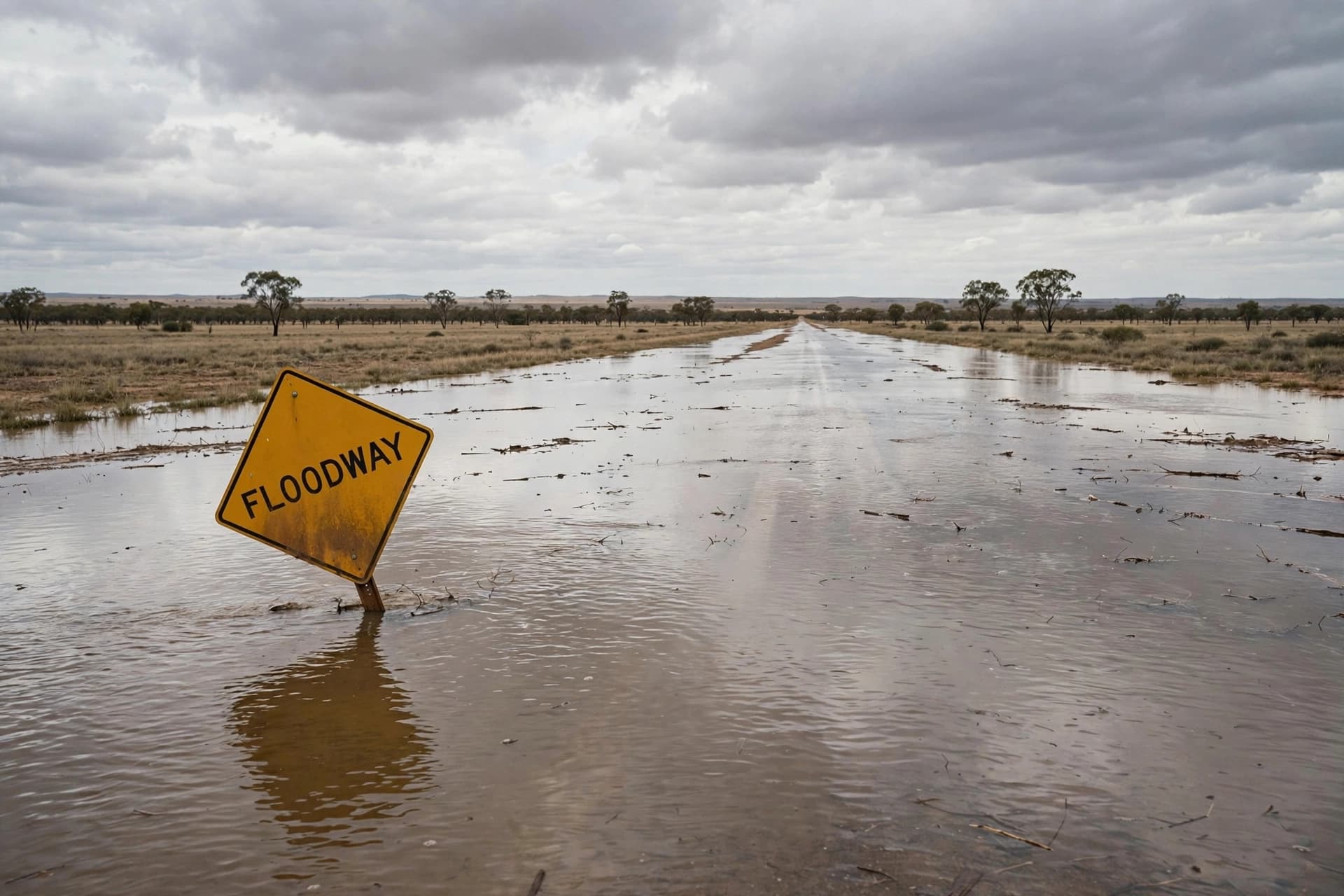
There is a particular kind of isolation that settles over a place when the road that connects it to the world simply disappears—not through abandonment, but through water. For the past two years, the Birdsville Track, one of Australia’s most iconic outback routes, has been closed for 400 days due to rain damage and flooding. Stretching more than 500 kilometers from Birdsville in south-west Queensland to Marree in far-north South Australia, the track is a lifeline for pastoralists, freight operators, and the remote businesses that depend on their traffic .
At the Marree Roadhouse, owner Lyall Oldfield has watched his business shrink to a third of its normal volume. His family has been in the town since 1934, and in all that time, the track has never been closed for longer than a month. “It’s just dreadful what’s happening with the roads,” he said. “It’s not even a joke” .
Further north, the Mungerannie Hotel has not opened all year. New owners took over in 2023, only to find themselves unable to operate because road closures have stopped the daily water deliveries the business relies on. Co-owner Andrew Norman described a similar situation in 2025, when there was “no sort of season whatsoever.” This year, he said, they thought last year was devastating, but they didn’t know what was coming .
The closure north of Mungeranie is having the greatest impact on tourism. “Nobody’s really coming up to Mungeranie to turn around and go back,” Norman said. His hope is simple: if the road north of the hotel can be opened and the Birdsville Track restored, next year should be fine. “If the track is open, we’ll be open. But without a track, we’re not open” .
The South Australian Department for Infrastructure and Transport has been working to reopen sections of the track, but the challenges are significant. Regional road maintenance manager Juanita Chester said some northern parts of the route remain underwater, with over a kilometer of road submerged. Rebuilding the surface would require carting in enormous quantities of material, and the local pits where that material is sourced have themselves flooded. “They’re like a dam when it rains, they fill with water,” she said. “If we can’t get in there to get material, there’s very little we can do” .
The department hopes to reopen the 200-kilometer section between Marree and Mungeranie in the coming week, but the route north of Mungeranie is expected to remain closed for several more months. The assessment of scope and cost for the remaining work will require approval before it can begin, and Chester said that is unlikely in the next two months .
For the businesses along the track, the waiting is measured not in weeks but in seasons lost. The road that carries over half a billion dollars worth of stock every year, that connects remote stations to markets and tourists to the outback, remains a ribbon of water and mud. And for those who depend on it, the question is not whether it will reopen, but when—and whether they can hold on until it does.
AI Image Disclaimer: All visual content associated with this report was generated by artificial intelligence and serves illustrative purposes only, not as a documentary record of the track or businesses described.
Sources: Australian Broadcasting Corporation, OpenAustralia.org, Queensland Country Life
Published by Banx Network. This article is part of the Banx decentralized media programme, powered by the BXE token on the XRP Ledger.