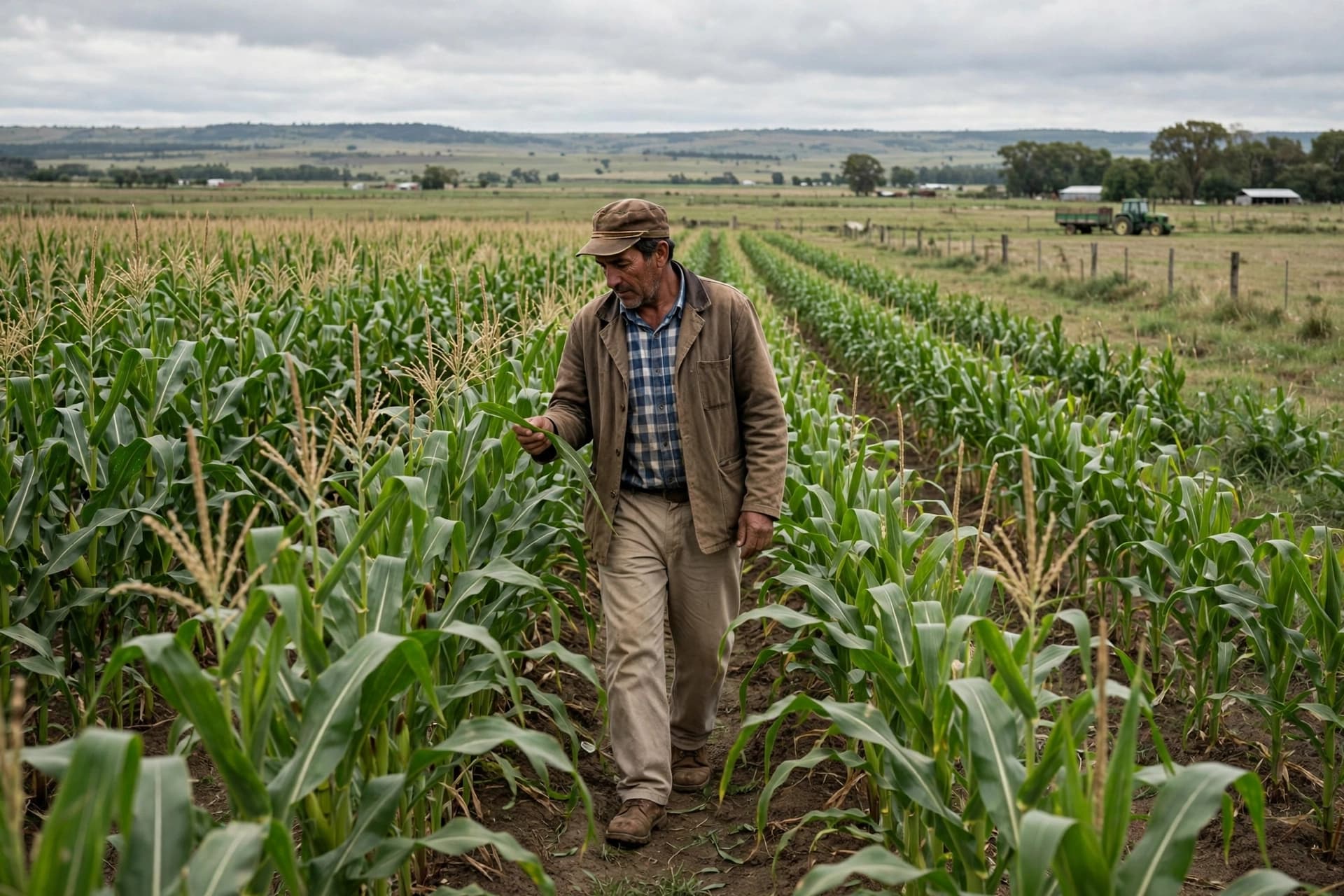
Across Argentina's agricultural heartland, the condition of a corn crop can depend on developments that are difficult to see from the roadside. Beneath the broad green rows, small insects can influence plant health, and changes in their numbers may affect how farmers prepare for the next planting season. For growers, careful monitoring is often as important as the weather itself.
Recent monitoring in Argentina has offered some encouragement regarding the corn leafhopper, known scientifically as Dalbulus maidis. The insect is a major concern because it can transmit pathogens associated with corn diseases, including corn stunt. The latest reports from the national monitoring network showed that leafhopper populations had declined across several agricultural regions during the second half of August, with changes linked in part to temperature fluctuations and cold conditions.
The decline was visible across five agroecological regions covered by the monitoring network. However, the improvement was not uniform. In parts of the northwest and northeast, as well as some areas of north-central Argentina, captures remained higher than those recorded at the same point in the previous year. That difference matters because a nationwide decline can conceal local conditions that still require attention.
For corn producers, the insect's seasonal movement is closely connected to planting decisions. Early-season crops can be particularly vulnerable when leafhoppers and the pathogens they carry are present in significant numbers. Monitoring helps farmers and agricultural advisers understand where insect populations are increasing or decreasing and assess the risks before plants enter critical stages of development.
The reports do not suggest that the threat has disappeared. Instead, they indicate that populations have retreated in many locations while remaining comparatively high in some areas where the pest is established. Agricultural specialists have therefore continued to recommend systematic surveillance, particularly as growers prepare for the early corn planting period of the 2026–2027 campaign.
Weather can influence this pattern, but it is not the only factor. Regional temperatures, crop availability, local growing conditions, and the presence of suitable plants can all affect insect populations. A change in weather may reduce numbers for a period without ensuring that they will remain low once conditions become more favorable. This is one reason agricultural monitoring continues even after a promising decline.
The stakes are economic as well as agricultural. Corn is an important crop in Argentina, serving domestic uses and contributing to the country's export economy. Disease-related losses can affect yields, increase production uncertainty, and influence the financial decisions farmers make when choosing seed, planning inputs, and determining how much land to plant.
For growers, the practical response is usually a combination of observation, timely advice, and region-specific management. Monitoring networks can provide a broader picture of pest movement, while local inspections help farmers understand what is happening in their own fields. Decisions about control measures need to reflect local conditions rather than relying solely on a national average.
The latest reports also underline the value of cooperation among producers, researchers, agricultural institutions, and extension specialists. By sharing observations and tracking changes across regions, they can identify emerging risks earlier and refine guidance as the season develops. Such systems cannot eliminate uncertainty, but they can give farmers better information when time-sensitive decisions must be made.
For now, the decline in leafhopper populations is a welcome development for Argentina's corn outlook, but it is not a guarantee of an uncomplicated season. Some regions continue to face elevated risks, and populations may change as weather and crop conditions evolve. The next planting campaign will depend on a familiar combination of careful observation, timely decisions, and the willingness to respond to what the fields reveal.
### AI Image Disclaimer
The accompanying AI-generated images illustrate corn farming and crop monitoring in Argentina. They do not represent actual monitoring plots or verified photographs of leafhopper populations.
### Sources
National Corn Leafhopper Monitoring Network of Argentina Estación Experimental Agroindustrial Obispo Colombres Maizar Buenos Aires Times
Published by Banx Network. This article is part of the Banx decentralized media programme, powered by the BXE token on the XRP Ledger.