Munich-based RobCo has emerged as one of the German companies seeking to bring more flexible automation into industrial settings. In October 2026, the robotics startup announced that it had reached a valuation of $1 billion following a transaction involving the sale of existing shares. The milestone places the company among a growing group of European technology businesses attracting substantial investment in advanced robotics.
The valuation follows a period of fundraising and business development. RobCo raised $100 million in January and secured an additional $40 million in the latest transaction, according to Reuters. The company has received backing from investors including Sequoia and Lightspeed Venture Partners, while newer participants have joined the latest deal. Such support reflects investor interest in technologies that can help manufacturers automate work without requiring every production process to be redesigned from the ground up.
RobCo's approach focuses on industrial robotics designed to perform practical tasks in manufacturing environments. Its business is part of a wider movement toward automation systems that can be adapted to different jobs and production requirements. Rather than treating robotics as a technology reserved for the largest factories, companies in this field are working to make automated equipment more accessible to a broader range of industrial customers.
The company is also looking beyond its home market. Chief Executive Roman Hölzl has relocated to the United States to concentrate on what RobCo describes as its fastest-growing market. The move illustrates the importance of American demand for European technology companies seeking to grow internationally, particularly in sectors where industrial investment and automation requirements can vary considerably between regions.
Yet international expansion does not mean abandoning the company's German foundation. RobCo plans to retain core manufacturing operations in Germany while undertaking some production for the US market in Austin, Texas. The arrangement offers a way to remain connected to the engineering expertise developed at home while moving closer to customers across the Atlantic.
The business opportunity is substantial, but the challenges are equally practical. Industrial customers need machines that operate reliably, integrate with existing equipment, and justify their cost over time. A successful demonstration is only the beginning; robotics companies must also provide maintenance, technical support, and systems that can adapt as a customer's production needs change.
The company's valuation therefore represents investor expectations rather than a guarantee of future results. To sustain its momentum, RobCo will need to translate financial backing into wider adoption, dependable products, and revenue that can support continued development. It must also compete in a global field where established automation suppliers and newer robotics companies are investing heavily in their own capabilities.
For Germany, the company's growth offers a small but meaningful example of how engineering traditions can meet newer forms of intelligent automation. The next chapter will depend on whether RobCo can turn its international ambitions into lasting industrial relationships. A billion-dollar valuation marks a milestone, but the more enduring measure will be the usefulness of the machines working quietly on factory floors.
### AI Image Disclaimer
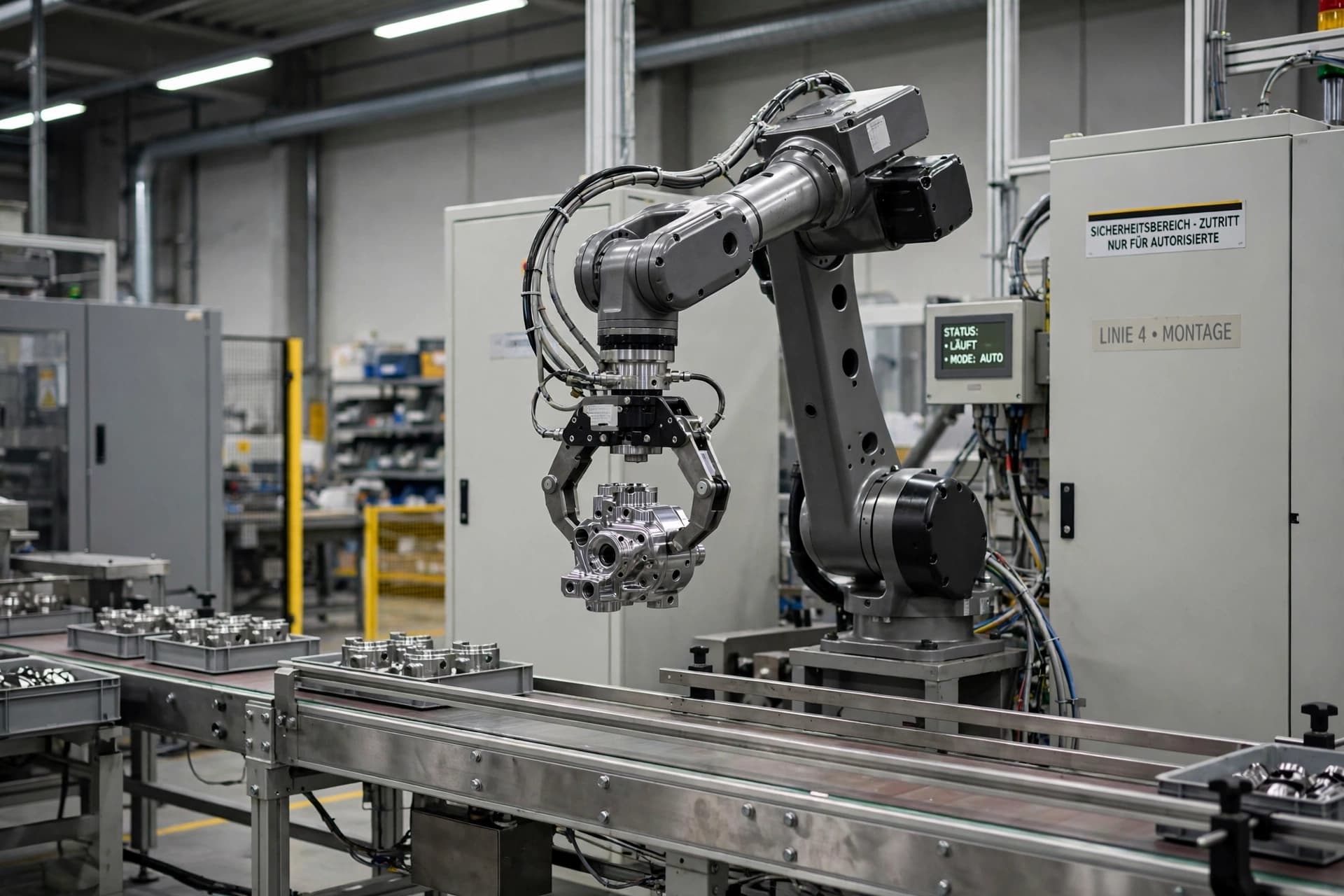
The accompanying AI-generated images illustrate industrial robotics and manufacturing environments. They are not photographs of RobCo's facilities, employees, or specific products.
### Sources
Reuters RobCo Channel NewsAsia
Published by Banx Network. This article is part of the Banx decentralized media programme, powered by the BXE token on the XRP Ledger.