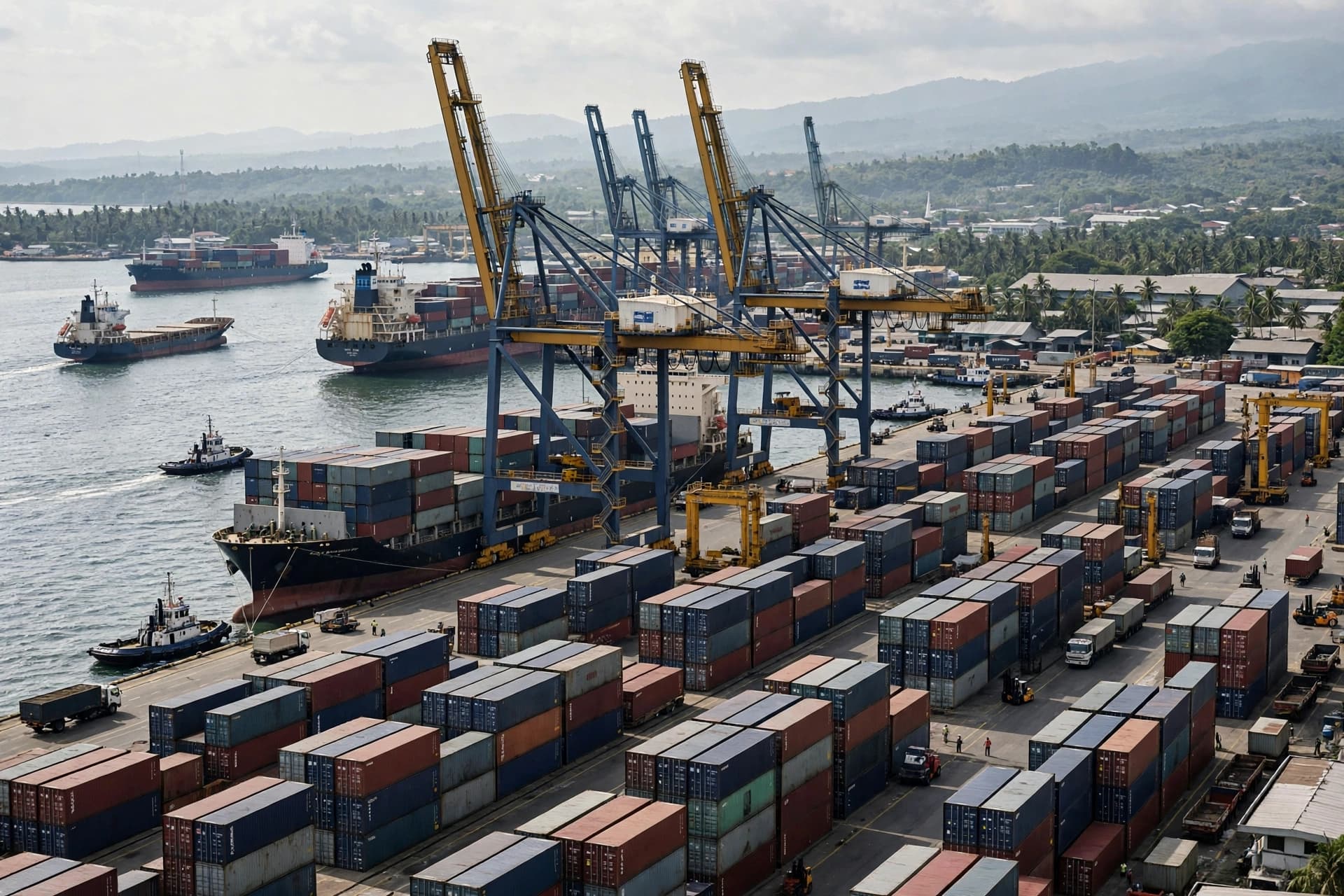
At a busy seaport, economic activity can be seen in the movement of containers, the arrival of cargo vessels, and the steady work of people preparing goods for overseas markets. Each shipment represents a transaction between businesses, but together these movements reveal something larger about a country's relationship with the world. Indonesia's latest trade figures offer a moment to examine that relationship.
Indonesia recorded a trade surplus of US$3.55 billion in August 2026, exceeding market expectations and marking its largest monthly surplus since September 2025, Reuters reported on October 1. The result provided some relief amid concerns about the country's external economic position.
Exports increased by 6.72% year on year to US$26.61 billion. Shipments of metals and chemicals helped support the increase, reflecting the importance of industrial commodities and processed materials in Indonesia's overseas trade. These figures suggest that some export sectors continued to find demand even as the international economic environment remained uncertain.
Imports also grew, rising 19.09% year on year to US$23.06 billion. Although the increase was substantial, it came in below economists' expectations. That difference matters because a trade surplus can widen not only when exports become stronger, but also when imports grow more slowly than anticipated.
The distinction offers a more complicated reading of the headline figure. Strong exports can indicate that domestic producers are competitive and overseas buyers remain interested in their products. Slower-than-expected imports, however, do not necessarily signal a stronger economy. They may reflect changes in demand for machinery, raw materials, consumer goods, or other imported products.
For Indonesian manufacturers, imported inputs are often part of the export process itself. Businesses may purchase equipment and components from abroad before turning them into finished products for domestic use or international customers. A lasting improvement in trade therefore depends on more than the balance between exports and imports in a single month. It also depends on investment, productivity, and the ability of local businesses to move into higher-value production.
Analysts cited by Reuters cautioned that the August surplus could prove fragile if imports strengthened and external demand weakened. Bank Danamon economist Irman Faiz noted that the result was driven largely by weaker-than-expected imports rather than a fundamental change that guaranteed a stronger trade position. Other analysts also warned that softer global demand could affect future exports.
The trade balance is closely watched because it forms part of the broader picture of a country's external accounts. A sustained surplus can support the flow of foreign currency into the economy, while a weaker balance can add pressure when import demand rises or export earnings decline. Yet monthly figures should be read alongside other indicators, including investment, household spending, inflation, and currency movements.
For businesses, the immediate lesson is to plan for more than one possible outcome. Exporters may need to prepare for changes in overseas orders, while import-dependent companies must account for exchange-rate movements and fluctuating input costs. Predictable infrastructure, efficient ports, and reliable logistics can help businesses respond to those changes with less disruption.
Indonesia's August surplus is encouraging, but its durability remains the more important question. A stronger trade position will be easier to sustain if export growth rests on productive investment, diverse markets, and competitive domestic industries. The movement of goods through ports may be constant, but the economic forces behind each shipment continue to change.
### AI Image Disclaimer
The AI-generated illustrations represent general Indonesian trade and export activity. They do not depict actual August 2026 cargo shipments or verified port scenes connected to the reported trade figures.
### Sources
Reuters Statistics Indonesia (BPS) Bank Indonesia Ministry of Trade of Indonesia
Published by Banx Network. This article is part of the Banx decentralized media programme, powered by the BXE token on the XRP Ledger.