From Fragments to Form: When an Ancient Face Emerges After 3.6 Million Years
Scientists have digitally reconstructed the 3.6-million-year-old skull of “Little Foot,” offering new insights into early human evolution and one of our oldest relatives.

Scientists have digitally reconstructed the 3.6-million-year-old skull of “Little Foot,” offering new insights into early human evolution and one of our oldest relatives.

A 7-ton meteor exploded over Cleveland, producing a bright fireball and a powerful boom equivalent to 250 tons of TNT, with most of it disintegrating in the atmosphere.

Astronomers have identified an exoplanet with an atmosphere rich in sulfur compounds, suggesting it could be among the most “smelly” worlds, based on its chemical composition.

NASA will roll Artemis 2’s SLS rocket to the launch pad on March 20, marking a key preparation step for its planned crewed mission around the Moon.

Astronomers have identified an exoplanet rich in sulfur gases like hydrogen sulfide, suggesting it could be one of the “smelliest” worlds, based on its atmospheric chemistry.

JWST observations of a hazy exoplanet reveal a featureless spectrum, suggesting a dense atmospheric layer that blocks chemical detection and highlights the limits of current space observation.

Scientists have discovered microbial life beneath Denman Glacier, revealing how organisms survive in extreme, lightless Antarctic environments.

The AlphaFold Database now includes millions of predicted protein complexes, offering new insights into molecular interactions and supporting future biological and medical research.

A six-tonne meteor entered Earth’s atmosphere at high speed, creating a bright fireball and possibly fragmenting before reaching the ground.

Dragon fruit peel extract can boost bread nutrition while reducing food waste, offering a sustainable way to reuse fruit byproducts.

New research suggests bull sharks may form social connections, showing repeated associations that challenge their reputation as solitary predators.

New research improves wave energy technology, making it more efficient to convert ocean motion into renewable electricity.

X-ray observations reveal a supermassive black hole awakening in a starburst galaxy, firing high-energy jets that influence its cosmic surroundings.

New research reveals how proteins assemble the oocyte cytoplasmic lattice, a key structure that organizes materials for early embryonic development.

A study finds 3D virtual reality anatomy learning reduces students’ cognitive load, helping them better understand complex spatial structures.

A refined “rock clock” method improves dating of early animal life, offering a clearer timeline for when complex organisms first appeared on Earth.

A study finds some sunscreens can produce persistent free radicals under light, prompting further research into formulation stability without changing current usage guidance.

Astronomers may have detected a flash of light linked to colliding black holes, suggesting such mergers can produce visible signals under certain conditions.

Asteroid Ryugu samples contain DNA-related molecules, suggesting key building blocks of life may have formed in space and reached Earth via asteroids.

A new testing method detects hidden mutagens in everyday products like water and cosmetics by analyzing their biological effects, offering deeper insight into chemical safety.

Super-resolution microscopy enables scientists to map brain blood flow at the cellular level, offering new insights into microcirculation and neurological function.

Scientists observed quantum radiation reaction as electrons interact with ultra-intense lasers, confirming how emitted radiation alters particle motion at extreme energies.

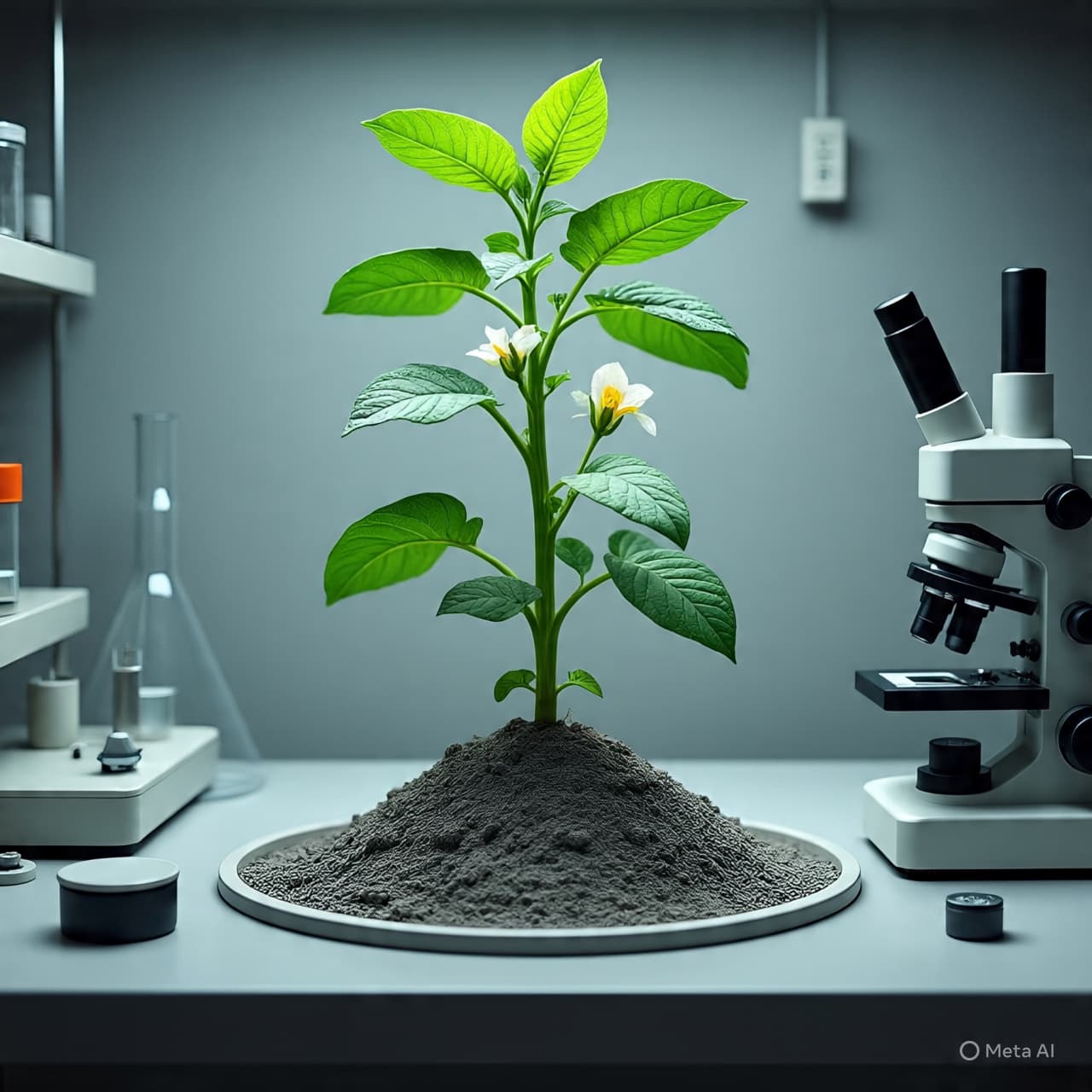
Scientists grew potatoes in lunar soil simulant, advancing research into sustainable agriculture for future Moon missions and long-term space habitation.

A carbon nanotube coating absorbs terahertz waves, potentially reducing interference and improving signal clarity in future 6G communication systems.