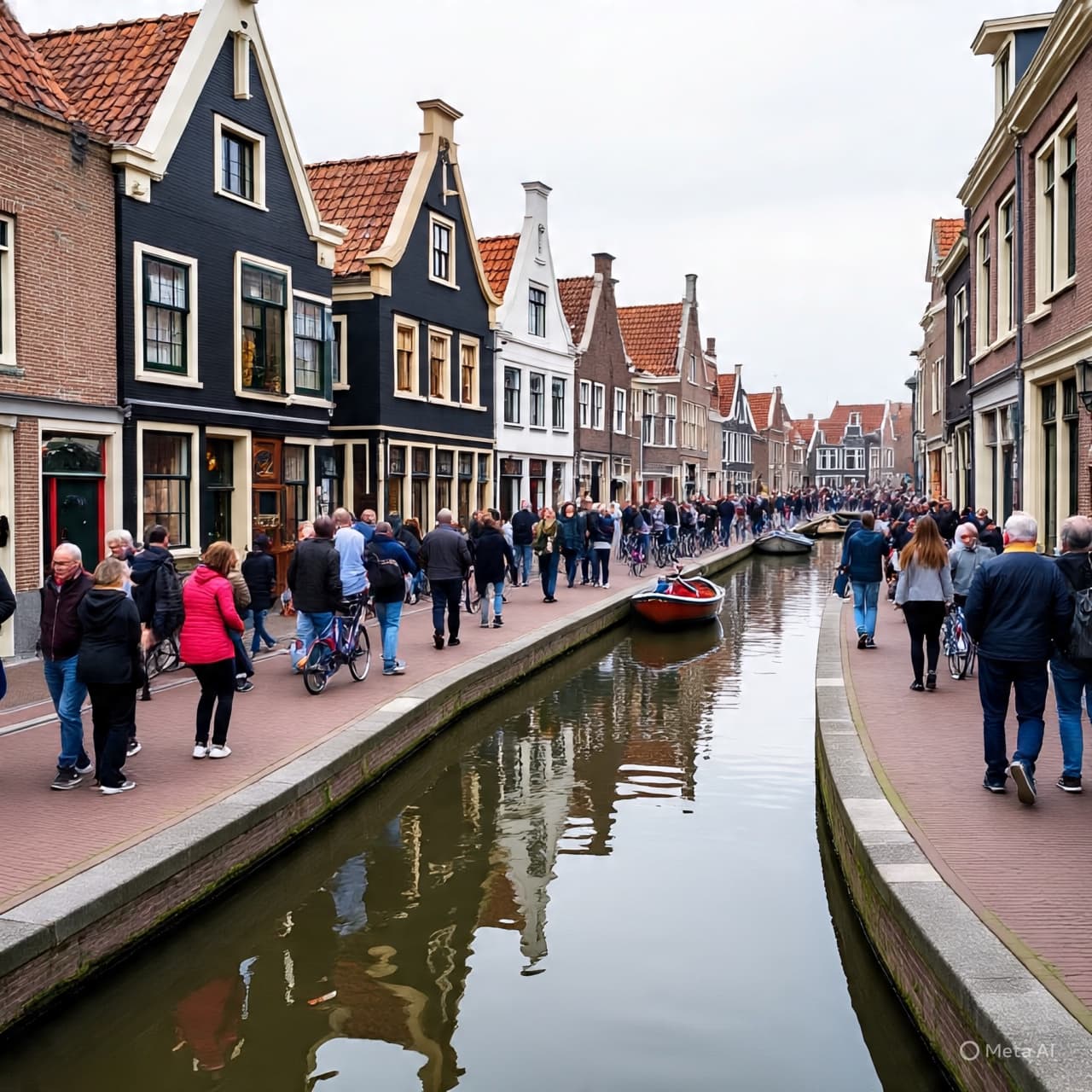
The image of Zaanse Schans—the quiet Dutch village framed by windmills, canals, and chocolate-scented air—sells itself like a postcard. Each year, millions arrive hoping to step into that postcard, to walk streets that whisper history. Yet, paradise under pressure can crack. Last year alone, 2.6 million visitors descended upon a community of barely one hundred residents. What was once a village has become a stage.
Now comes the controversial response: beginning soon, entry to Zaanse Schans will cost €17.50. The fee, officials argue, is not a ticket to exploit beauty but a guardrail to protect it. Even with fewer visitors, revenue is projected to reach €25 million annually—proof of just how powerful the pull of authenticity remains.
The question, however, is not financial. It is existential. What happens when a living community becomes a curated attraction? For locals, the strain has been real: narrow streets choked with tour buses, rising waste, and the steady erosion of ordinary life. For tourists, the disappointment grows when the postcard image blurs into traffic jams and selfie sticks.
And so, Zaanse Schans faces a paradox shared by many global landmarks—from Venice to Machu Picchu: the very popularity that sustains them also threatens to unravel their essence. Can authenticity survive once commodified? Can a village charge admission and still remain a village?
Supporters of the fee call it pragmatic, a necessary compromise that funds preservation and infrastructure. Detractors worry that access will tilt toward those who can afford it, while others may feel priced out of a cultural experience that should remain open to all.
Perhaps €17.50 is less about cost and more about conscience. The fee forces every visitor to confront an uncomfortable truth: beauty is fragile, and consuming it without care comes at a price. Zaanse Schans is no longer just a backdrop for travel photos. It is a reminder that heritage, like nature, must sometimes be defended from love itself.
Images by AI Sources : This article is based on reporting from DutchNews.nl, The Guardian, and National Geographic Travel.
Published by Banx Network. This article is part of the Banx decentralized media programme, powered by the BXE token on the XRP Ledger.