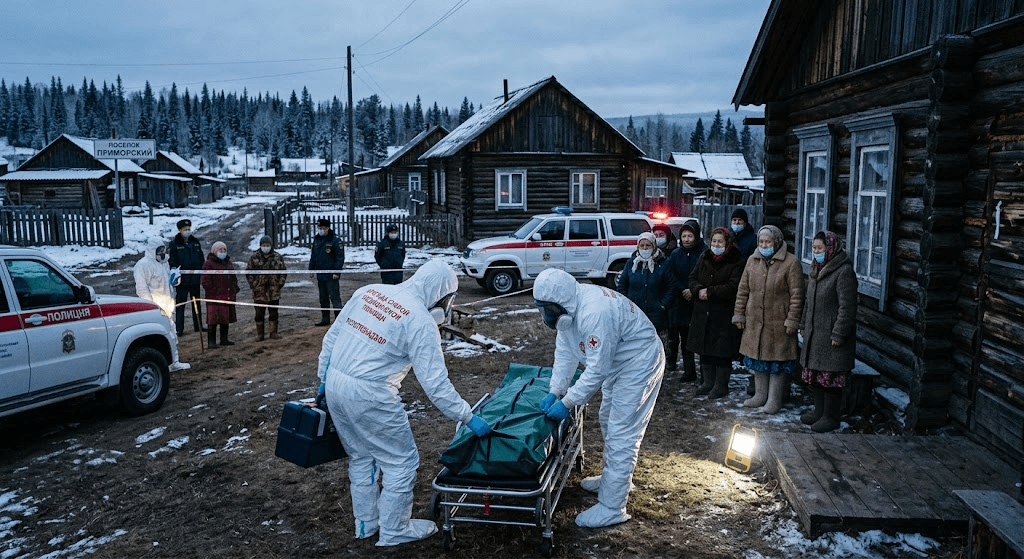
IRKUTSK, Russia — Health authorities in eastern Siberia have declared a localized medical watch following the death of a woman from plague in a remote settlement within the Irkutsk Oblast, prompting immediate quarantine measures and public health interventions across the isolated region.
The victim, a resident of a rural district in the vast Siberian territory, was admitted to a regional medical facility after exhibiting high fever, severe swollen lymph nodes, and rapid respiratory deterioration. Despite aggressive medical intervention and emergency treatment in an isolation ward, the patient succumbed to the infection shortly after arrival.
Laboratory tests conducted by regional epidemiological specialists subsequently confirmed the presence of Yersinia pestis, the bacterium responsible for plague.
Emergency response teams from Rospotrebnadzor, Russia's consumer rights and human welfare watchdog, were dispatched immediately to the settlement to trace contacts, sanitize the victim’s residence, and administer prophylactic antibiotics to close family members and healthcare workers who had come into contact with the patient.
"All necessary medical protocols and barrier isolation procedures were enacted as soon as symptoms were identified," stated a regional health representative. "At present, no further active cases have been detected among the local population."
Plague remains endemic among wild rodent populations across specific geographic zones of Siberia, Central Asia, and parts of the Russian Far East. Epidemiologists suspect the woman may have contracted the pathogen through direct contact with infected wild animals or via bites from fleas inhabiting local rodent burrows, a common exposure route in sparse, agricultural communities bordering wilderness zones.
Authorities have issued warnings to local residents, hunters, and agricultural workers in the Irkutsk region, advising them to avoid handling wild marmots, ground squirrels, or stray animals, and to report any unusual rodent die-offs to local veterinary officers immediately.
Local health officials emphasize that the risk of a broader outbreak remains extremely low due to the prompt implementation of quarantine protocols and the remote nature of the affected settlement. Specialist epidemiological units remain on-site to monitor the local populace, conduct environmental sampling, and prevent any further transmission of the disease.
Published by Banx Network. This article is part of the Banx decentralized media programme, powered by the BXE token on the XRP Ledger.