At first light, when the orchards are still cool and the mountains hold the last traces of night, the rows of cherry trees appear almost perfectly still. Leaves rustle lightly in the breeze, and clusters of fruit hang beneath the branches, deepening in color as the harvest approaches. For farmers, these quiet mornings often carry a quiet calculation: how much of the crop will reach the market, and how much may vanish before it ever leaves the tree.
Birds have long been part of that uncertainty.
Across many cherry-growing regions, flocks of starlings and other fruit-eating birds can descend quickly on ripening orchards. Their visits are brief but effective, stripping trees of fruit and leaving behind damage that can affect both yields and quality. Farmers have experimented with many forms of deterrence—reflective tapes, sound devices, and protective netting—but these solutions can be costly, labor-intensive, or only temporarily effective.
Recently, however, some growers have begun working with a solution that belongs less to technology and more to the rhythms of nature.
Falcons.
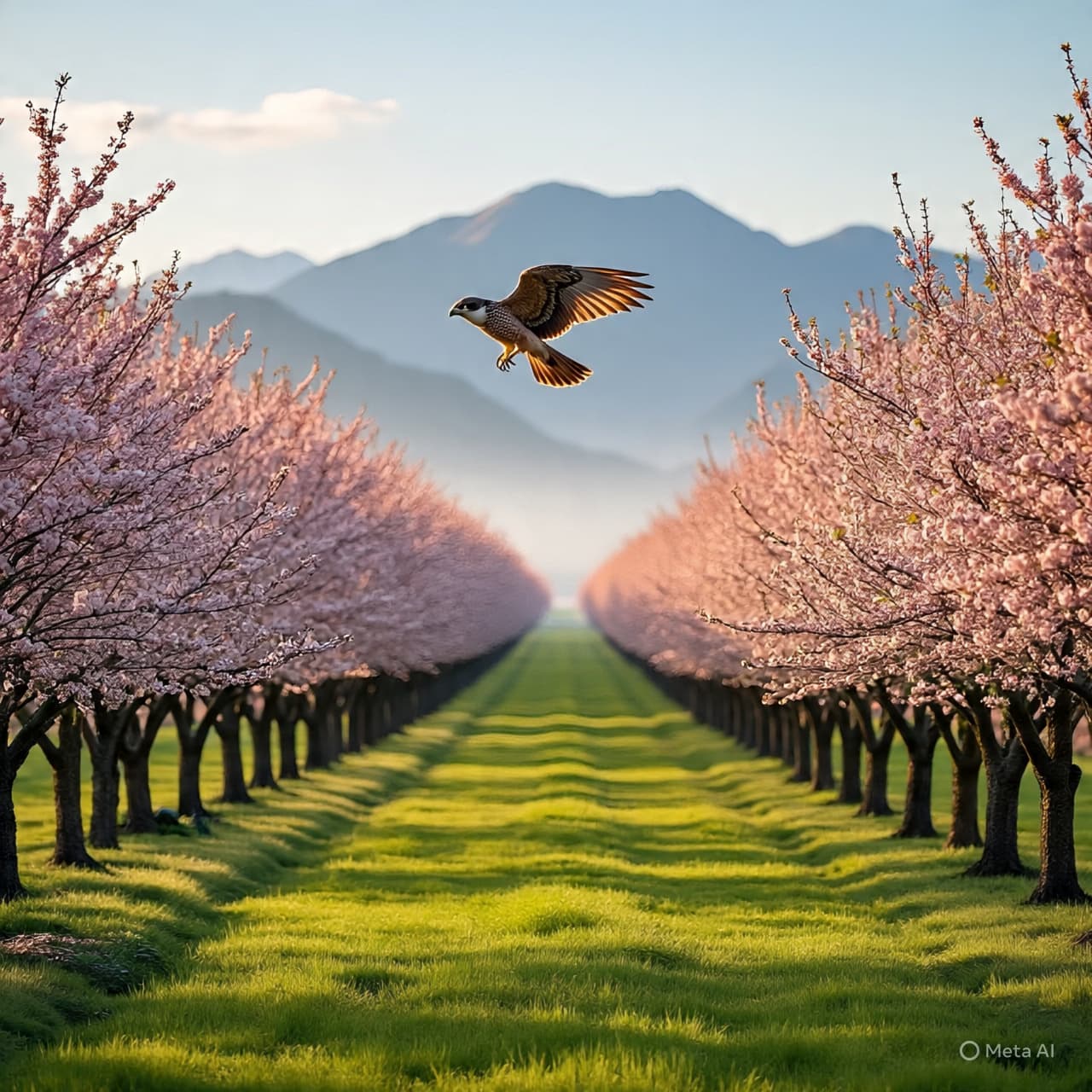
In several orchard regions, farmers are turning to trained falcons to help protect their crops. Falconry, an ancient practice once associated with hunting traditions, has found a modern role in agriculture and food safety. When a falcon circles above an orchard, smaller birds instinctively recognize a predator. Rather than risk approaching the trees, they often choose to stay away altogether.
The effect can be immediate and surprisingly efficient. A single falcon flying periodically over an orchard can discourage large flocks of pest birds from settling in the area. Unlike stationary deterrents, the movement of a real predator creates a dynamic presence that birds are less likely to ignore.
For cherry growers, the benefits extend beyond crop protection alone.
Food safety has become an increasingly important consideration in agriculture, particularly for fresh fruit destined for export markets. Birds that feed in orchards can leave droppings on fruit and branches, raising concerns about contamination. By reducing the presence of large flocks, falcons help lower the likelihood of such contamination, supporting stricter food safety standards demanded by international buyers.
The practice typically involves professional falconers who work with trained birds of prey. These falcons are not released to hunt freely among the trees. Instead, they are flown strategically across orchards during key periods when cherries are ripening and most vulnerable to bird activity. The mere sight of the predator overhead is often enough to reshape the behavior of other birds in the area.
Farmers who have adopted the approach describe it as both practical and environmentally aligned. Unlike chemical deterrents or large-scale netting systems, falconry relies on natural predator-prey relationships that already exist within ecosystems. The falcons themselves are carefully managed by falconers, ensuring the birds remain healthy and responsive to their handlers.
In some regions, the presence of falcons has also brought an unexpected element of visibility to agricultural work. Visitors and workers sometimes pause to watch the birds glide above the orchards, their wings catching the morning light as they circle slowly across the fields. What appears from a distance as a graceful flight is, in practice, a carefully planned form of crop management.
The approach does not replace every other protective measure. Nets, monitoring systems, and other techniques still play roles in safeguarding fruit. Yet falcons offer something different: a living deterrent that moves, adapts, and communicates a clear signal to birds that the orchard is no longer a safe place to gather.
As harvest seasons arrive and the red fruit deepens across the branches, that message travels quickly through the skies above the orchards.
A single silhouette against the morning light can be enough.
In that quiet partnership between farmers and falcons, centuries-old falconry traditions are finding a new purpose—helping ensure that more cherries reach the tables they were grown for.
Published by Banx Network. This article is part of the Banx decentralized media programme, powered by the BXE token on the XRP Ledger.