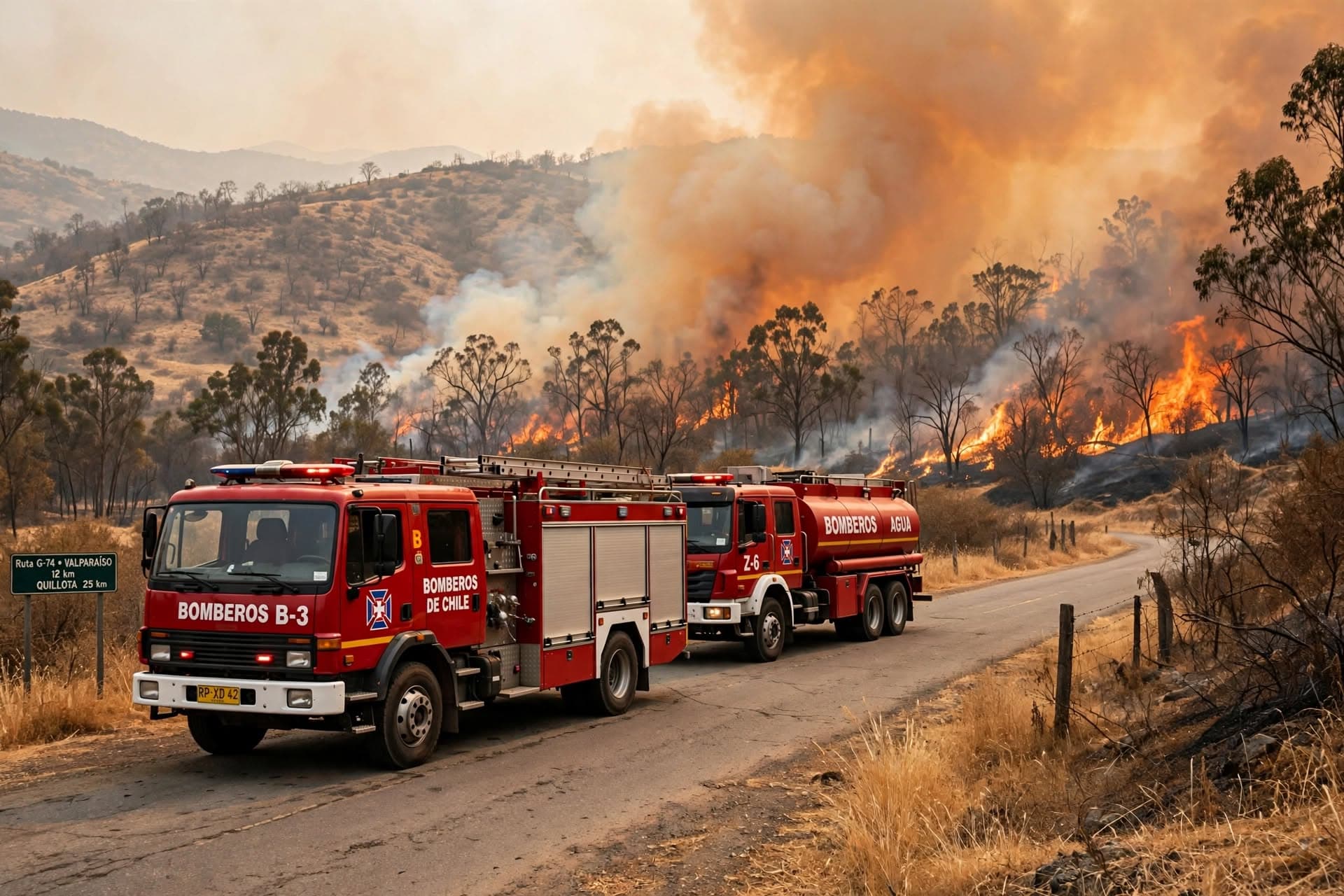
Concepción, Chile—Fast-moving wildfires swept violently through rural communities in central Chile on Sunday, killing four people and burning dozens of residential homes to ashes. Gale-force winds combined with low humidity to drive dense walls of flame across dry agricultural brush into inhabited hamlets. Emergency alerts forced thousands of residents to abandon livestock and property to escape along smoke-filled rural roads. Local fire departments dispatched all available units within minutes, but intense heat and erratic wind shifts repeatedly turned back initial containment efforts.
Voluntary firefighters attempting to set up defensive containment lines along farm perimeters were forced to retreat when fire jumped a four-lane highway. The blaze consumed timber plantations, pasture land, and wooden residential structures in its path with extraordinary speed. Local authorities confirmed four fatalities after search teams discovered victims trapped inside burned buildings in isolated agricultural sectors. Police units sealed off access roads leading into affected valleys to prevent civilian vehicles from entering dangerous fire zones.
Emergency medical facilities in nearby towns declared regional alerts as evacuees arrived suffering from severe smoke inhalation and burn injuries. Local hospitals deployed outdoor triage centers to filter minor burn victims and clear indoor beds for critical medical cases. Internal forestry service communications revealed that warning reports concerning accumulated dry biomass along rural housing perimeters had been logged months before the fire outbreak. Public officials declined to clarify why controlled burns and clearing operations had been delayed throughout the dry season.
National emergency management agencies coordinated water-dropping aircraft to target active fire fronts near residential clusters, but heavy smoke plumes hampered low-altitude flying maneuvers. Displaced residents gathered at municipal gymnasiums converted into makeshift emergency shelters, seeking news of missing family members and livestock. Power companies cut electrical supply to regional grids to prevent damaged power lines from igniting additional secondary blazes across dry grasslands.
Local residents used water buckets and hand tools to extinguish embers falling onto roof structures in nearby unevacuated townships. Ash rained down over urban centers miles from the main fire lines, coating vehicles and pedestrian walkways in fine gray powder. Field medics set up mobile respiratory stations along evacuation routes to supply oxygen to fleeing families and elderly residents.
Industry critics pointed out that extensive monoculture tree plantations situated directly adjacent to rural towns created dense fuel corridors that accelerated the fire front. Government forestry regulation changes made over past administrative cycles allowed commercial forestry operations to plant inflammable eucalyptus trees near populated boundaries. Local community groups gathered outside regional government buildings demanding immediate reform of land-use codes and fire barrier requirements.
Firefighting crews spent the late afternoon establishing bare-earth firebreaks around threatened residential subdivisions using heavy bull-dozers and hand crews. Dense red smoke obscured the afternoon sun across the entire region as flame fronts continued moving unchecked toward coastal agricultural settlements. Ground crews remain deployed along active perimeters, attempting to protect critical transport infrastructure from encroaching spot fires.
Regional authorities remain stationed inside disaster coordination centers as meteorological forecasts indicate high winds will continue into the overnight hours. Fire containment lines around three major rural clusters remain completely unanchored as hot spots continue multiplying across the countryside.
Published by Banx Network. This article is part of the Banx decentralized media programme, powered by the BXE token on the XRP Ledger.