
Key Highlights
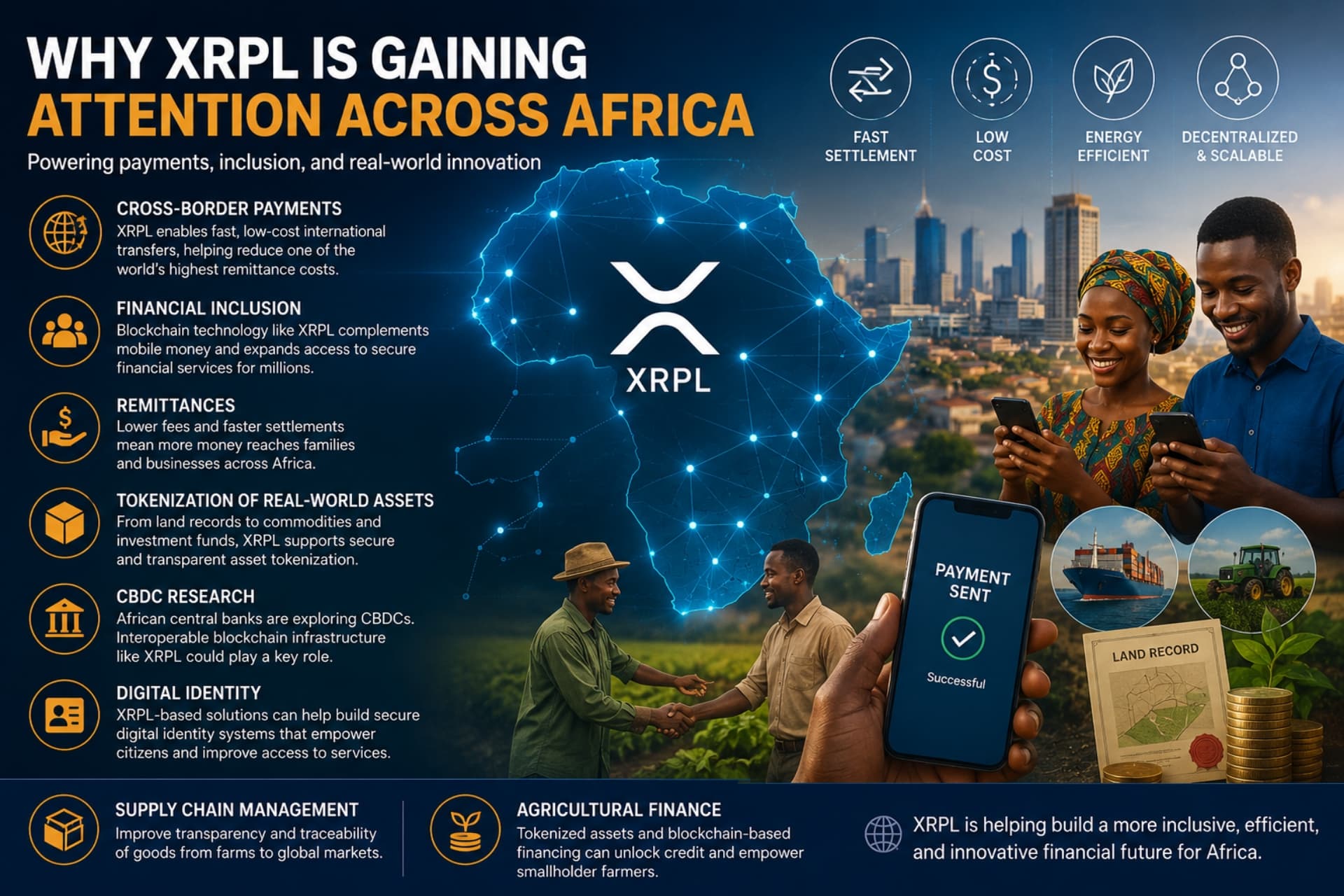
- Cross-Border Payments:XRPL offers a cost-effective solution for international transfers.
- Financial Inclusion:Blockchain technology enhances access to financial services.
- Tokenization:XRPL supports the digital representation of real-world assets.
The XRPL (XRP Ledger) is gaining significant attention across Africa as the continent seeks innovative solutions to its financial challenges. With economies increasingly interconnected through trade and migration, the need for efficient cross-border payment systems has never been more critical. Currently, Africa faces some of the highest remittance costs globally, often exceeding the United Nations' targets. XRPL's fast settlement times and low transaction fees present a viable alternative, attracting interest from fintech companies eager to explore faster payment corridors.
Despite the growth of mobile money services, millions of Africans remain underserved by traditional banking systems. Blockchain platforms like XRPL can enhance existing digital financial services by facilitating secure peer-to-peer transactions and programmable payments without relying solely on conventional banking infrastructure. This capability is crucial for promoting financial inclusion, especially in rural areas where access to banking services is limited.
Remittances play a vital role in Africa's economy, with tens of billions of dollars sent home by citizens working abroad each year. By reducing transaction costs, XRPL could enable families and businesses to receive more funds, ultimately boosting local economies. While regulatory frameworks vary across the continent, many countries are exploring blockchain-based settlement technologies to improve remittance efficiency.
Beyond payments, the XRP Ledger's capabilities extend to the tokenization of real-world assets. This process involves digitally representing physical assets on a blockchain, which can revolutionize various sectors in Africa. Potential applications include tokenizing agricultural commodities, land records, investment funds, carbon credits, government bonds, and real estate assets. Although many of these initiatives are still in the exploratory phase, tokenization is viewed as one of the most promising long-term applications of blockchain technology.
Central Bank Digital Currencies (CBDCs) are also on the radar of several African central banks as part of broader digital finance strategies. While no African CBDC currently operates directly on XRPL, Ripple has developed technology related to CBDCs that has garnered global interest. As regulators in Africa continue to evaluate digital currency models, the need for interoperable blockchain infrastructure will likely become increasingly important.
Digital identity is another critical area where XRPL can make a difference. Secure digital identity solutions are essential for expanding financial access, and blockchain technologies can enhance identity verification while giving individuals greater control over their personal information. Researchers and technology communities are actively exploring how decentralized identity systems could support various sectors, including banking, education, healthcare, and public services.
Finally, agriculture remains a cornerstone of many African economies, and blockchain-based supply chain management systems built on networks like XRPL could improve transparency and traceability. By recording the movement of agricultural products from farms to export markets, these systems can help reduce fraud and strengthen consumer confidence. Additionally, tokenized assets and transparent transaction histories could expand credit opportunities for smallholder farmers, who often face limited access to financing.
As XRPL continues to gain traction across Africa, its potential to transform the continent's financial landscape is becoming increasingly evident. From enhancing cross-border payments to supporting digital identity and agricultural finance, the XRP Ledger is poised to play a pivotal role in shaping Africa's economic future.
Published by Banx Network. This article is part of the Banx decentralized media programme, powered by the BXE token on the XRP Ledger.



