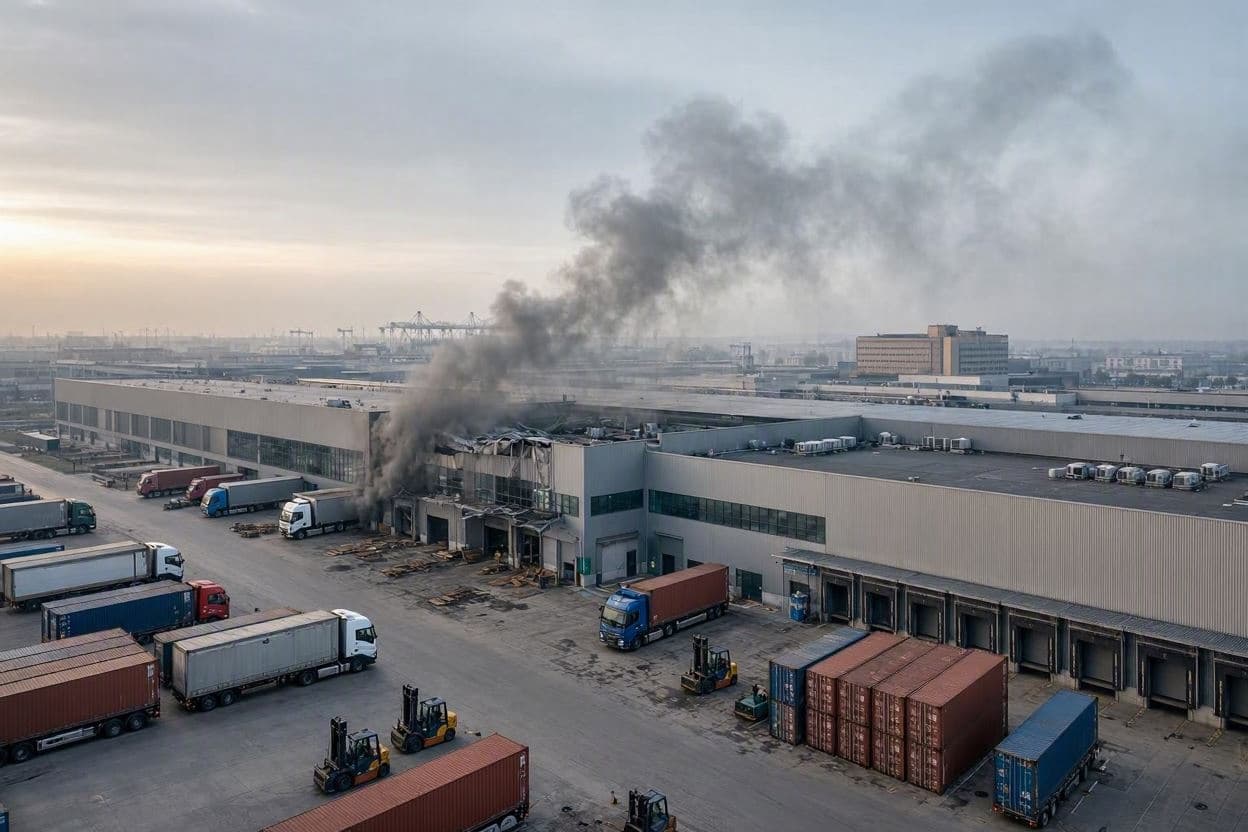
In the complex economics of war, targets are chosen not only for their military value but for their symbolic and logistical weight. Wildberries, Russia’s largest online retailer, has recently found itself at the center of a sustained campaign by Ukrainian forces. Since mid-2026, a series of drone strikes has targeted its massive logistics hubs across Russia, burning billions of dollars in inventory and disrupting supply chains that serve millions of consumers.
The rationale behind these attacks is multifaceted. Wildberries is not just a shop; it is a critical node in Russia’s domestic economy, facilitating the flow of goods from imports to local markets. By striking these warehouses, Kyiv aims to inflict economic pain, raising costs for businesses and consumers alike. The destruction of inventory, often valued at over $1 billion per facility, represents a significant financial blow to the company and its stakeholders.
Furthermore, there are allegations that Wildberries’ logistics network has been used to support the Russian war effort, transporting dual-use goods and materials. While the company denies direct involvement, the sheer scale of its operations makes it a tempting target for those seeking to disrupt the backend of the Russian state’s capacity to sustain conflict. The strikes are part of a broader strategy of "long-range sanctions," aiming to bring the cost of war home to the Russian public.
The impact on ordinary Russians is tangible. Delays in deliveries, shortages of certain goods, and rising prices create a sense of instability and frustration. For a government that relies on maintaining a semblance of normalcy, these disruptions are more than an inconvenience; they are a challenge to its narrative of control and prosperity. The psychological effect of seeing familiar brands burn adds to the growing weariness among the population.
From a military perspective, the attacks demonstrate Ukraine’s increasing capability to strike deep inside Russian territory. The use of long-range drones allows for precise targeting of industrial and commercial sites, bypassing traditional front-line defenses. This evolution in tactics forces Russia to divert resources to protect rear-area infrastructure, stretching its air defense systems thinner.
Wildberries has responded by accelerating repairs and dispersing its inventory, but the repeated nature of the strikes suggests a persistent threat. The company’s resilience is being tested, not just by fire but by the uncertainty of future attacks. For investors and partners, the risk profile of doing business in Russia has shifted, adding another layer of complexity to an already strained economy.
The international community watches these developments with mixed reactions. While some view the strikes as legitimate acts of war against economic infrastructure, others worry about the collateral damage to civilian livelihoods. The debate underscores the blurred lines between military and civilian targets in modern conflict, where supply chains are as strategic as tank battalions.
As the campaign continues, the story of Wildberries becomes a microcosm of the wider war. It illustrates how economic leverage is wielded as a weapon, and how the daily lives of citizens are intertwined with geopolitical struggles. For Kyiv, each strike is a message; for Moscow, each fire is a reminder that the war is not confined to the borders of Ukraine.
AI Image Disclaimer: Images accompanying this report are AI-generated artistic interpretations of logistics centers and digital commerce concepts, intended to visualize the economic context without depicting real violence or specific individuals.
Sources: PBS News, Wikipedia, CNN, Radio Free Europe/Radio Liberty
Published by Banx Network. This article is part of the Banx decentralized media programme, powered by the BXE token on the XRP Ledger.