
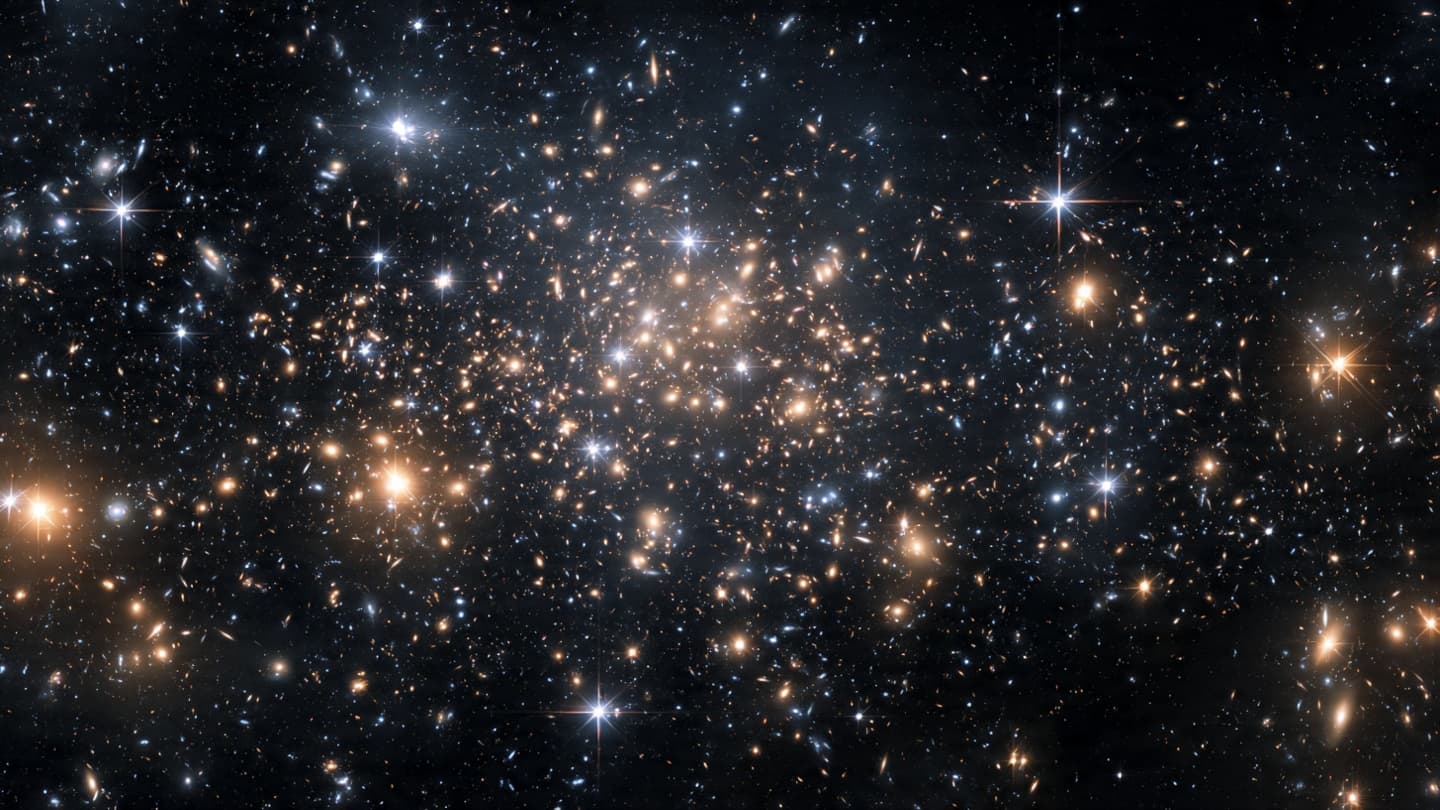
For centuries, humanity imagined the universe as something fixed and unchanging. Modern astronomy replaced that picture with a far more dynamic reality. The cosmos is expanding, and according to new research, that expansion continues to accelerate, deepening one of the most fascinating mysteries in science.
The study builds upon decades of astronomical observations that have transformed understanding of cosmic evolution. Scientists have long known that galaxies are moving away from one another as space itself expands. What remains difficult to explain is why that expansion appears to be speeding up.
Researchers analyzed observational data from multiple astronomical surveys. Their findings support previous evidence suggesting that the universe is not simply growing larger but doing so at an accelerating rate. The result aligns with measurements collected by various observatories over recent decades.
At the center of this mystery is dark energy, a theoretical form of energy believed to permeate space. Although dark energy is estimated to account for most of the universe's total energy content, its true nature remains unknown.
Understanding dark energy has become one of the primary goals of modern cosmology. Scientists are using increasingly sophisticated instruments to measure cosmic expansion with greater precision and determine whether existing theories adequately explain observed behavior.
The implications extend to questions about the ultimate fate of the universe. Depending on how dark energy behaves over time, cosmic expansion could continue indefinitely, slow down, or evolve in ways not yet anticipated by current models.
Large-scale observatories, including both ground-based facilities and space telescopes, are contributing data to these investigations. International collaborations bring together researchers from diverse scientific disciplines to tackle the challenge.
While many aspects of the phenomenon remain uncertain, the consistency of observational evidence continues to strengthen confidence that accelerated expansion is real. The focus has increasingly shifted toward understanding its underlying cause.
The study represents another step in a scientific journey that stretches from the earliest observations of distant galaxies to today's advanced cosmological research. Each new measurement helps refine humanity's understanding of the universe and its future.
AI Image Disclaimer: The accompanying visuals are AI-generated scientific illustrations designed to represent cosmological concepts discussed in the article.
Sources Verified EarthSky NASA European Space Agency (ESA) Nature Astronomy Scientific American
Published by Banx Network. This article is part of the Banx decentralized media programme, powered by the BXE token on the XRP Ledger.



