There are moments in a nation’s life that feel like a sudden storm breaking over a quiet plain — unexpected in its ferocity, reshaping what once felt certain. In recent weeks, Iran has witnessed such a storm: voices rising in cities and towns, streets transformed into both callings for change and battlegrounds of unrest. At the center of this tumult, Iran’s Supreme Leader, Ayatollah Ali Khamenei, has chosen not to look inward at the complex roots of discontent, but outward — placing the weight of responsibility on a distant figure, former U.S. President Donald Trump. In his address to the nation, Khamenei echoed with conviction that the violence and loss were not merely the result of internal strife, but a reflection of external forces — a narrative as old as geopolitics itself.
In Tehran, the echo of Khamenei’s words — calling Trump a “criminal” and accusing him of instigating unrest — was amplified across state media and international reporting, illustrating how global politics can become intertwined with deeply personal suffering. Thousands of Iranians, caught in protests that initially began over economic grievances, have died in clashes with security forces. Iranian authorities and state-aligned sources now describe the unrest not only as a popular uprising but as a charged confrontation guided, in their telling, by foreign hands. This claim places a distant political rival at the center of a tragedy affecting ordinary men and women whose aspirations and frustrations were rooted in economics, dignity, and a yearning for a life with greater hope.
International rights groups reporting on these events paint a harrowing picture of thousands of deaths, tens of thousands of arrests, and waves of crackdowns that have stretched across Iranian cities. Into this narrative of pain and loss comes a leader’s indictment of an external enemy — in this case, a former U.S. president — asserting that foreign statements and encouragement of protesters turned discontent into deadly confrontation. Trump’s own remarks compounded the backdrop: publicly calling for change in Iran’s leadership and at times suggesting possible intervention, before later softening his tone while maintaining calls for reform. This exchange of words, public and sharp, illustrates how international rhetoric can be invoked as a lens through which domestic crises are interpreted.
Yet when one steps back from the charged rhetoric, there remains room for reflection on the lived realities of the people in the streets. Their voices, often muffled by crackdowns and internet blackouts, speak to deep-seated issues: inflation, a collapsing currency, and a generational rift between governing structures and everyday citizens. As with many moments of upheaval worldwide, the story is as much about the unmet hopes of a populace as it is about the narratives leaders choose to promote on the global stage.
In reporting these developments, the focus does not fall on assigning moral judgment to the leaders involved, but on describing how narratives shape perceptions and, in turn, shape events. Khamenei’s accusations against Trump reflect a longstanding diplomatic tension and a strategic framing of events that resonate across borders. At the same time, independent observers and rights groups highlight the human cost of unrest that extends beyond political blame. In the shifting light of protests, pronouncements, and responses, what endures is the complexity of human aspiration — and the enduring impact of both internal and external forces on people’s lives.
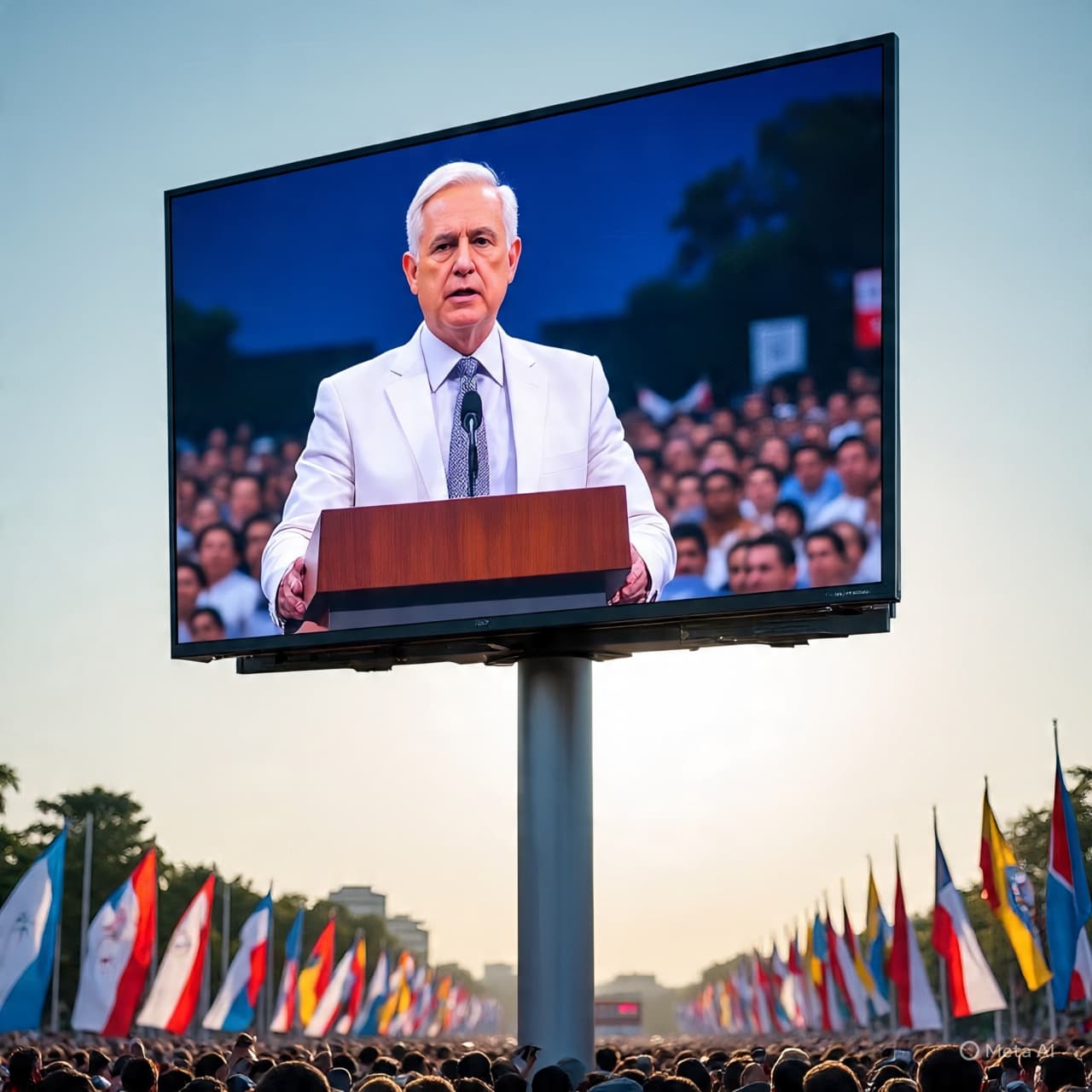
AI Image Disclaimer *Visuals are created with AI tools and are not real photographs; they are meant for conceptual representation.*
Sources: Reuters Al Jazeera Associated Press / Daily Sabah Time Newsweek
Published by Banx Network. This article is part of the Banx decentralized media programme, powered by the BXE token on the XRP Ledger.