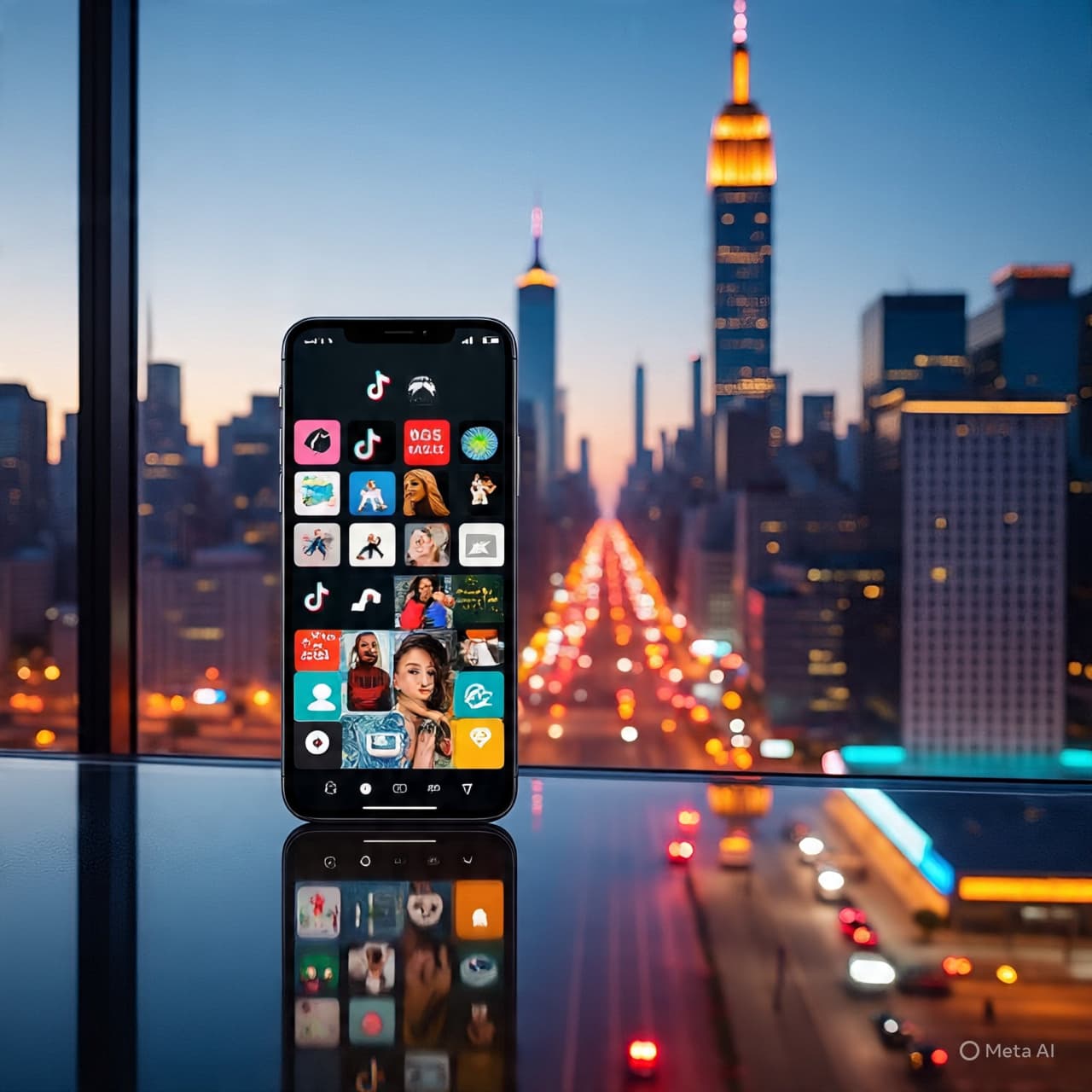
For years, TikTok has moved like a restless river through American life — carrying dances, jokes, news, and confessions in an endless current of short videos. It has been playful and powerful, fleeting yet formative. Now, that river has reached a bend. With a newly announced deal reshaping who controls TikTok’s U.S. operations, America’s users find themselves quietly asking what, if anything, will change when the same app wakes up looking slightly different behind the scenes.
The agreement, forged under the pressure of looming U.S. legislation, shifts control of TikTok’s American business into a new entity dominated by U.S. investors. While ByteDance, TikTok’s Chinese parent company, remains involved, the deal is designed to ensure that decision-making authority, data oversight, and operational control sit largely within American hands. For Washington, this arrangement answers long-standing national security concerns. For users, the question is more intimate: will their daily experience feel safer, freer, or simply the same?
In practical terms, most American users are unlikely to notice immediate changes. The familiar interface remains, creators keep posting, and recommendation feeds continue to scroll. The deal preserves continuity for the platform’s estimated 170 million U.S. users, avoiding the disruption of a ban or forced shutdown. From a consumer standpoint, this stability may be the most visible effect — a sense that the digital ground beneath their thumbs has not suddenly shifted.
Beneath that surface calm, however, the deal carries weight. User data in the United States is expected to remain stored domestically, overseen by U.S.-based governance structures and technology partners. Supporters argue this creates clearer legal boundaries and stronger safeguards against foreign influence. Critics counter that while ownership changes may limit risk, they do not erase broader questions about algorithmic transparency or how data is ultimately used.
Creators, too, stand at this crossroads. For influencers, small businesses, and artists who rely on TikTok for income and visibility, the deal offers reassurance. The platform they depend on is not disappearing, and the audience they have cultivated remains intact. Yet uncertainty lingers about future rules, moderation policies, and how regulatory oversight may shape content in subtle ways over time.
For American users, the deal is less a dramatic transformation than a quiet recalibration. TikTok remains TikTok — a mirror of humor, anxiety, trends, and community — but now operates under closer scrutiny and clearer borders. The app that once symbolized global digital fluidity is becoming more distinctly American in its governance, even as its content continues to feel universal.
As lawmakers, investors, and executives mark the deal as a turning point, users are left with something simpler: an app that still opens, still scrolls, still entertains. Whether this new structure ultimately builds trust or merely postpones deeper debates will unfold slowly, in ways that may be felt less in headlines and more in the quiet confidence — or doubt — of those who use it every day.
AI IMAGE DISCLAIMER (ROTATED) “Illustrations were produced with AI and serve as conceptual depictions rather than real photographs.”
SOURCES
• Reuters
• Associated Press
• Bloomberg
• The Verge
• Financial Times
Published by Banx Network. This article is part of the Banx decentralized media programme, powered by the BXE token on the XRP Ledger.