There is a stillness in the Antarctic wind that suggests eternity — a calm that seems to cradle centuries of change beneath its white expanse. In that serene and solemn landscape, the rocks themselves become storytellers, bearing the vestiges of ancient climates and vanished lands, whispering secrets of a time when ice did not dominate this frozen world. This spring, a group of Turkish and Bulgarian researchers has embarked on a journey into that quiet archive, listening carefully to the geological memory held within the deep past of Antarctica.
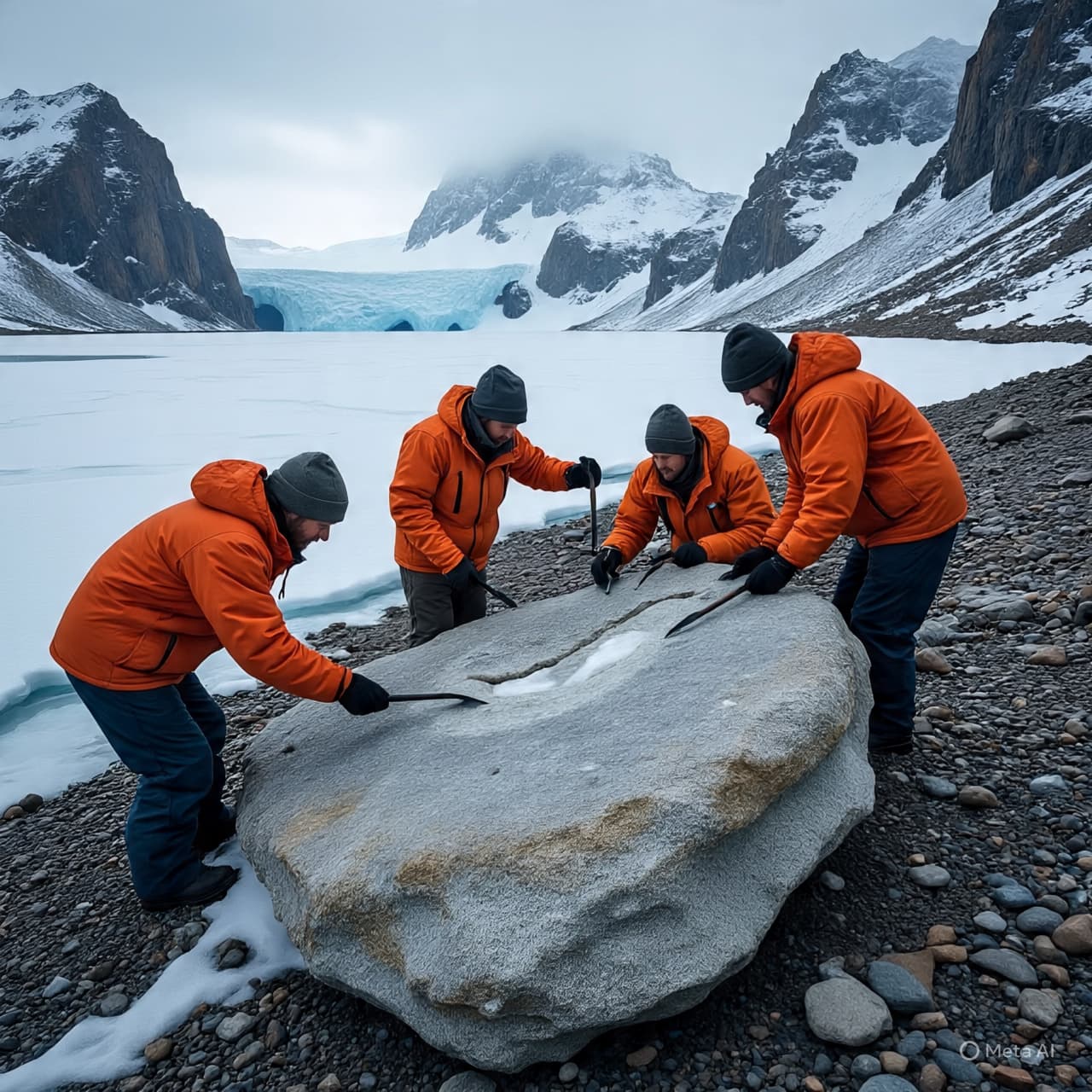
On Horseshoe Island, where the shadow of ice meets the resilience of stone, the Turkish‑Bulgarian team has been meticulously examining rock formations that span tens of millions of years. Their work is part of Türkiye’s 10th National Antarctic Science Expedition, a scientific effort supported by national research institutions and framed by a spirit of international cooperation. The researchers describe their mission as an invitation to read the pages of Antarctica’s geological story — to decipher how this vast continent shifted from a temperate landmass once entwined with Gondwana to the icy dominion it is today.
In the field, the scientists move among ancient magmatic rocks, volcanic remnants, and the echoes of long‑vanished marine environments. These formations, formed in epochs such as the Jurassic and Cretaceous, act like layers in an old manuscript, each chapter reflecting different environmental and tectonic conditions. Within these stones, features such as pillow lavas and volcanic agglomerates suggest times when gases and molten rock melded with shallow seas. These physical traces, gently weathered yet distinct, offer clues about how Earth’s tectonic rhythms have shaped not only Antarctica but also global geological patterns over eons.
The researchers’ aim is both humble and profound: to understand how these ancient records inform not only the continent’s past but also the long‑term trajectory of climate change. From the evidence preserved in these rocks, scientists hope to draw connections between deep time and contemporary shifts in Earth’s climate systems. In each sample collected and each layer studied, there’s a sense that time’s immensity can be rendered just a little more comprehensible — that by tracing the arc of ice and fire embedded in the Earth, we might better grasp the changes unfolding today.
In this delicate, slow exchange between humans and millennia‑old stone, the work of the Turkish and Bulgarian teams becomes a quiet testament to our collective curiosity. Their collaboration underscores a belief that the pursuit of knowledge knows no borders, extending from the distant north of Türkiye and the heart of Bulgaria to the remote reaches of Antarctica’s frozen horizon.
Scientists in this joint initiative emphasize that the geological record harbored here can deepen understanding of glaciation, tectonic shifts, and the intricate history of Earth’s climate. Their fieldwork — conducted in an environment as harsh as it is awe‑inspiring — reflects the patience and respect required to engage with the planet’s deepest stories. Through their careful observations and collected samples, they are slowly unwrapping chapters of the past that have long been sealed beneath snow and time.
As the expedition continues, the broader scientific community watches with interest, hoping that each layer of rock studied and each mineral sampled will add nuance to our understanding of how Antarctica became the continent of ice. Such knowledge not only enriches the story of Earth’s geological evolution but also frames the challenges and questions facing climate science today.
AI Image Disclaimer Graphics are AI‑generated and intended for representation, not reality.
Source Check — credible sources found: TRT World News Türkiye Today Anadolu Agency (via multiple outlets) Daily Sabah US Muslims news site (reporting Anadolu content)
Published by Banx Network. This article is part of the Banx decentralized media programme, powered by the BXE token on the XRP Ledger.