On the frozen edge of the world, where silence stretches for miles and snow accumulates in centuries-old layers, scientists listen to the stories hidden in ice. In Antarctica, long cylinders of ice are extracted from deep within the continent — time capsules that hold the memory of climate, snowfalls, and stresses endured over millennia. But these cores reveal more than history; they reveal the strength and fragility of the ice itself, helping researchers anticipate where cracks might form next.
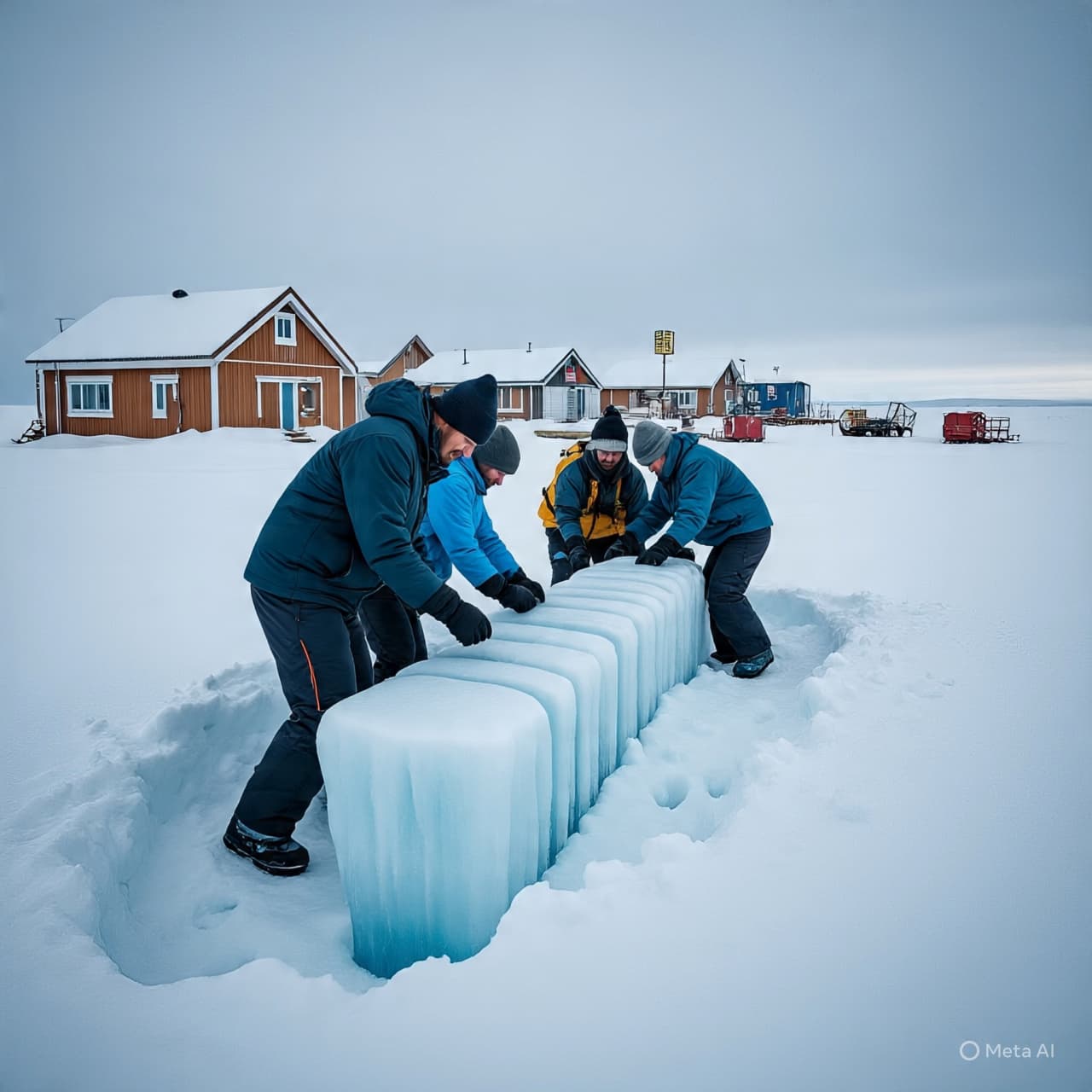
Ice is far from uniform. Layers of snow compacted into ice record not only the passage of time but also subtle mechanical properties: density variations, microfractures, and grain structures that determine how ice behaves under stress. By testing ice cores in laboratories — compressing, twisting, and gently crushing them — scientists can observe how real ice resists pressure, how cracks propagate, and how fractures might spread across massive ice shelves.
Ice shelves act as brakes for the glaciers that feed them, holding back inland ice from flowing too quickly into the sea. Yet these shelves bend and flex, creak and crack under forces both slow and sudden. Understanding the internal strength of ice is crucial for predicting how fractures develop over time. Laboratory tests of ice cores, combined with field observations and models, allow scientists to anticipate which areas are most vulnerable to large-scale ice breaks.
Crushing ice cores may seem a quiet, almost clinical task, but it reveals the hidden mechanics of a frozen world. Ice that appears flawless can harbor weaknesses invisible to the eye. When these cores yield under controlled stress, they speak of past pressure, the slow dance of accumulation, and the potential for sudden fracture. This knowledge is vital as warming oceans and changing climates increase stress on Antarctica’s ice sheets.
In the end, these experiments turn ancient ice into a messenger, offering insight into how Earth’s largest frozen expanses respond to a warming world. By listening closely to the stories trapped in ice, scientists hope to foresee the next major crack before it unfolds, turning patience and careful observation into foresight for one of the planet’s most extreme environments.
AI Image Disclaimer Illustrations were created using AI tools and are not real photographs.
Sources (names only) British Antarctic Survey Journal of Glaciology Cryosphere Research Publications National Antarctic Science Consortium
Published by Banx Network. This article is part of the Banx decentralized media programme, powered by the BXE token on the XRP Ledger.