In places where wind whispers like an unspoken secret and the sun barely reaches the horizon, the emories in quietd rock. These frozen pages, siare, hold stories w of years — narratives of woceans rising and retreating, of carbon hidden and released. Recently, a team of scientists journeyed to one of the most remote chapters of this chronicle, deep beneath the Antarctic ice, in search of something that might illuminate our future.
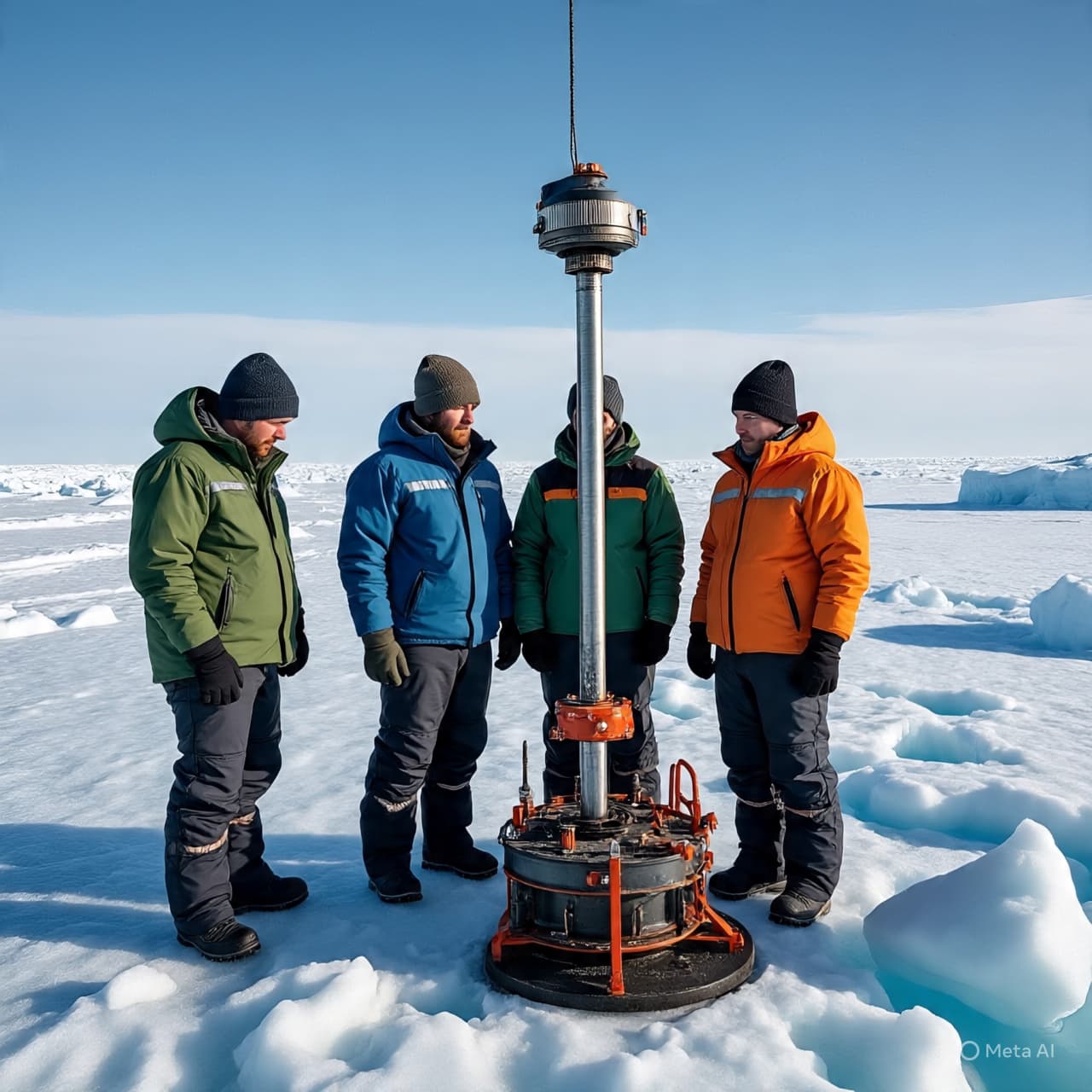
An international research team, part of the Sensitivity of the West Antarctic Ice Sheet to 2 °C of Warming (SWAIS2C) project, has succeeded in retrieving a massive sediment core from below the vast Antarctic ice sheet. In temperatures that defy human warmth, these scientists used specialized drills to melt and bore through more than 1,700 feet of solid ice and another 748 feet of sediment that lay beneath, reaching layers that have never before been seen by human eyes.
This remarkable core — the longest ever extracted from beneath an ice sheet — is more than a column of mud and ancient debris. Each stratum represents a page in Earth’s climate history, preserving evidence from perhaps 23 million years ago, when the world’s temperatures and oceans looked very different from today’s. Studying fossils and sediments locked inside these layers allows scientists to reconstruct periods of warmth and ice, offering insights into how ice sheets may behave as the planet warms.
Researchers describe this achievement as unprecedented, not just for its technical difficulty, but for its potential to answer questions that have long eluded climatologists. What temperatures have pushed ice sheets to retreat in the past? How have sea levels responded? What does this ancient record suggest about tipping points the Earth might face in the decades ahead?
As the core is prepared for detailed laboratory analysis, the implications of this work are already circulating within the scientific community. Preliminary dating of tiny fossils suggests a snapshot of a warmer past, a reminder that Earth’s climate has shifted dramatically over geological time. Understanding these shifts is essential as communities worldwide prepare for the challenges of rising seas and changing ecosystems.
In essence, these frozen sediments are ancient teachers. They remind us that change has always been part of our planet’s story — but they also warn that the pace and scale of modern warming pose questions that can be asked most clearly when we know the answers to the ones buried deep below.
AI Image Disclaimer: Visuals are created with AI tools and are not real photographs.
Sources (Media Names): CBS News KPIX News RNZ swissinfo.ch Smithsonian Magazine
Published by Banx Network. This article is part of the Banx decentralized media programme, powered by the BXE token on the XRP Ledger.