On a night that began with the flash of protest and the shadow of political upheaval, the roar of fire replaced the rustle of newspapers in Dhaka’s Karwan Bazar. For decades, the presses of Bangladesh’s leading dailies have churned out headlines at the heart of the nation’s conversations. But this week, their offices became the scene of a far different narrative — one of chaos, smoke, and the raw fragility of press freedom. In the thick, choking air of a burning newsroom, journalists found themselves not reporting history, but clinging to life within it.
It began late Thursday night, as protests surged through the capital following the death of Sharif Osman Hadi, a prominent figure in last year’s student-led uprising. Angry crowds descended upon the buildings housing Prothom Alo and The Daily Star, hurling stones, vandalising ground floors, and setting parts of the offices ablaze. Staff who had remained to work into the night were suddenly confronted with black smoke that billowed faster than anyone expected.
“I can’t breathe anymore,” wrote one journalist, trapped on the rooftop of The Daily Star building, her words a stark testament to the peril just feet below. As smoke thickened, editors, photographers and support staff sought refuge above the flames, breathing through cloths pressed tightly to their faces, gasping for air they feared would not come soon enough.
Hours passed like moments too long. Firefighters battled to douse the blaze, while military and civil defence forces worked to reach those stranded above. Around dawn, after what felt like an eternity, rescuers guided the weary and shaken staff down from the rooftop to safety. In the hushed aftermath, some clutched each other in relief; others sat silently, uncertain how to describe a night in which their own workplace became a tinderbox.
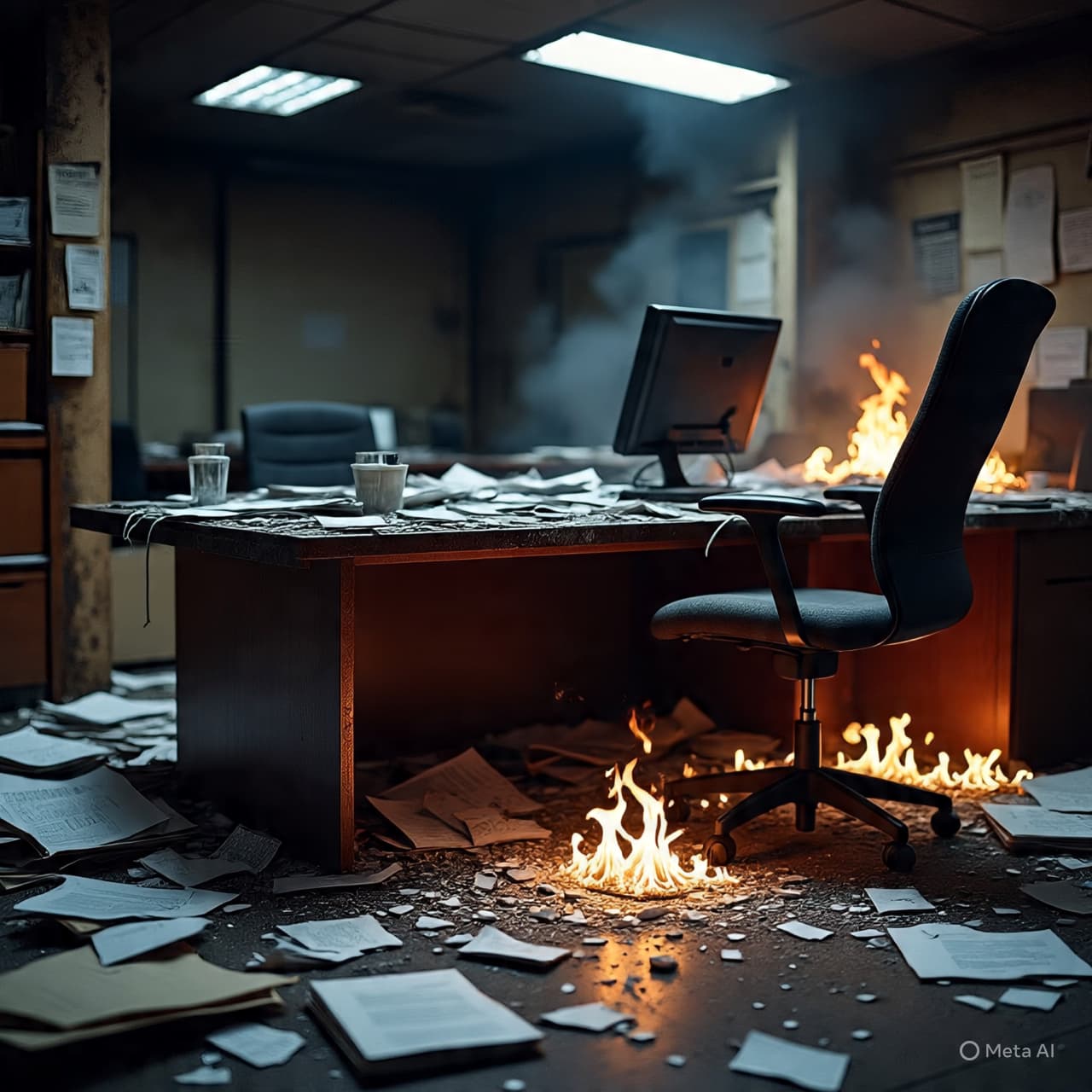
The cost was not measured in lives lost, but in the charred remains of offices that once stood as pillars of independent journalism. The Daily Star — publishing without interruption for 35 years — was forced to halt its print edition for the first time. Walls once covered with headlines and bylines now bore scorch marks, a visual testament to a moment when the very act of reporting became dangerous.
Leaders of the interim government condemned the violence, pledging justice and urging calm. But the attack — and the terrified pleas sent from inside a burning newsroom — has raised uneasy questions about freedom of expression in a nation already navigating political turmoil. Those who spent a night atop a smoke-filled rooftop now find themselves not only recounting a harrowing escape, but standing at a crossroads for press safety in Bangladesh.
AI Image Disclaimer “Graphics are AI-generated illustrations and are for representation only, not actual photographs.”
Sources
• Reuters
• Associated Press
• The Daily Star (Bangladesh)
• BBC / Saudi Gazette referencing BBC reporting
• The Business Standard (Bangladesh)
Published by Banx Network. This article is part of the Banx decentralized media programme, powered by the BXE token on the XRP Ledger.