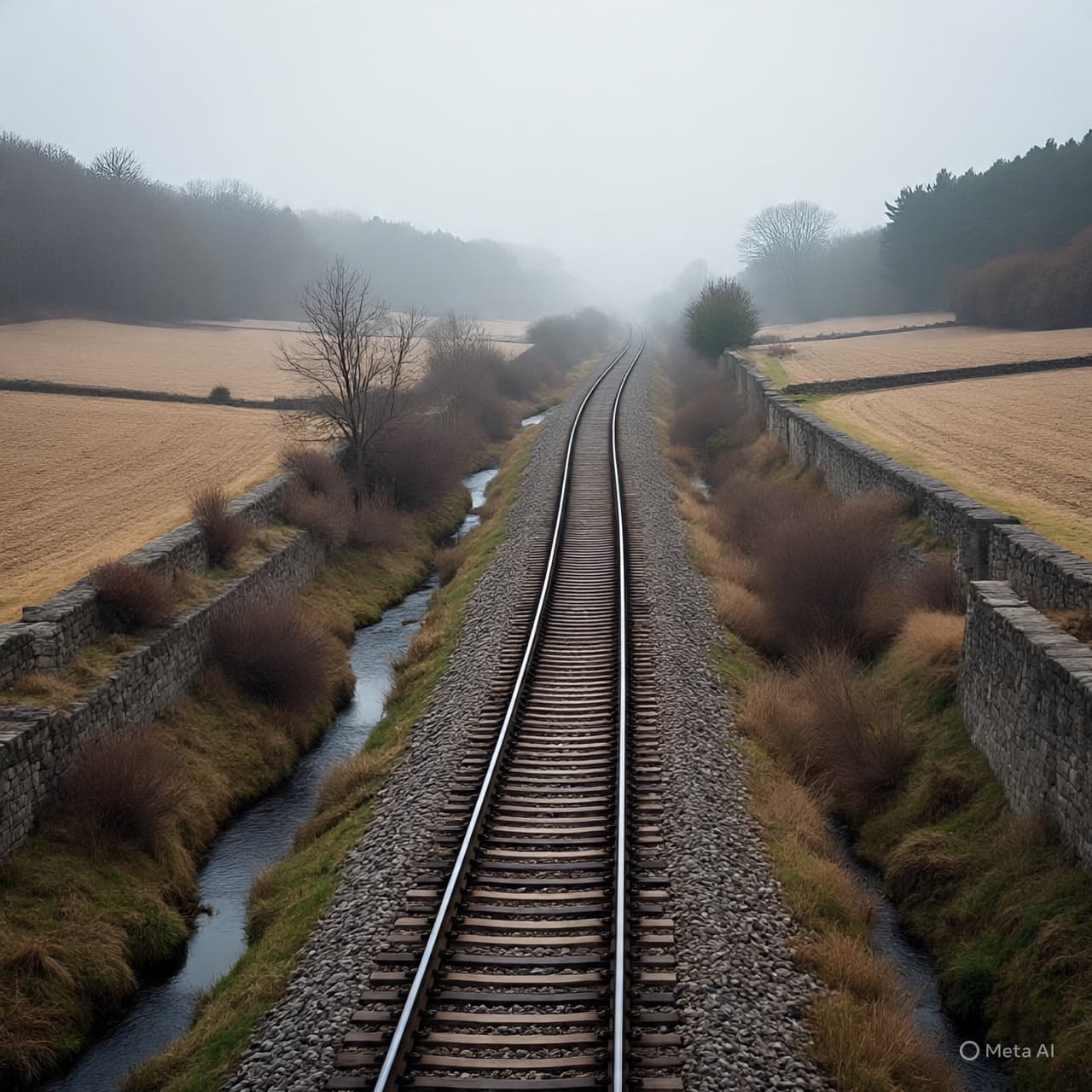
In the countryside where the tracks bend gently and the land slopes toward water, a stream moves without urgency. It carries leaves, silt, and the passing memory of storms. For months, it seemed untouched by the violence that once thundered nearby. Yet it is here, in the slow current below the rails, that new attention has settled.
Investigators examining Spain’s recent rail crash have turned their focus downward, to fragments recovered from the stream that runs alongside the accident site. Small pieces—metal, wiring, components dislodged by force—have begun to re-enter the conversation. They are unremarkable at first glance, the kind of debris nature absorbs easily. But in accidents, meaning often hides in what escapes immediate notice.
The crash itself unfolded in moments. A train, bound by routine and schedule, lost its order. What followed was noise, confusion, and then stillness. Early investigations centered on speed, signaling, and human decision-making, tracing familiar paths through data logs and procedural reviews. The landscape, meanwhile, quietly held onto what fell beyond the tracks.
Recent recoveries from the stream have prompted renewed examination of mechanical factors. Investigators are studying whether dislodged parts show signs of pre-impact failure or damage sustained only after derailment. The distinction matters. It separates cause from consequence, intention from accident, system from circumstance.
Spain’s rail network is among the most extensive in Europe, shaped by decades of investment and modernization. Crashes are rare, which makes each one feel heavier, more personal. When systems built for precision falter, the public instinctively looks for clarity—not to assign blame, but to restore trust in the rhythms of daily movement.
Water complicates evidence. Time softens edges, corrodes surfaces, and rearranges fragments. Yet it also preserves, sheltering objects from further disturbance. What the stream offers now is not certainty, but possibility—a chance to confirm, challenge, or refine conclusions already forming.
For families affected by the crash, the search for answers has never paused. Official updates move carefully, measured by forensic timelines rather than emotional ones. Each new detail, however small, carries weight. It suggests progress, or at least attention, in a process that can otherwise feel remote.
There is something fitting, if unsettling, about clues emerging from a place designed to flow past trouble rather than confront it. The stream did not cause the crash. It simply bore witness, holding onto pieces until someone thought to look.
As investigators continue their work, the broader lesson remains familiar. Modern transport depends not only on speed and efficiency, but on vigilance—on noticing what slips away from the obvious path. Sometimes the answer is not on the rails themselves, but just beyond them, waiting in the quiet persistence of water.
AI Image Disclaimer
Illustrations were created using AI tools and are not real photographs.
Sources (names only)
Reuters Associated Press El País BBC News The Guardian
Published by Banx Network. This article is part of the Banx decentralized media programme, powered by the BXE token on the XRP Ledger.