
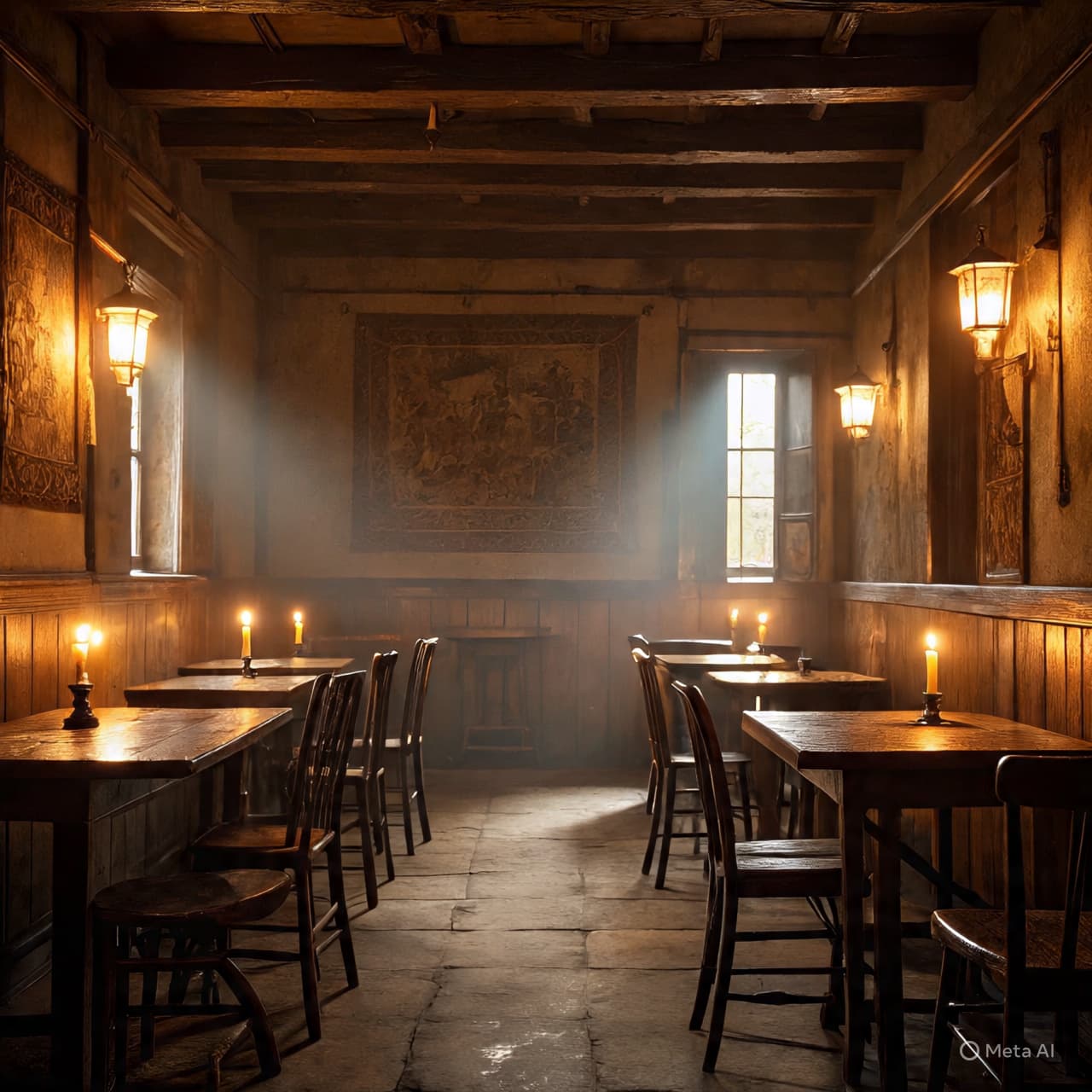
Some places do not announce their importance. They sit quietly, absorbing voices, arguments, pauses between sentences. A wooden table. A corner bench. The soft rhythm of glasses meeting wood. In Bonn, one such tavern has now closed its doors, ending a long chapter in the city’s everyday intellectual life.
The tavern was not a monument in stone, nor a museum behind glass. It was a working place, shaped by repetition rather than reverence. Students gathered there. Locals returned out of habit. And more than a century ago, Friedrich Nietzsche is said to have passed through its rooms — not as an icon, but as a young mind among others, thinking, listening, and lingering.
Its closure is not dramatic. No sudden collapse, no scandal. Just the slow arithmetic of modern cities: rising costs, changing habits, fewer evenings spent sitting without urgency. Like many traditional establishments across Europe, the tavern found itself outpaced by a world that prefers movement to pause.
Yet places like this matter precisely because they resist efficiency. Taverns have long served as informal universities — spaces where ideas stretch out, where conversations drift without agenda. Nietzsche’s philosophy often returned to the tension between structure and instinct, between the ordered world and the unruly forces beneath it. It feels fitting that a place associated with his presence would exist outside institutional design, shaped instead by time and repetition.
Bonn itself has changed. Once a political capital, now a quieter administrative city, it carries layers of identity that rarely announce themselves. The tavern belonged to that understated tradition. It did not sell philosophy. It offered something simpler: continuity. A room that stayed familiar while generations passed through.
For those who visited, the loss is not about Nietzsche as a historical figure. It is about atmosphere. About knowing that somewhere in the city there existed a space where thought once wandered freely, unrecorded, unarchived. Philosophy before publication. Ideas before certainty.
There is a tendency to preserve history by freezing it. Plaques are installed. Dates are printed. Names are elevated. But living history survives differently — through use, through routine, through wear. A tavern remains meaningful not because a philosopher once entered it, but because people kept entering after him.
With its closure, Bonn loses more than a business. It loses a quiet permission: the permission to sit without purpose, to argue without resolution, to let thoughts unfold slowly over time. These are not things that migrate easily to screens or schedules.
The door is now shut. The chairs stacked. The tables wiped clean one final time. What remains is memory — not monumental, not official, but human in scale. And perhaps that is appropriate. Nietzsche himself wrote often of impermanence, of becoming rather than being.
In that sense, the tavern’s end does not erase its meaning. It completes it. A place where ideas once lingered has joined them, existing now not in rooms, but in recollection.
AI Image Disclaimer Visuals are AI-generated and serve as conceptual representations.
Sources Reuters Associated Press Deutsche Welle Frankfurter Allgemeine Zeitung The Guardian
Published by Banx Network. This article is part of the Banx decentralized media programme, powered by the BXE token on the XRP Ledger.


.jpg&w=3840&q=75 "US Declares Drought Disaster for Parts of Puerto Rico as Dry Conditions Persist")