There are days when the sea seems content to lie flat beneath the sky, reflecting light like polished glass. And then there are days when it writes in motion — sketching spirals, etching crescents, and tracing luminous swirls that appear as if guided by an unseen hand. Around Jeju Island, such patterns have recently unfurled, turning the waters into a living canvas that shifts with wind and tide.
Captured in satellite imagery highlighted by NASA Earth Observatory, the showy swirls are not mere decoration. They are the visible signatures of ocean currents in conversation with one another. Here, where the warm Tsushima Current brushes past cooler surrounding waters, subtle differences in temperature and salinity create boundaries. Along these invisible edges, plankton gathers, sediments drift, and light scatters differently — giving rise to the dramatic shapes seen from above.
To the human eye at sea level, the surface might seem unchanged. But from orbit, the waters south of the Korean Peninsula reveal circular eddies and sweeping arcs. These formations often occur in the channel between Jeju and the mainland, a dynamic passage linking the East China Sea and the Korea Strait. In this corridor, currents accelerate, collide, and curl back on themselves, much like wind sculpting sand dunes in a desert.
Such swirls are known as oceanic eddies — rotating pockets of water that can span miles. They may last days or weeks, gently transporting heat, nutrients, and microscopic life. For marine ecosystems, these spinning formations are not spectacles but lifelines. Nutrient-rich waters rising from below can stimulate phytoplankton blooms, which in turn sustain fish populations. Fishermen, long attuned to the sea’s subtle cues, often understand that where currents converge, life gathers.
Scientists from institutions including the Korea Meteorological Administration monitor these waters closely. Beyond their aesthetic appeal, the swirls provide insight into climate variability, seasonal transitions, and long-term ocean health. Temperature gradients and shifting currents can signal broader environmental changes, linking the patterns near Jeju to larger Pacific systems.
Yet there is something quietly humbling about seeing Earth in this way. The swirls do not roar; they do not demand attention. They simply appear — luminous against deep blue — reminding us that motion is constant, even when imperceptible. The ocean, like a patient artist, composes and recomposes its designs without pause.
For residents and visitors to Jeju, whose volcanic cliffs and windswept fields already speak of natural drama, the swirling waters add another chapter. They are a reminder that the island’s story is not confined to land. Beneath ferry routes and fishing boats, beneath sunlight and moonlight, the sea is engaged in an endless choreography.
As satellites continue to orbit and scientists continue to observe, these showy swirls offer both data and quiet wonder. They suggest that even in a world measured in metrics and models, beauty and knowledge often arrive together — traced in circles upon the sea.
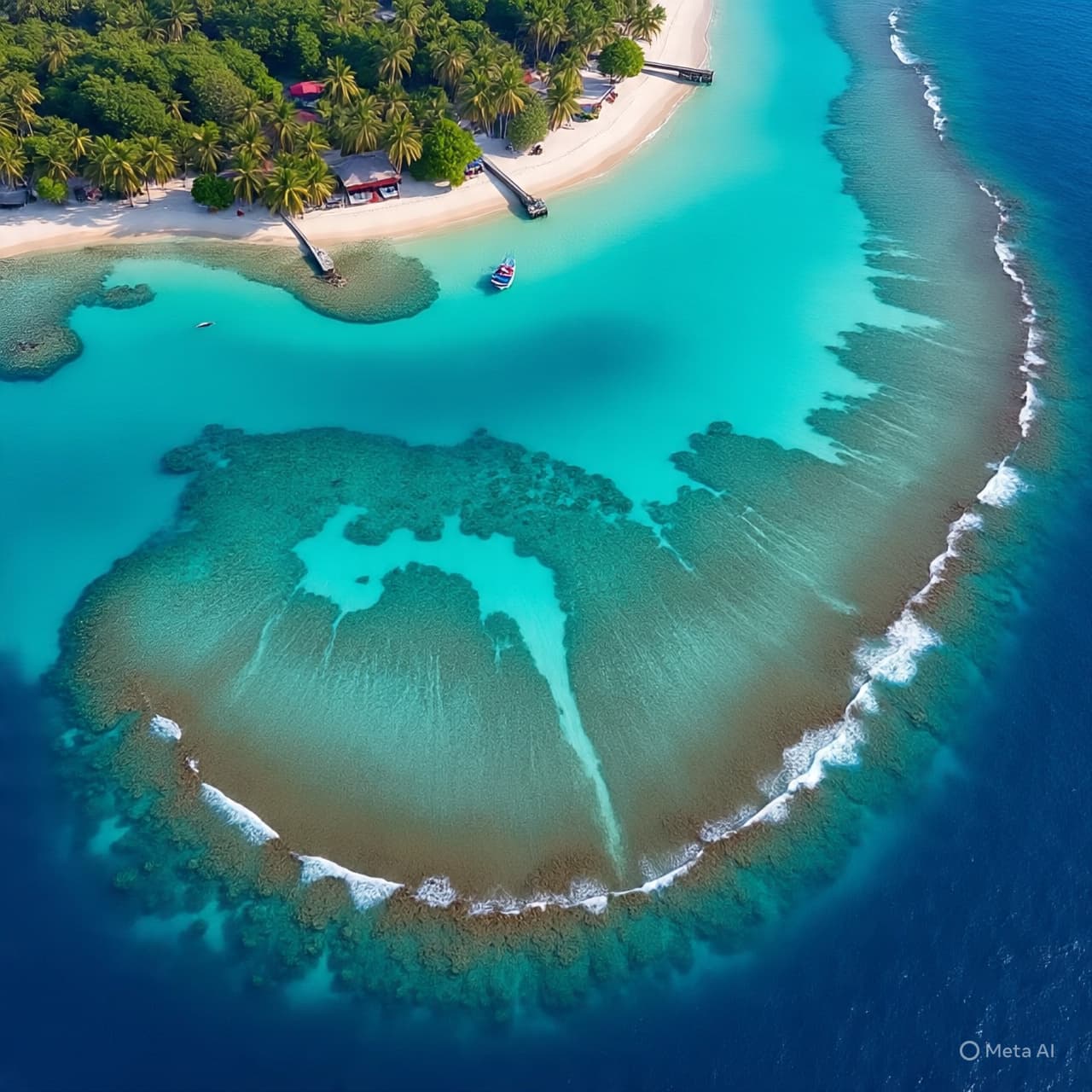
AI Image Disclaimer
Visuals are created with AI tools and are not real photographs.
Source Check
Credible mainstream and scientific sources covering ocean swirls and satellite imagery around Jeju:
1. NASA Earth Observatory 2. The Korea Times 3. The Korea Herald 4. Yonhap News Agency 5. The Guardian (science/environment)
Published by Banx Network. This article is part of the Banx decentralized media programme, powered by the BXE token on the XRP Ledger.