In the shadowed folds of deep time, long before calendars and kingdoms and the names we give ourselves, two branches of human lineage brushed gently against one another. Like rivers merging, diverging, and sometimes crossing again in subtle eddies, the paths of Homo sapiens and Neanderthals met in the terrains of ancient Europe and Asia — not only in the footprints they left behind but in the very strands of their DNA.
Long hidden within our genomes are the echoes of those prehistoric encounters — not loud tales of battle or rivalry, but whispered genetic signatures of interwoven lives. For decades, scientists have known that most people of non-African descent carry a small but persistent legacy of Neanderthal DNA, a quiet testament that our ancestors sometimes shared intimacy with these close cousins.
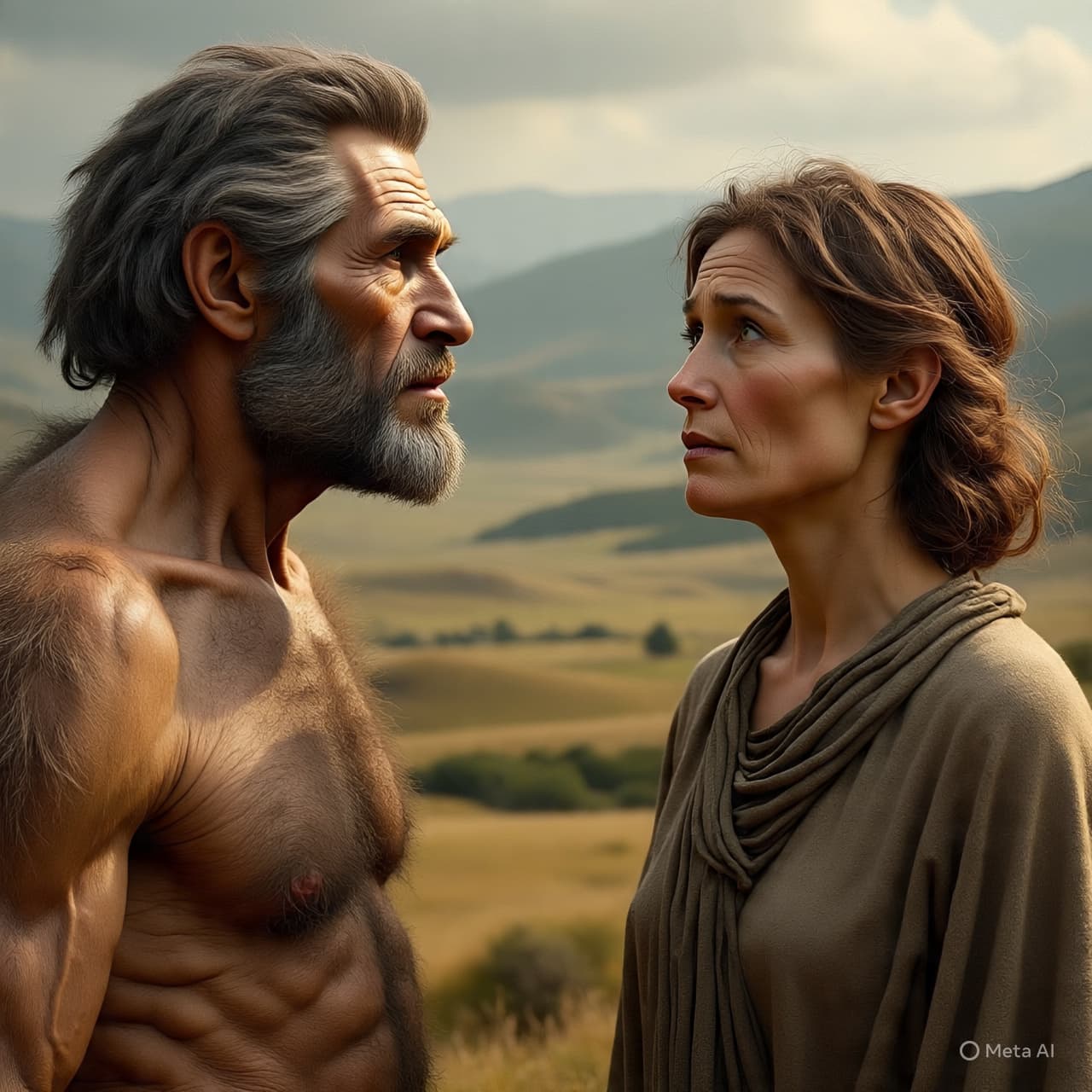
A new wave of genetic research has now begun to tease apart not just the fact of these ancient unions but something more nuanced: the direction of them. Geneticists studying segments of DNA passed down through generations have found intriguing asymmetries — patterns that suggest prehistoric liaisons were more often between male Neanderthals and female modern humans than the reverse.
This insight comes from careful comparisons of ancient Neanderthal genomes with those of early modern humans. Because males and females pass on different combinations of chromosomes, the trace footprints left in our inherited DNA act like faded brushstrokes on a canvas. In these patterns, the artifacts of deeper time reveal that more X chromosome material from early humans ended up in Neanderthal DNA than vice versa — a subtle clue indicating a recurring pattern of male Neanderthals pairing with female Homo sapiens.
That pattern doesn’t tell us why these relationships occurred, nor does it ascribe motives or emotions to beings who lived tens of thousands of years ago. It does suggest, however, that certain encounters were repeated enough to leave a statistical echo in the genomes of both species. In the long weave of evolution, brief moments of shared life — even those spanning only a generation — can ripple outward, shaping genetic heritage in ways we are only beginning to understand.
Our closest extinct relatives thus left more than stone tools and fossils; they also left traces of connection that survive within us. In those silent strands of DNA, we carry an ancient story of meeting — and, yes, of mating — reminding us that the tapestry of human ancestry is richer and more interlaced than any single line of descent might suggest.
AI Image Disclaimer (Rotated Wording) Visuals are created with AI tools and are not real photographs.
Sources The Guardian Nature Live Science ScienceDaily AP News
Published by Banx Network. This article is part of the Banx decentralized media programme, powered by the BXE token on the XRP Ledger.