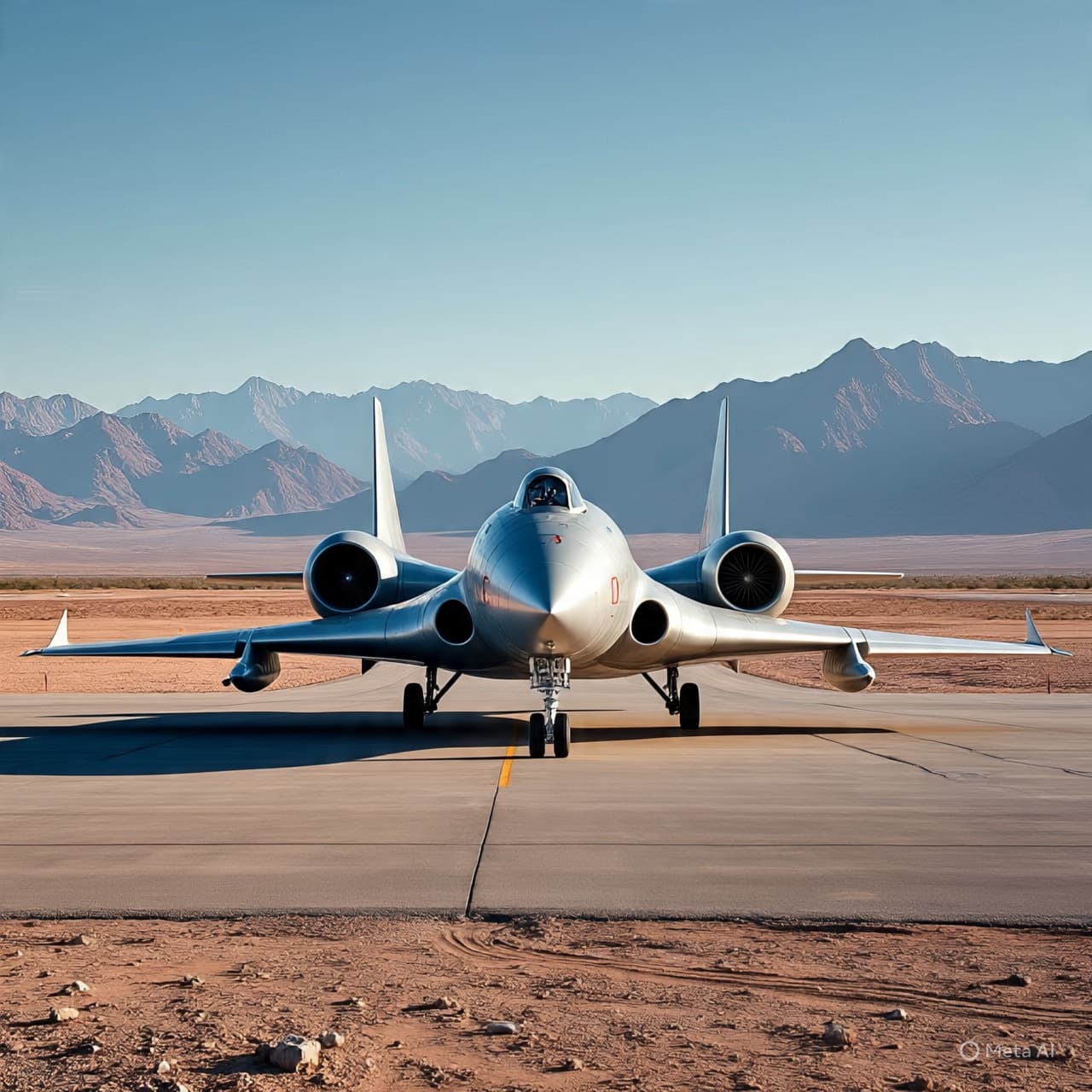
There are runways where the horizon seems to widen rather than end. In the dry stillness of the California desert, aircraft do more than take off and land—they test the boundaries of possibility. Here, flight is not routine transportation; it is inquiry. It is a question posed to air and answered in motion.
At the heart of this quiet ambition stands NASA’s primary center for experimental aviation, the NASA Armstrong Flight Research Center, located at Edwards Air Force Base. For decades, this desert facility has served as the agency’s proving ground for new aircraft technologies, piloted research missions, and aerodynamic innovation.
Experimental flight is rarely about spectacle. It is about measurement—about testing materials against stress, refining control systems, and collecting data that may shape the next generation of commercial and military aviation. Engineers and pilots collaborate to evaluate propulsion systems, noise reduction strategies, and fuel efficiency improvements, often in aircraft that appear both familiar and subtly transformed.
Among the center’s most closely watched initiatives is the development of next-generation X-planes. These experimental aircraft serve as flying laboratories, exploring concepts such as low-boom supersonic travel and hybrid-electric propulsion. Each project is designed not simply to break records, but to gather evidence—data that can guide regulators, manufacturers, and policymakers toward safer and more sustainable flight.
The desert setting offers practical advantages. Clear skies and expansive dry lakebeds provide natural runways and wide safety margins. Yet the significance of the site extends beyond geography. Since the mid-20th century, test flights conducted here have contributed to advancements in aerodynamics, materials science, and avionics that now define modern aviation.
Today, NASA’s aeronautics mission focuses on three broad priorities: reducing aviation’s environmental footprint, enhancing safety through advanced autonomy and data systems, and enabling new forms of mobility such as urban air transport. Experimental aircraft at Armstrong serve as platforms to test quieter engines, sustainable aviation fuels, and improved flight control algorithms.
One notable project, the X-59 Quiet SuperSonic Technology aircraft, aims to demonstrate that supersonic flight over land can be achieved without the disruptive sonic boom traditionally associated with breaking the sound barrier. By reshaping the aircraft’s fuselage and nose profile, engineers hope to reduce shockwaves to a softer “thump,” potentially informing future regulatory changes.
At the same time, research into electrified propulsion seeks to address climate concerns. Hybrid-electric systems are being tested to evaluate efficiency gains and emissions reductions. While commercial implementation may take years, experimental validation is a necessary first step.
The work is methodical. Flights are conducted under strict protocols. Data is analyzed with precision. Success is measured not in headlines, but in incremental refinement. Each test contributes to a broader understanding of how aircraft can fly farther, cleaner, and more quietly.
In steady terms, NASA confirms that ongoing experimental flight programs at Armstrong continue to support the agency’s aeronautics mission. Projects currently underway include low-boom supersonic research and sustainable propulsion testing, with further updates expected as flight trials progress. The desert runway remains active, not as a stage for spectacle, but as a workshop for the future of flight.
AI Image Disclaimer Graphics are AI-generated and intended for representation, not reality.
Source Check (Credible Media Coverage Identified): NASA Space.com Aviation Week Scientific American The New York Times
Published by Banx Network. This article is part of the Banx decentralized media programme, powered by the BXE token on the XRP Ledger.