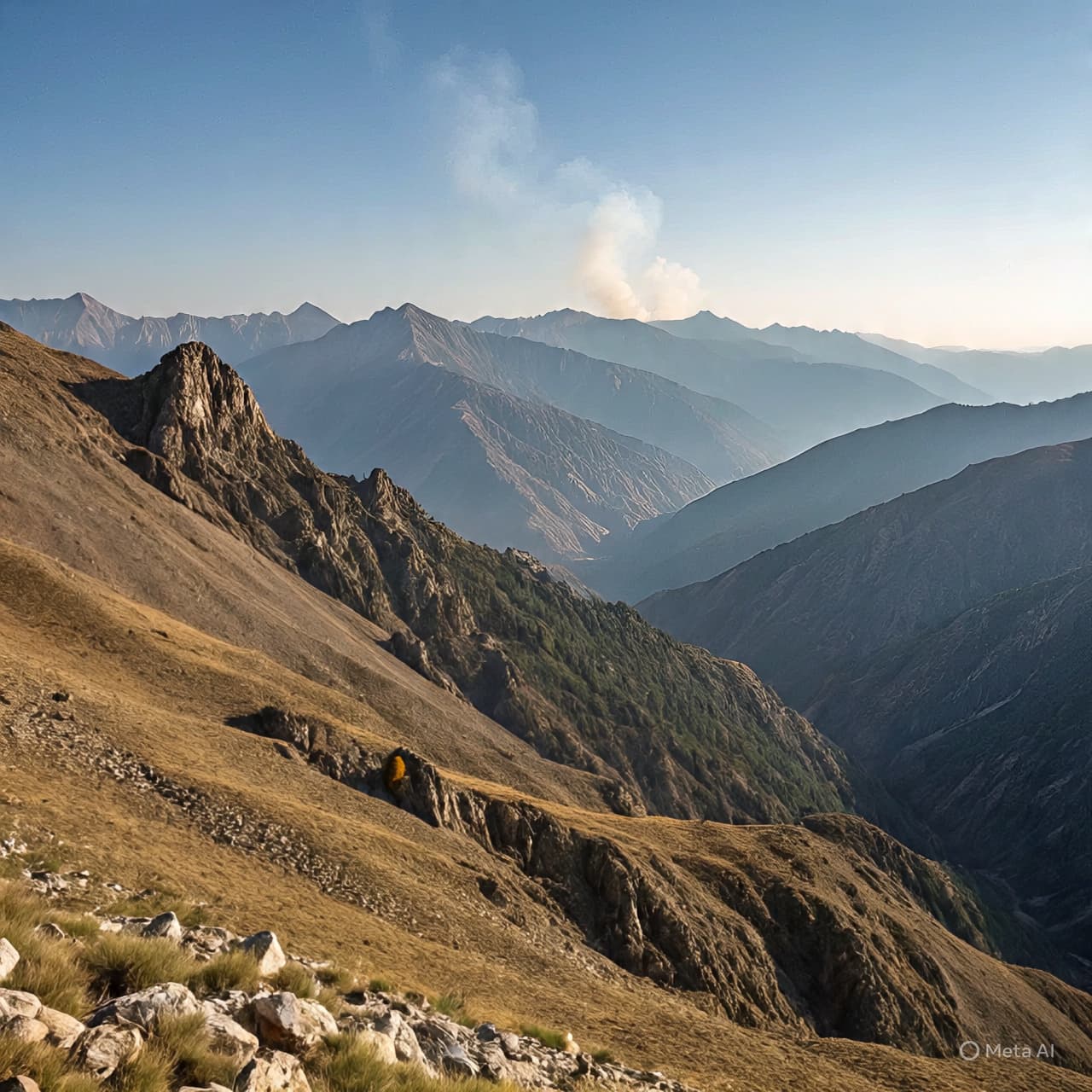
In the high passes where dust gathers along stone ridges and wind moves freely between valleys, the border has rarely felt like a fixed line. It is a place of crossings and cautions, of watchtowers and worn footpaths. This week, it has also become a corridor of smoke. As fighting between Pakistan and Afghanistan entered its fifth day, neither side showed signs of stepping back, and the mountains carried the sound of artillery further than usual.
The violence has centered along stretches of the long-disputed frontier commonly known as the Durand Line, a boundary that has never quite settled into quiet acceptance. Officials on both sides have traded accusations over cross-border attacks and the presence of militant groups operating near the line. Airstrikes and artillery shelling have reportedly struck border districts, displacing families who live in villages that cling to slopes and valleys shaped more by geography than by politics.
Authorities in Islamabad have maintained that operations are aimed at militant targets they say threaten security inside Pakistan, pointing to recent attacks attributed to insurgent groups. Leaders in Kabul, governed by the Taliban, have rejected those claims and accused Pakistan of violating Afghan sovereignty. Each statement has been followed by another, firm in tone, steady in conviction, the language of diplomacy giving way to the cadence of warning.
For residents near the border, the days have blurred into a cycle of sirens, brief evacuations, and anxious returns. Schools have closed in some districts. Markets have opened cautiously, if at all. The rhythm of daily life—normally marked by trade, travel, and shared kinship across tribal lines—has been interrupted by the unpredictability of escalation. The frontier, already fragile, now feels suspended between retaliation and restraint.
The tensions are not new. Relations between the two neighbors have been strained for years, shaped by disputes over security, migration, and the movement of armed groups. Since the Taliban’s return to power in Kabul in 2021, Pakistan has repeatedly called for stronger action against militants it says operate from Afghan territory, including factions linked to cross-border attacks. Afghan authorities have countered that they are not responsible for violence beyond their borders and have urged dialogue over confrontation.
Regional observers warn that prolonged clashes risk destabilizing a corridor already burdened by economic hardship and humanitarian strain. Border closures have disrupted trade routes vital to both economies. Aid agencies monitoring the situation note that civilian displacement, even when temporary, compounds existing vulnerabilities in communities with limited access to healthcare and infrastructure.
Yet even amid the exchanges of fire, there have been intermittent calls for de-escalation from diplomats and regional partners. Past flare-ups have sometimes given way to uneasy calm after military and political channels reopened. Whether this moment will follow a similar pattern remains uncertain. Five days into the confrontation, the signals have leaned more toward resolve than retreat.
As dusk falls over the ridgelines, smoke thins but does not disappear entirely. The mountains remain, ancient and indifferent, holding the echoes of both argument and appeal. For now, the border waits—its villages listening for either the quiet return of routine or the distant rumble that suggests another night without rest.
AI Image Disclaimer
Illustrations were created using AI tools and are not real photographs.
Sources
Reuters Associated Press Al Jazeera BBC News Dawn
Published by Banx Network. This article is part of the Banx decentralized media programme, powered by the BXE token on the XRP Ledger.