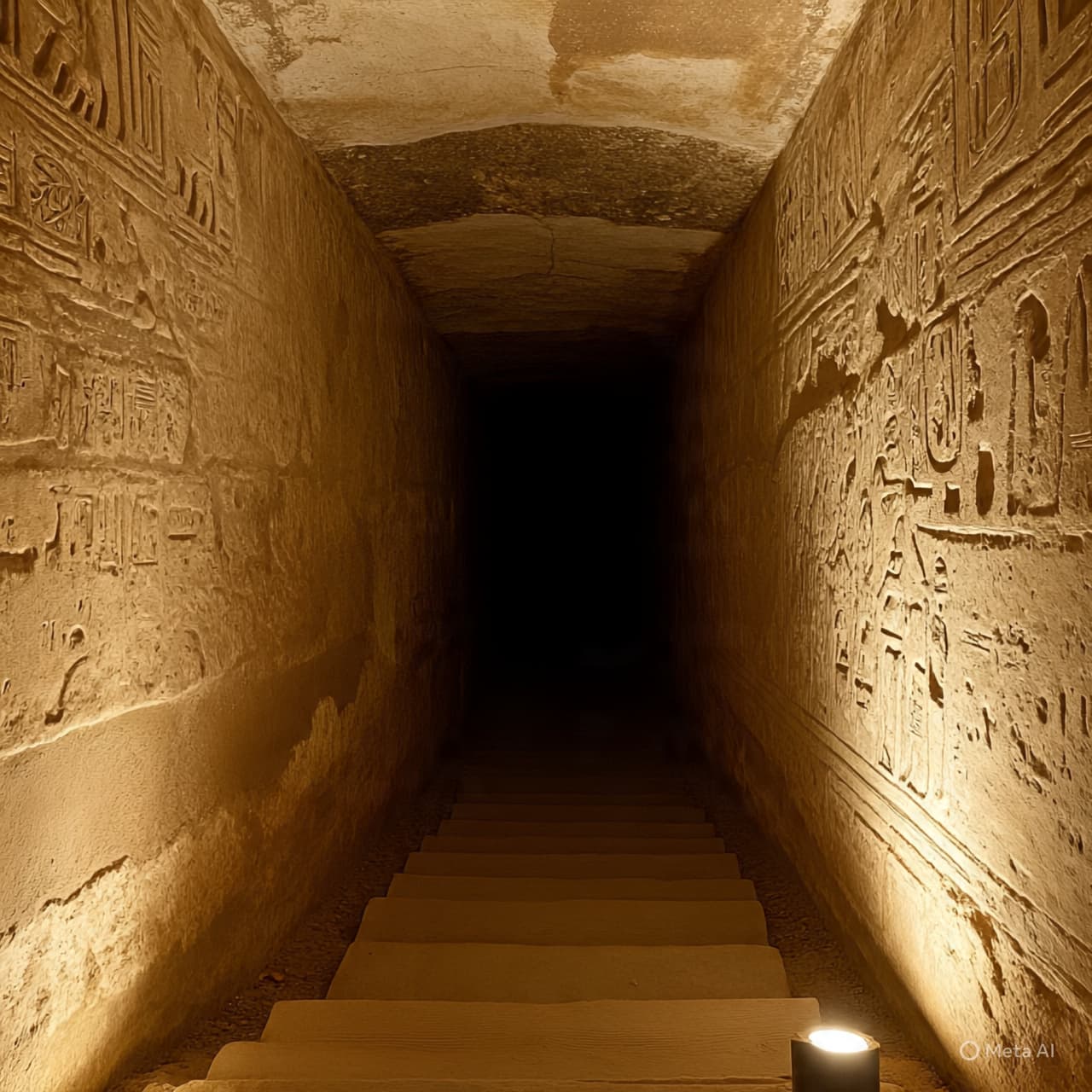
In the still warmth of Luxor’s desert air, a heavy stone door has swung back open — a gateway to centuries of silence, now stirred by light once more. The tomb of Pharaoh Amenhotep III, long hushed by time and restoration, has been unveiled to visitors after more than twenty years of careful renewal.
The tomb, nestled in the western reaches of the Valley of the Kings, traces back to the reign of Amenhotep III in the 18th Dynasty, roughly between 1390 and 1350 BCE. It was discovered in 1799 and suffered looting early on — its sarcophagus taken, artifacts removed, walls damaged by neglect and elements. Now, after a three-phase restoration led by Japanese experts with UNESCO and Egypt’s antiquities authorities, the site stands renewed in part: paintings of gods, frescoes of the king with deities, and inscriptions from the Book of the Dead shine once more where darkness had taken hold.
The entry passage descends some 14 meters, sloping gently over 36 meters from the Valley’s rim. From there, visitors reach the main burial chamber of the king, alongside two side chambers for Queens Tiye and Sitamun. Though not every wall is fully decorated, the restored sections reveal breathtaking artistry — color, hieroglyph, and divine imagery that survived centuries. The lid of the original sarcophagus remains missing; what is seen now is the frame and preserved surrounding stone elements.
Authorities say the reopening comes just ahead of the inauguration of the Grand Egyptian Museum in Cairo, part of a wider effort to renew Egypt’s heritage tourism. Experts worked meticulously: restoring wall paintings, upgrading lighting, making visitor paths safer, and protecting the tomb from further deterioration.
Published by Banx Network. This article is part of the Banx decentralized media programme, powered by the BXE token on the XRP Ledger.