Morning in the high country of the American West often begins in quiet layers: mist sliding across pine forests, thin clouds drifting over ridges, and the slow breathing of the earth beneath Yellowstone’s restless ground. In that landscape of heat and silence, time sometimes seems suspended. Pools simmer gently, vents whisper steam, and the surface of the land appears calm—until, occasionally, the quiet breaks.
At the edge of the Norris Geyser Basin, a pool known as Yellowstone National Park stirred after years of stillness. Beneath the crust of mineral-stained rock, pressure gathered in hidden channels, moving through water heated deep below the surface. Then, without much warning, the geyser erupted.
The feature is called Echinus Geyser, a rare geothermal spring known for the unusual chemistry of its waters. Its eruptions had been absent since 2020, leaving a six-year pause in a place where the earth rarely repeats itself on a predictable schedule. In early February 2026, the basin began to show subtle signs of change—water rippling across the surface, runoff channels filling, and the pool slowly agitating before its first eruption returned.
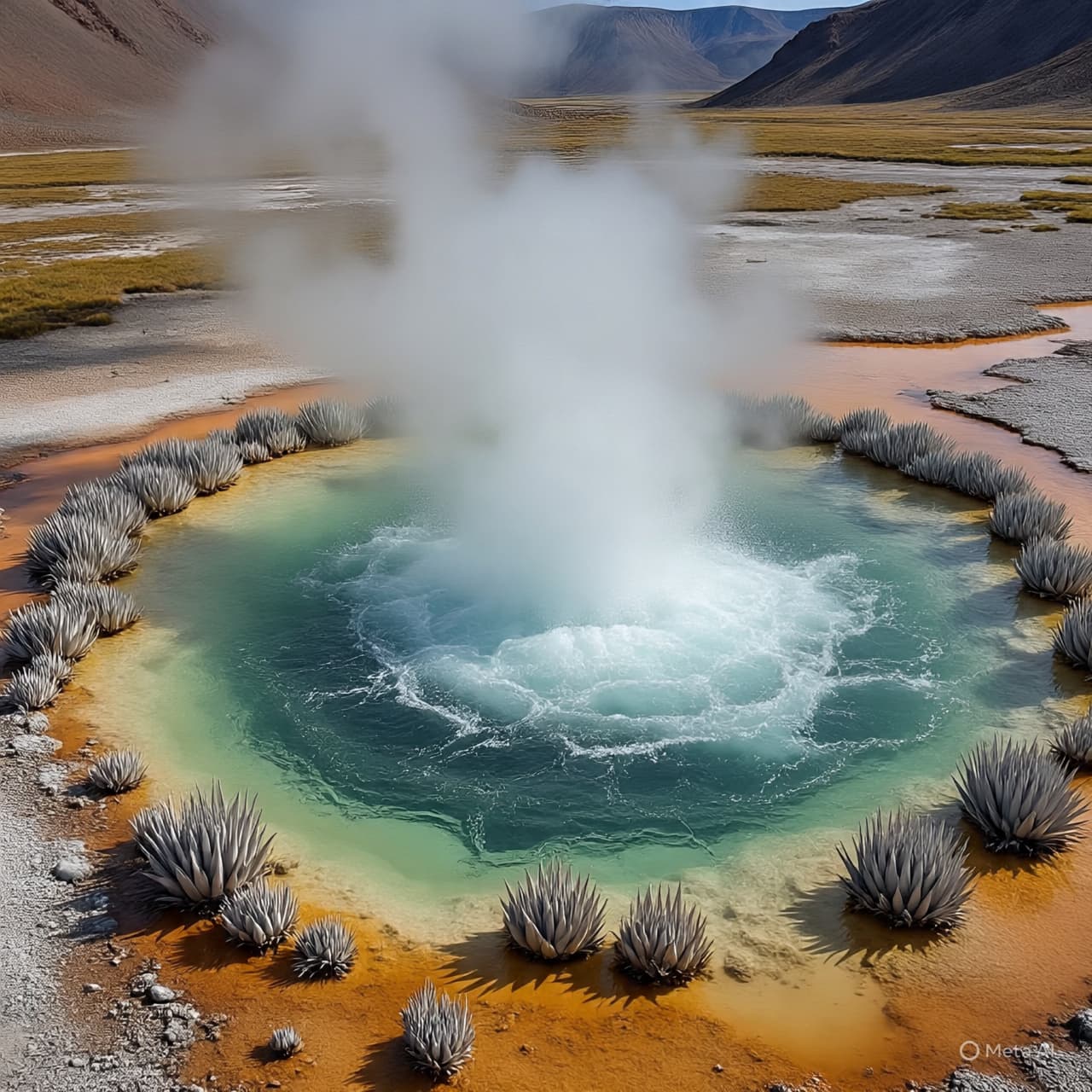
When the geyser finally broke through the surface again, it sent bursts of steaming water roughly 20 to 30 feet into the air. The eruptions last only a few minutes, but they arrive with force, draining the pool before it gradually refills for the next cycle. In recent weeks, some eruptions have appeared every few hours, a rhythm reminiscent of activity seen years earlier.
Echinus is unusual even in a park famous for geothermal extremes. Scientists describe it as the largest known acidic geyser in the world, with waters that carry a low pH similar to vinegar. The acidity slowly dissolves surrounding rock, shaping the jagged mineral formations that ring its pool—spiny shapes that inspired its name in the late nineteenth century.
Its return has drawn attention not because it signals danger, but because it reflects the quiet complexity beneath Yellowstone’s surface. Geologists say the activity is a natural fluctuation within the park’s geothermal system, where eruptions often begin and end with little warning. At the same time, routine monitoring shows no signs of unusual volcanic unrest in the region.
For visitors walking through the Norris basin, the moment can appear almost theatrical—steam rising, water bursting skyward, and the mineral-streaked ground briefly alive with motion. Yet such events are simply part of Yellowstone’s long rhythm, where the land shifts slowly and the next eruption is always uncertain.
Officials say the geyser’s activity may continue sporadically in the coming months, giving some summer visitors a chance to witness the rare phenomenon if the timing is right.
AI Image Disclaimer Illustrations were created using AI tools and are not real photographs.
Source Check
CBS News Good Morning America KXLH News MTN News Outside
Published by Banx Network. This article is part of the Banx decentralized media programme, powered by the BXE token on the XRP Ledger.