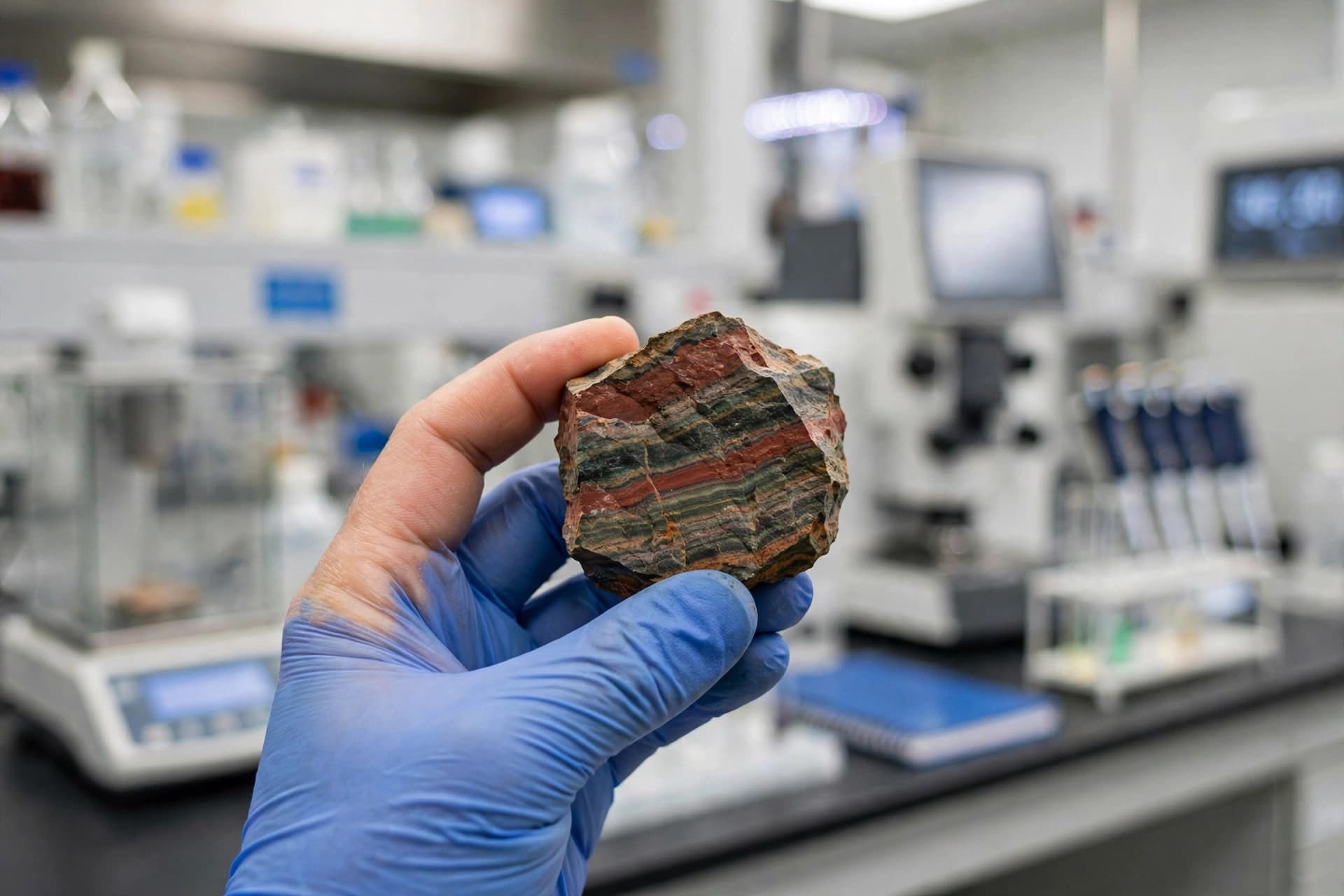
In a lab nestled among instruments chilled closer to absolute zero than to any warmth we know, there exists a kind of quiet that feels less like absence and more like promise. Here, physicists peer into the subtle motions of electrons and magnetism, trying to catch a glimpse of a world where resistance vanishes and coherence thrives. It is in this hushed domain that the notion of triplet superconductivity has stirred a measured excitement — not the roar of triumph, but the softly unfolding awareness that, perhaps, a long‑sought key is finally within reach.
Superconductors, in their conventional form, are already remarkable. In these materials, electrons pair up in a delicate embrace that allows them to flow without resistance, like dancers gliding effortlessly across a ballroom floor. Yet those pairs — called singlet pairs — lack one defining feature: spin. It is the spin of electrons that holds a deeper promise, especially for quantum technologies that depend on entangled states, coherence, and controlled motion at the smallest scales. A triplet superconductor, in which these spinning partners move in unison, could open a pathway beyond mere electrical efficiency to a realm where spin currents flow without energy loss and quantum bits — or qubits — find a more stable home.
Professor Jacob Linder and his collaborators have been threading this subtle needle. At the Norwegian University of Science and Technology, Linder’s team — together with colleagues in Italy — has been probing an alloy of niobium and rhenium known as NbRe, and they have observed behaviors that suggest the material may harbor this exotic triplet state. Such a state differs from the conventional singlet superconductors not only in its allowance for spin‑carrying currents, but in the very nature of how electrons lock arms. If confirmed, such a material could, in principle, ferry quantum information encoded in spin with minimal disturbance, a quality that has been elusive in many of today’s quantum computing platforms.
This shift in perspective — from resistance to coherence, from electrical currents alone to spin‑rich conduits — matters deeply. In quantum computing, operations must be both fast and fault‑tolerant, a balance that has proven difficult to strike. Conventional superconductors help reduce energy loss, but their inability to carry spin without dissipation has limited their usefulness in next‑generation architectures. Triplet superconductivity, by contrast, could provide a medium where both current and spin are transported without loss, and where exotic entities like Majorana particles may arise. These peculiar quasi‑particles — their own antiparticles — are theorized to be especially robust against the decoherence that plagues many quantum systems, offering routes toward qubits that retain information longer and with greater fidelity.
The NbRe alloy itself does not yet resolve all questions. It exhibits superconducting behavior at about 7 Kelvin, a temperature still frigid by ordinary standards but comparatively “warm” in the esoteric world of quantum materials. Detection of triplet superconductivity must be corroborated by further experimental work and independent verification from other groups, and the path from demonstration to practical technology remains long. Even so, the hints are compelling: a material that carries spin with zero resistance, a realm where quantum coherence might be less fragile, and the tantalizing possibility of stabilizing qubits against error.
This is not the first time scientists have sensed the contours of unusual superconductive landscapes. Past research has revealed intricate links between magnetism and superconductivity, as well as novel topological states that could host quantum excitations useful for computation. But triplet superconductivity — especially in a bulk material rather than a contrived interface — feels like a moment where theory and experiment may be converging toward something deeper. In this dance of spins and chilled lattices, one sees not only a material property but a metaphor for the slow, steady rhythm of scientific discovery: a search not for spectacle, but for substance.
In plain terms, physicists led by Jacob Linder and collaborators have reported evidence that a niobium–rhenium alloy known as NbRe may exhibit properties consistent with triplet superconductivity, an exotic form of superconductivity in which electron pairs carry spin. This differs from traditional “singlet” superconductors and, if confirmed, could have useful implications for quantum computing by enabling energy‑efficient spin transport and stabilizing quantum information. The research demonstrates unusual superconducting behavior at very low temperatures and points toward future studies needed to verify and harness such materials for quantum technologies.
AI Image Disclaimer
Illustrations were created using AI tools and serve as conceptual representations.
Sources (Media Names Only)
Phys.org ScienceDaily
Published by Banx Network. This article is part of the Banx decentralized media programme, powered by the BXE token on the XRP Ledger.