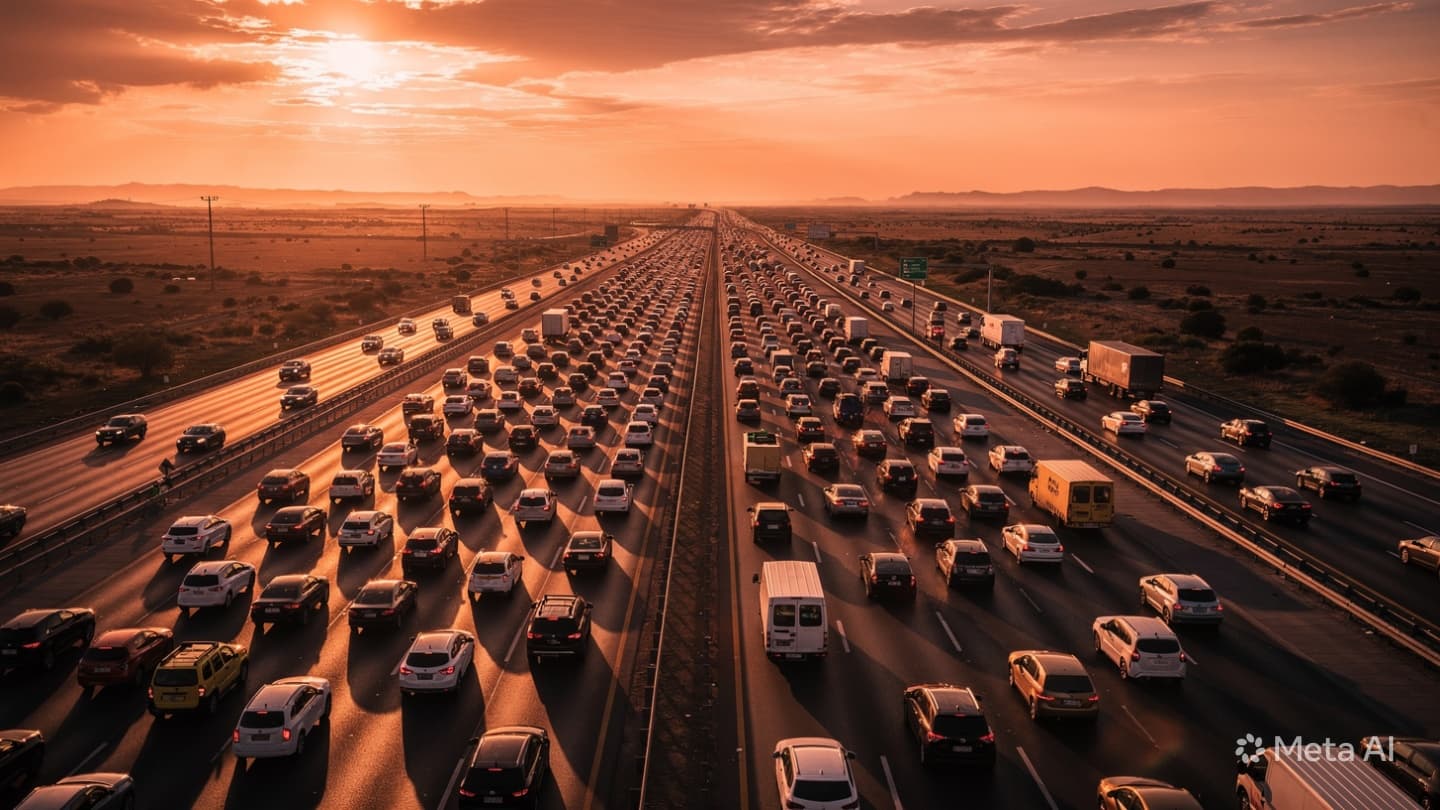
The interstate is the modern artery of our existence, a ribbon of concrete that hums with the persistent, mechanical vibration of thousands of lives in motion. It is a landscape defined by speed and predictability, where the horizon is always just a few miles ahead and the pace of life is dictated by the velocity of our transit. When that rhythm is interrupted—when the steady, flowing stream of commuters and travelers is suddenly forced into a stagnant, motionless queue—the effect is jarring. It is a rupture in the expected flow, a moment where the highway ceases to be a conduit and becomes, instead, a site of collective stillness.
In the shadow of a multi-vehicle pileup, the atmosphere shifts from the functional to the existential. The soundscape changes from the roar of engines to the hollow, punctuated notes of sirens slicing through the stagnant air. Those caught in the gridlock look out onto the scene with a mix of curiosity and dread, their own journeys momentarily eclipsed by the gravity of the disruption unfolding ahead. The interstate, so often taken for granted as a mere background for our daily transit, becomes the foreground of a sudden, sober human drama.
The pileup itself is a manifestation of the thin margins that define our high-speed lives. In the blink of an eye, the complex choreography of travel—the distance between cars, the focus of the driver, the shifting conditions of the pavement—collapses into a single, chaotic event. It is a reminder of the inherent risk that attends our mobility, a hidden cost buried in the efficiency of modern transit. As emergency vehicles maneuver through the debris, the rest of the world waits in the forced patience of the traffic jam, a captive audience to the aftermath of a moment’s loss of control.
Watching the process of response is an observational exercise in precision. First responders, moving with the practiced efficiency of those accustomed to the unpredictable, clear paths through the gridlocked cars, their actions a stark contrast to the motionless sea of travelers. There is a somber dignity in their work, a recognition of the importance of restoring the flow while honoring the severity of the incident. For those trapped in the queue, it is an opportunity—perhaps an unwanted one—to observe the world outside their vehicle, to engage in the quiet, reflective labor of waiting.
The delay, while frustrating in the immediate sense, invites a shift in perspective. Surrounded by the metal shells of hundreds of other travelers, one becomes acutely aware of the isolation that modern transit provides. We move in parallel paths, rarely touching, until an incident like this forces a convergence. In the silence of the stalled interstate, the distance between ourselves and our fellow travelers is bridged by the shared experience of the delay, a fleeting moment of commonality amidst the metal and asphalt.
As the authorities begin the task of clearing the wreckage, the interstate slowly returns to its former self. The debris is cleared, the lanes are reopened, and the pulse of the highway begins to quicken once more. Yet, the memory of the pause remains. For those who witnessed the scene, the return to speed is tempered by a renewed awareness of the volatility that exists just beneath the surface of our routine movements. The highway is once again a channel, but it feels slightly different, the quiet after the disruption a lingering testament to the fragility of our journey.
This incident on the Interstate 95 is a microcosm of the risks inherent in our interconnected world. It is a prompt to reflect on the nature of our movement, the haste with which we navigate our lives, and the importance of maintaining focus in a space where speed is the governing rule. The highway will continue to pulse, the traffic will return to its steady, mechanical roar, but for a brief window, the importance of patience and the weight of our shared vulnerability were made vividly, if uncomfortably, clear.
In the end, we resume our travel, moving toward our separate destinations with a sense of perspective. The interstate remains an essential part of the landscape, a necessary bridge between the places we inhabit. But we carry with us the small, reflective lessons of the delay, a reminder that in the grand rhythm of our transit, the ability to stop, to wait, and to acknowledge the fragility of the road is as important as the ability to move forward. The highway remains, waiting for the next rhythm, the next journey, and the next moment of pause.
The Local News Network reports that a significant multi-vehicle collision has occurred on Interstate 95, resulting in major traffic disruptions and long-term delays for commuters. Emergency response teams are currently on the scene working to clear the wreckage and provide assistance to those involved. Motorists are being advised to seek alternative routes as the highway remains partially blocked during the investigation and cleanup efforts. Traffic updates will continue to be issued as officials work to restore normal flow to the affected corridor.
Published by Banx Network. This article is part of the Banx decentralized media programme, powered by the BXE token on the XRP Ledger.