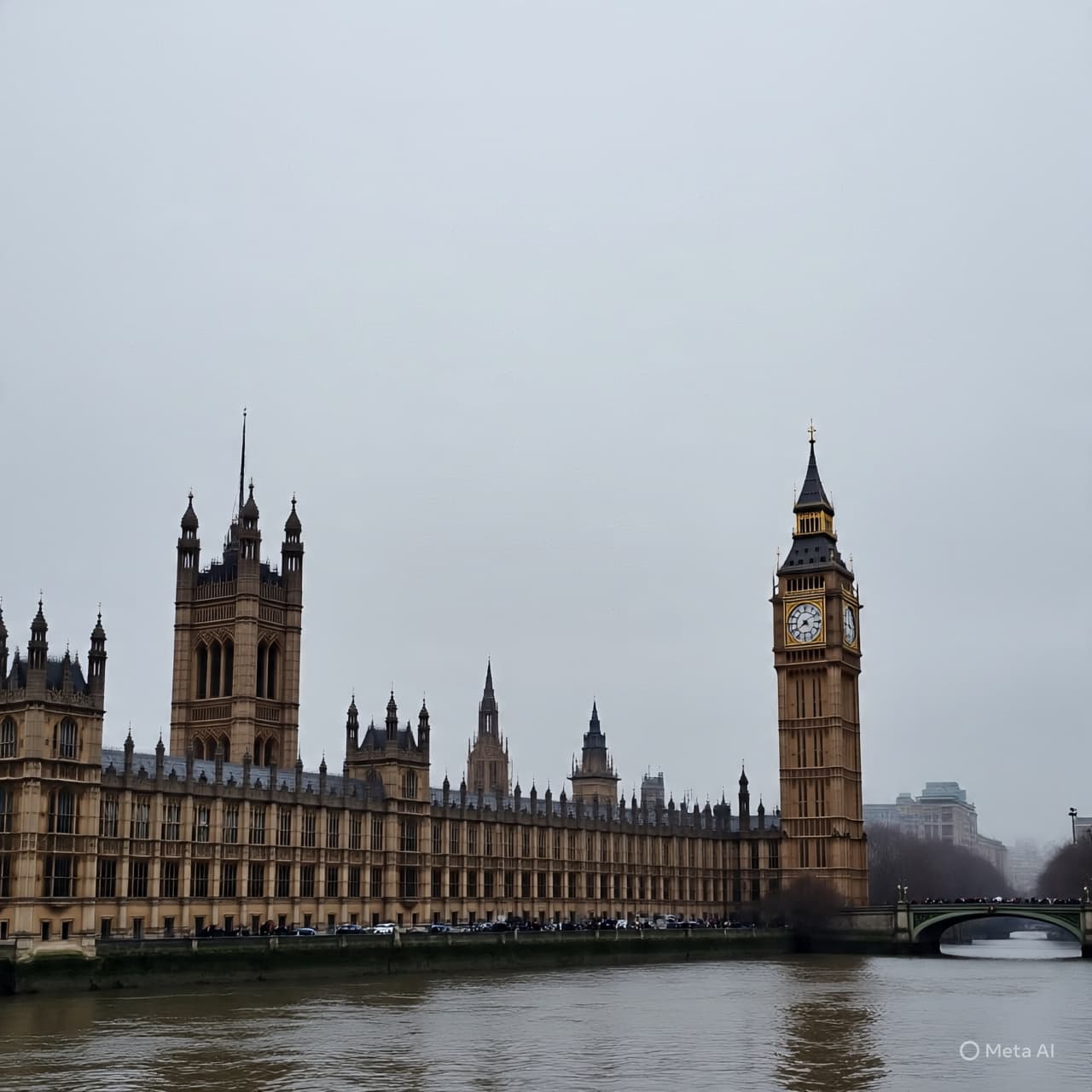
A low winter light settles over London, softening the outlines of stone buildings and familiar streets. In the distance, the Thames moves steadily, indifferent to declarations made across oceans. Yet the political air has shifted. Words spoken from Washington have carried northward, touching Arctic maps and European capitals alike, and in their wake have prompted a careful response from Britain’s new prime minister.
President Donald Trump’s warning that tariffs could be imposed on European allies opposing U.S. ambitions related to Greenland has stirred unease across the continent. In London, Prime Minister Keir Starmer chose a tone neither theatrical nor evasive. He described the threat plainly as “completely wrong,” placing Britain’s position within a wider framework of alliance, sovereignty, and restraint.
Starmer’s response did not arrive as a break with the United States, but as a reminder of boundaries. Greenland, he emphasized, is not a bargaining chip to be weighed against economic pressure. Its future, he said, rests with its people and with Denmark, to which it belongs. The idea that trade measures could be used to influence such questions, in Starmer’s view, runs counter to the principles that underpin long-standing partnerships.
The pushback came as part of a broader European reaction. Across capitals, leaders voiced similar concerns, rejecting the use of tariffs as a tool against allies and warning that such an approach risks fraying trust at a time when cooperation remains essential. For Britain, newly settled into a different political rhythm after years of domestic turbulence, the moment has offered an early test of tone and alignment on the global stage.
Starmer framed his stance within the language of NATO and collective security, suggesting that alliances function best when disagreements are addressed through dialogue rather than leverage. His remarks carried an implicit acknowledgment of shared challenges — from regional conflicts to economic uncertainty — that require steadiness rather than escalation.
There was, too, a practical note beneath the rhetoric. The prime minister indicated that his government would engage directly with Washington, keeping diplomatic channels open even as it rejects the premise of the threat. It was a response shaped less by confrontation than by continuity, reflecting a desire to preserve relationships while defending principles.
In this unfolding exchange, Britain’s position has been marked by clarity rather than volume. The message, repeated quietly, is that trade penalties aimed at allies over questions of sovereignty are not acceptable, and that cooperation, not coercion, remains the preferred path.
In straightforward terms, Prime Minister Keir Starmer has condemned President Trump’s threat to impose tariffs over Greenland, calling it wrong and reaffirming that Greenland’s future should be decided by its people and Denmark, while signaling that the UK will pursue dialogue with the United States.
AI Image Disclaimer Visuals are AI-generated and serve as conceptual representations.
Sources (Media Names Only) Reuters BBC News The Guardian
Published by Banx Network. This article is part of the Banx decentralized media programme, powered by the BXE token on the XRP Ledger.