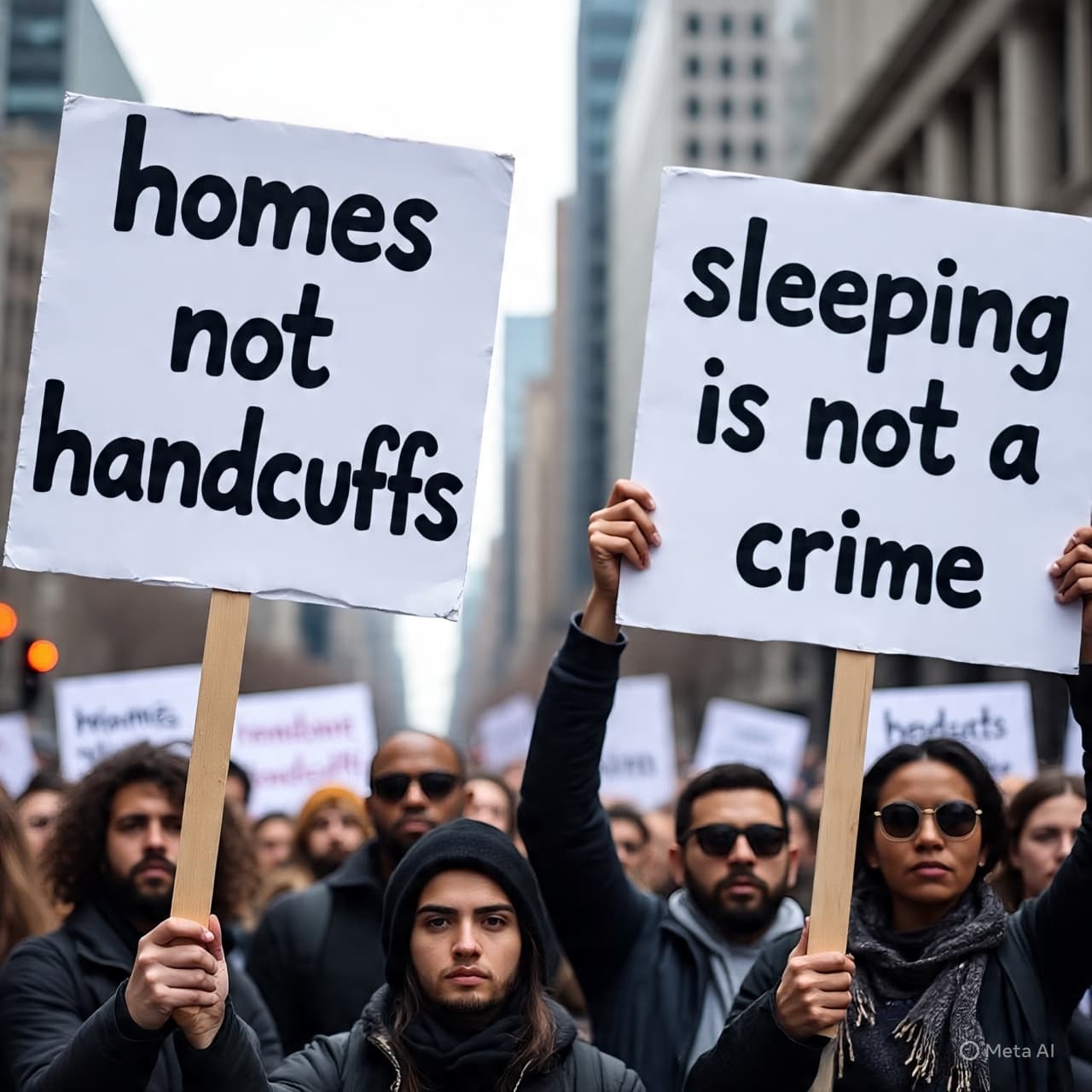
Opening Article Sometimes a city’s heartbeat can be felt not in its skyscrapers or busy crosswalks, but in the quiet stillness of a sleeping bag beneath the streetlights. In Auckland’s Karangahape Road one evening, a group of people gathered with sleeping bags and signs, not to rest for the night, but to make a gentle yet firm call for attention — a shared moment of reflection in the face of a policy that many feel touches the city’s conscience. As voices rose and stories were shared, what began as a simple sit-in also became a meditation on what it means to belong, to be seen, and to be treated with dignity in the spaces we all share.
Body Article On Thursday night, about 30 Aucklanders gathered for a sit-in protest on Karangahape Road, carrying signs reading “homes not handcuffs” and “care not criminalisation.” Organised by musician and activist Jazmine Mary, the demonstration was meant as a show of support for rough sleepers and others facing deep insecurity on the city’s streets — and as a plea for government and public servants to listen to the community’s concerns.
Protesters sat with sleeping bags, read books, and talked about how changes to law might deepen the divide for some of the city’s most vulnerable people. Among them was Mars Cook, 24, who spoke of how his own experience of homelessness shaped his presence at the sit-in; now with housing, he used his “privilege” to stand in solidarity with those still without a stable home. Another participant, Ricki Dewstow, shared the personal worry of not being able to pay rent — a reminder, she said, that life’s fragility can affect any one of us.
The protest unfolded against the backdrop of a national policy change: the government’s introduction of “move-on orders” that would empower police to require rough sleepers, people begging, or those displaying disorderly behaviour to leave public spaces for up to 24 hours. Failure to comply could result in fines of up to $2,000 or up to three months’ imprisonment, under amendments being considered to the Summary Offences Act.
Speakers at the protest emphasized that simply relocating someone “up the street” does nothing to address the deeper roots of homelessness, which advocates and community workers say is tied not only to a lack of affordable housing, but also to broader issues such as mental health, social support, and economic instability. They argued that punitive approaches risk further stigmatizing people already on the margins, and could impede access to vital services located in central areas — from food banks and health services to outreach centres.
Helen Robinson, chief executive of the Auckland City Mission, explained that services like Homeground are situated in the heart of the city for good reason: so that those in need can access help readily. She warned that move-on orders might unintentionally push people away from the very support structures intended to assist them, and advocated instead for strategies that combine housing, care, and tailored support.
In response, Prime Minister Chris Luxon defended the new powers, saying they are intended to give police tools to address disruptive and anti-social behaviour in urban centers while connecting individuals with social services where appropriate. He framed the initiative as part of a broader effort to ensure city spaces feel safe and welcoming for visitors, workers, and residents alike.
In the conversations woven through the evening on Karangahape Road, the protestors reflected a worldview that sees compassion as central to community life — a belief that supportive solutions are needed more than enforcement alone. And though the crowd was small, its message was a quiet echo of a larger public conversation about how a city cares for its most vulnerable members.
Closing Article In straightforward terms, the protest in Auckland highlighted local opposition to the government’s move-on orders for rough sleepers and others in public spaces, as part of wider policy changes under consideration at the national level. Officials maintain the orders are a tool to address anti-social behaviour, while advocates and service providers argue that supportive housing and services are needed to address homelessness effectively. The issue remains subject to ongoing debate, including legislative scrutiny and public discussion across the country.
AI Image Disclaimer “Illustrations were produced with AI and serve as conceptual depictions.”
Sources RNZ News Helm News RNZ News (political debate) RNZ News (broader policy) Teaonews
Published by Banx Network. This article is part of the Banx decentralized media programme, powered by the BXE token on the XRP Ledger.