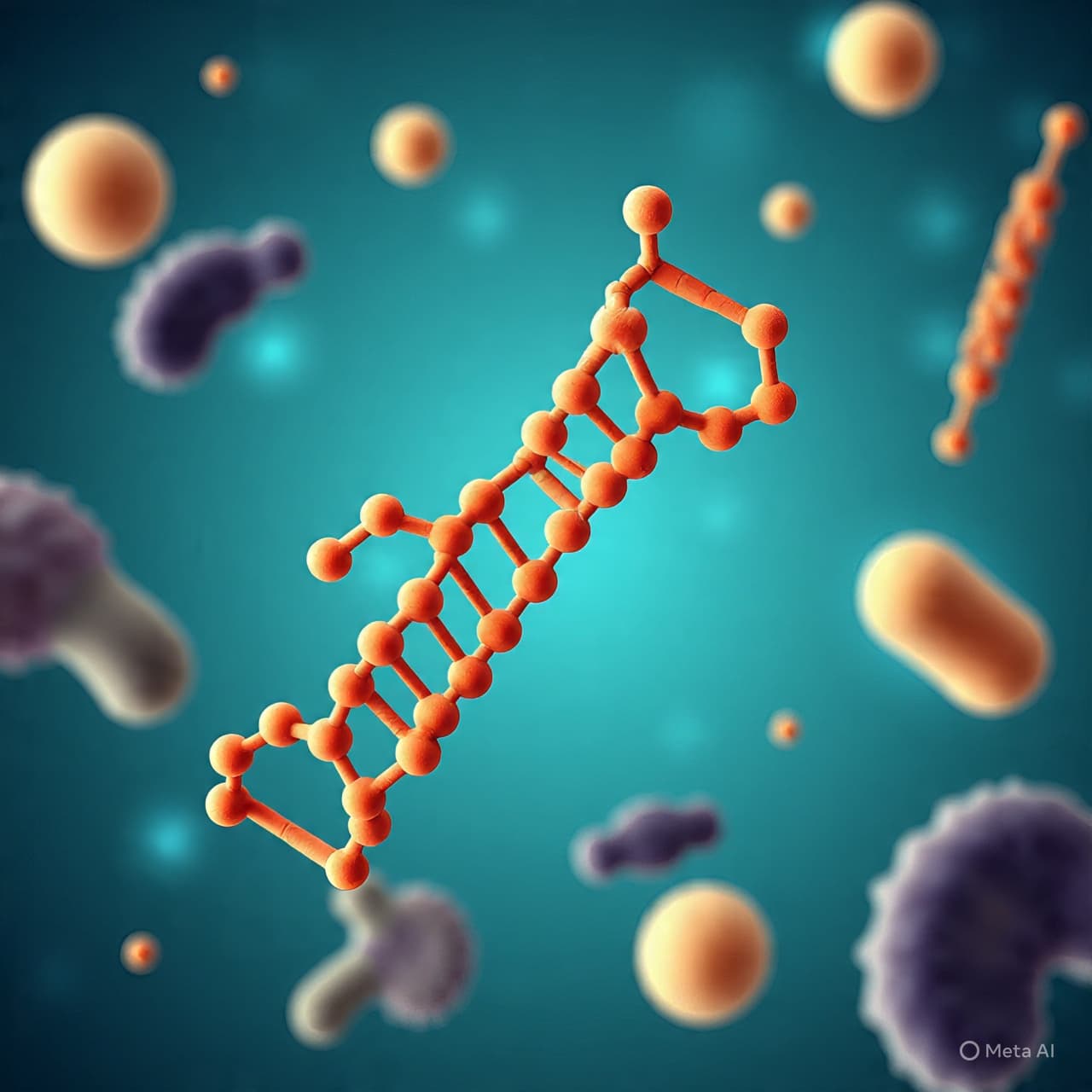
There is a kind of silence that exists within every cell—a vast, coiled library of instructions, many of them resting, waiting, unread. Within this quiet architecture, genes do not always speak. Some remain folded into stillness, their potential held in reserve like a thought not yet formed.
In laboratories shaped by careful light and steady hands, scientists have begun to explore ways not just to edit this library, but to gently invite certain passages into expression. Through advances in CRISPR, a system once known primarily for its ability to cut and alter DNA is being reimagined as something more subtle—a tool for activation rather than alteration.
At the center of this work is the use of RNA-guided mechanisms, where strands of RNA act as guides, leading engineered proteins to precise locations within the genome. Unlike traditional CRISPR approaches that rely on cutting DNA, these modified systems employ a deactivated form of the Cas enzyme—often referred to as dCas9—that no longer cleaves genetic material. Instead, it functions as a kind of molecular anchor.
Once guided to a target gene, this anchor is paired with activation domains—biological components capable of encouraging the cell’s transcriptional machinery to begin reading and expressing that gene. The process does not rewrite the underlying sequence; rather, it changes the likelihood that a gene will be turned on, allowing researchers to modulate biological activity with a finer degree of control.
This approach, often described as CRISPR activation or CRISPRa, has opened pathways in fields such as genetic engineering and molecular biology. It allows scientists to study gene function by increasing expression levels without permanently altering DNA, offering a reversible and more nuanced method of investigation.
The implications extend into medicine and therapeutic research. In conditions where certain genes are underactive or silenced, the ability to selectively activate them presents a potential avenue for treatment. Rather than replacing or editing faulty genes, researchers can explore ways to restore balance by amplifying what is already present within the genome.
Yet, as with all developments in biotechnology, the movement forward is measured. Questions remain around delivery methods, specificity, and long-term effects. The cell is not a simple system, and even precise tools must contend with its complexity. Activation in one region can ripple outward, influencing networks of genes in ways that are still being mapped.
What emerges from this work is not a sense of control, but of dialogue—a growing ability to interact with the genome in ways that are less invasive and more attuned to its natural rhythms. The language of biology, once thought to be largely fixed, reveals itself as responsive, capable of being guided rather than rewritten.
Researchers report that RNA-guided CRISPR activation systems can successfully increase gene expression without altering DNA sequences. The technique uses deactivated Cas proteins linked to transcriptional activators to target specific genes. Studies continue to evaluate its efficiency, safety, and potential applications in research and therapeutic development.
AI Image Disclaimer
Illustrations were created using AI tools and are not real photographs.
Sources
Nature Biotechnology Science Cell MIT Technology Review Nature
Published by Banx Network. This article is part of the Banx decentralized media programme, powered by the BXE token on the XRP Ledger.